Three Arunachal Pradesh Scholars Showcase Tribal Cultural Research at Prestigious MICOLLAC-2025 in Malaysia
The conference, organized by the University of Putra Malaysia, brought together leading scholars and researchers from across the globe to discuss cultural and literary diversity.

ITANAGAR- In a proud moment for Arunachal Pradesh, three distinguished academicians from the state presented their research at the 13th Malaysia International Conference on Languages, Literatures and Cultures (MICOLLAC-2025), held from August 26–28, 2025, at St. Giles Wembley Hotel, Penang, Malaysia.
The conference, organized by the University of Putra Malaysia, brought together leading scholars and researchers from across the globe to discuss cultural and literary diversity.

Also Read- Protected Cultivation Boosts Farmer Income in Tawang
Representing Arunachal Pradesh on this international stage were:
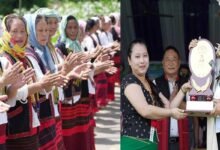
Prof. Anga Padu, Department of Education, Rajiv Gandhi University, who presented her paper “The Role of Mopin in Preserving the Cultural Heritage of Arunachal Pradesh.” Her study explored how the Mopin festival serves as a cultural pillar in sustaining the indigenous identity and traditions of the Galo community.
Dr. Minu Sono, Assistant Professor, Bini Yanga Government Women’s College, presented her research titled “Echoes of Identity: The Role of Nyokum in Preserving Nyishi Culture of Arunachal Pradesh.” She examined the Nyokum festival as a cultural anchor, strengthening Nyishi community bonds and facilitating the transfer of indigenous knowledge across generations.
Dr. Tage Monju, Department of Education, Rajiv Gandhi University, contributed a socio-cultural study, “The Psycho-Social Experiences of Tattooed Apatani Women in Arunachal Pradesh, India.” Her work highlighted the traditional facial tattooing of Apatani women as an expression of beauty and cultural identity—challenging external misinterpretations that label it otherwise.
Also Read- Adis Celebrates Solung Festival with Traditional Fervor
The trio’s participation not only spotlighted the tribal heritage of Arunachal Pradesh but also underscored the state’s growing role in global academic discourse. Their contributions demonstrated how indigenous festivals, traditions, and practices are vital knowledge systems that enrich both local communities and global cultural studies.
Scholars at the conference lauded the efforts of the Arunachal researchers for their contribution in bringing the unique cultural narratives of Northeast India to an international platform.
This recognition reaffirms the importance of documenting, preserving, and celebrating indigenous traditions while placing Arunachal Pradesh on the global academic map.