Arunachal Celebrates Keyi Panyor as India’s First “Bio-Happy District”
Agriculture Minister Gabriel D. Wangsu inaugurated a two-day biodiversity and climate resilience festival in Yazali, highlighting Keyi Panyor’s emergence as a model district for sustainable and community-driven development.
YAZALI- Arunachal Pradesh on Wednesday hosted a major consultation and biodiversity festival in Yazali, positioning Keyi Panyor district as a pioneering model for “biohappiness”-driven development and climate resilience.
The event, titled Arunachal Pradesh Jaiv Vividhata & Mvm Liid Soonam / Beej Utsav 2026, was inaugurated at the Government Higher Secondary School in Yazali by Agriculture, Horticulture, Animal Husbandry, Fisheries, and Food & Civil Supplies Minister Gabriel D. Wangsu.

The two-day gathering brought together policymakers, researchers, farmers, tribal leaders, women’s groups and environmental stakeholders to discuss sustainable livelihoods, ecological conservation and indigenous agricultural systems. The event is jointly organised by the 16th Yachuli Assembly Constituency MLA Office, Krishi Vigyan Kendra (KVK) Keyi Panyor, the Arunachal State Rural Livelihoods Mission (ArSRLM), and the M. S. Swaminathan Research Foundation (MSSRF).
Also Read- NCW Team Visits Ziro to Review Women’s Safety, AI Inclusion and Grassroots Leadership
During the inaugural session, state leaders and organisers highlighted Keyi Panyor as a unique example of development rooted in ecological balance, cultural identity and community well-being. Local representatives stated that the district is being promoted as India’s first “Bio-Happy District,” reflecting a model that integrates biodiversity conservation with human welfare and tribal traditions.
Addressing the gathering, Minister Gabriel D. Wangsu said indigenous ecological knowledge and traditional crop systems remain critical for adapting to changing climatic conditions in the Himalayan region. Referring to shifting rainfall patterns, shorter winters and intensified floods, he observed that conventional agricultural models developed in the plains may not be suitable for Arunachal Pradesh’s terrain and ecological conditions.
Also Read- Assam Court Grants Interim Bail to Anti-Drug Activist Gumin Mize Amid Public Outcry
The Minister also underlined the importance of preserving indigenous seed varieties as a safeguard against climate uncertainty. He praised local conservation efforts, including the initiative of Hage Nanya from Ziro, who has applied for intellectual property rights protection under the Protection of Plant Varieties and Farmers’ Rights (PPV&FR) Act for 12 indigenous paddy varieties from Lower Subansiri district.
To strengthen local agricultural resilience, the government announced plans to support community seed banks, improve seed certification systems, expand storage infrastructure and promote networks of women-led “Seed Guardians” involved in preserving indigenous crop diversity.
Also Read- Jio Launches ₹200 OTT Pass With 15 Streaming Apps and Unlimited 5G
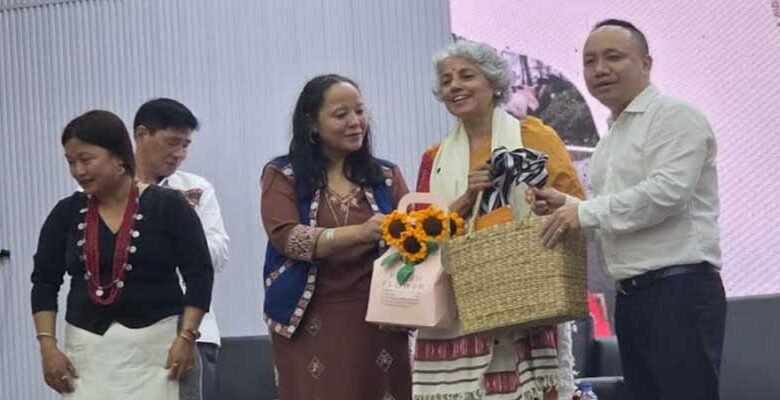
Earlier in the programme, MLA Toko Tatung delivered the welcome address and highlighted the agricultural and cultural heritage of the region. The ceremony also included a traditional lamp-lighting event led by Nyishi and Apatani tribal leaders.
Dr. Soumya Swaminathan, Chairperson of MSSRF, in her opening remarks, stated that the concept of biohappiness can serve as a framework linking biodiversity conservation with livelihood generation, nutrition security and inclusive development.
The consultation sessions focused on reviving agrobiodiversity systems, strengthening local seed-sharing networks and promoting climate-resilient food systems. Discussions also examined the role of tribal women in conservation economies and governance structures, along with opportunities for youth engagement through eco-tourism, food processing, value-chain development and digital marketing initiatives.
The opening day concluded with the inauguration of the Arunachal Agrobiodiversity Festival and Sustainable Livelihoods Exhibition, featuring participation from seed conservers, forest and agriculture departments, the Spices Board and local enterprises, including NAARA AABA.
The festival is scheduled to continue on Thursday with technical sessions on nature-based solutions, ecological restoration and sustainable livelihood innovation involving environmental experts, researchers and policy practitioners.