Sikkim Tunnel Collapse: Death Toll Rises to 11, Dozens Feared Trapped
Rescue teams face methane gas leaks, heavy debris, and confined spaces as efforts continue to reach workers feared trapped inside the under-construction tunnel linked to the Teesta Stage VI Hydroelectric Project.
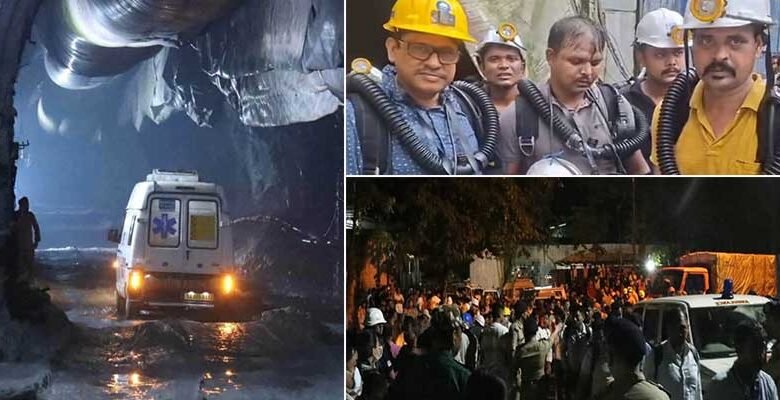
NAMCHI- The death toll from the collapse of an under-construction tunnel in Sikkim’s Namchi district has risen to 11, while rescue teams continue round-the-clock operations to reach workers still feared trapped inside under hazardous conditions.
The incident occurred at approximately 3:40 PM on July 20 at the Samardung (Samardong) Tunnel (ADIT-3) in the Jholungey-Mamring area. The tunnel is part of the NHPC Teesta Stage VI Hydroelectric Project, being executed by contractor Patel Engineering.

According to officials, a landslide blocked the tunnel entrance, triggering a collapse. Rescue efforts have been further complicated by a suspected methane gas leak, believed to have originated from disturbed underground rock formations, creating a dangerous environment for emergency personnel.
Also Read- Youth Rally in Itanagar Backs Sonam Wangchuk, Demands Education Reforms
Authorities confirmed that 10 bodies have been recovered and shifted to Singtam District Hospital, STNM Hospital in Gangtok, and Namchi District Hospital for further procedures.
Officials estimate that around 27 workers—including approximately 21 employees of Patel Engineering and six from NHPC—may still be trapped inside the tunnel. However, the exact number has not yet been officially confirmed, as rescue teams have been unable to complete a full assessment of the tunnel’s interior due to the hazardous conditions.
The rescue operation is being coordinated by the Namchi district administration with support from the National Disaster Response Force (NDRF), State Disaster Response Force (SDRF), Sikkim Police, Fire and Emergency Services, and the Health Department. Additional specialised rescue teams from Pakyong, Siliguri, and West Bengal have also joined the operation, while ambulances remain on standby.
Also Read- Police, Protesters Clash During ‘Sansad Chalo’ March in Delhi
Rescue personnel are facing significant challenges, including heavy debris blocking the entrance, poor visibility, confined working spaces, and toxic methane gas that has reportedly caused dizziness and fainting among some responders. Teams are using gas masks and specialised protective equipment while carefully advancing through the collapsed section.
NDRF Deputy Commander Vivek Kumar confirmed the recovery of 10 bodies and stated that the possibility of additional workers remaining inside the tunnel cannot be ruled out. The Sikkim State Disaster Management Authority (SSDMA) continues to monitor the situation closely.
Chief Minister Prem Singh Tamang visited the accident site to oversee rescue efforts and directed all concerned departments to expedite operations while ensuring the safety of rescue personnel. He also appealed to the public not to circulate unverified information. In a post on X, the Chief Minister thanked Prime Minister Narendra Modi for extending support and assuring all possible assistance from the Central Government.
Also Read- Gajraj Corps Organises Yak Mela to Promote Culture and Community Welfare in Tawang
Prime Minister Modi expressed grief over the tragedy and announced an ex-gratia of ₹2 lakh from the Prime Minister’s National Relief Fund (PMNRF) to the next of kin of each deceased worker, along with ₹50,000 for those injured. He also spoke with Chief Minister Tamang and assured full Central assistance for rescue and relief operations.
Union Home Minister Amit Shah also contacted the Chief Minister to review the situation and assured all necessary support from the Union Government for ongoing rescue efforts and assistance to affected families.
District Collector Anupa Tamling stated that a clearer picture of the situation would emerge only after rescue teams gain access to the tunnel interior. Officials indicated that a formal investigation into the cause of the collapse is expected once rescue operations are completed.
The tragedy has once again drawn attention to the challenges of executing major infrastructure projects in the Himalayan region, where difficult terrain, seismic activity, and monsoon-triggered landslides significantly increase construction risks. Rescue operations continue as authorities work to locate and evacuate any remaining workers.