Arunachal Pradesh, Assam Agree to Fast-Track Boundary Demarcation in 33 Disputed Villages
Arunachal Pradesh Urban Affairs Minister Balo Raja and Assam Revenue Minister Keshab Mahanta lead regional committee talks, with both states agreeing on phased demarcation, restrictions on fresh encroachments and a roadmap for unresolved disputes.
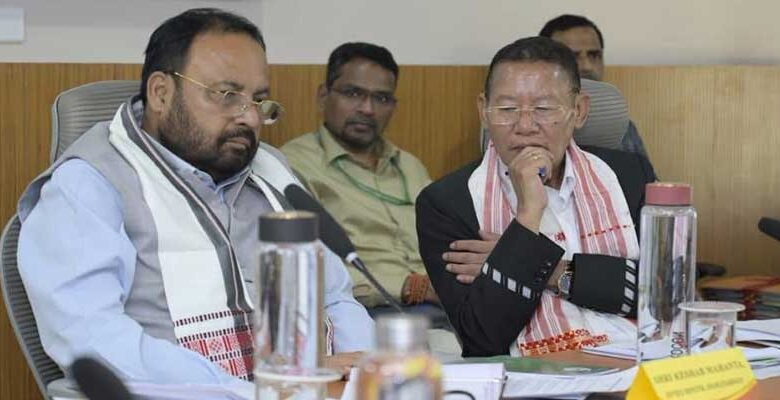
GUWAHATI- Arunachal Pradesh and Assam have agreed to accelerate boundary demarcation and develop a roadmap for resolving disputes in 33 villages along their inter-state border, following the second meeting of the regional committee dealing with areas under Papum Pare district and Assam’s Biswanath and Lakhimpur districts.
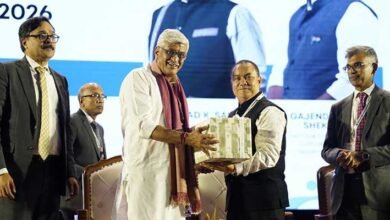
The meeting was attended by Arunachal Pradesh Urban Affairs Minister Balo Raja and Assam Revenue Minister Keshab Mahanta, who led their respective delegations. Doimukh MLA Nabam Vivek, Papum Pare Deputy Commissioner Mamu Hage, Assam Education Minister Ranoj Pegu and MP Ranjit Dutta were also present.

The discussions focused on reviewing progress since the previous meeting on January 9, 2023, including joint field inspections conducted to identify disputed areas and work towards a mutually acceptable settlement.
Also Read- Arunachal: 550 NCC Cadets Explore Poma Hills on Fifth Day of Rising Sun Trek
Boundary Demarcation to Begin in Nine Villages
Officials said the 33 disputed villages have been classified into three categories based on the nature and complexity of the disagreements.
Nine villages fall under Category I, 22 under Category II, involving relatively minor localised disputes, and two under Category III, where differences remain more complex.
The two states agreed to install boundary pillars immediately in the nine Category I villages. Disputes in the 22 Category II villages will be addressed by the respective district administrations.
Both sides also decided to engage the Survey of India to initiate formal boundary demarcation within two months, marking a key step towards translating the regional committee’s decisions into ground-level action.
Also Read- Pema Khandu Inaugurates Donyi Polo Multipurpose Hall at Galo Heritage Centre
Measures to Prevent Fresh Disputes
The meeting agreed to maintain the status quo in accordance with mutually accepted cut-off dates and prevent fresh encroachments and tree felling in disputed areas.
The two states also decided to initiate procedures for withdrawing FIRs registered against officials of either state in connection with the boundary disputes.
For the two Category III villages where consensus remains elusive, the regional committee will prepare a separate roadmap after consultations with local legislators, district officials and residents.
The next regional committee meeting is scheduled for late December, when further progress is expected to be reviewed.
Also Read- Tawang Trains Newly Elected PRI Members on Village Development Planning and Finance Grants
Background of the Arunachal-Assam Boundary Dispute
The boundary dispute between Arunachal Pradesh and Assam dates back to 1951, when areas covering more than 3,600 square kilometres were transferred from the North-East Frontier Agency to Assam following recommendations of the Gopinath Bordoloi committee.
Arunachal Pradesh subsequently challenged the arrangement, making the boundary issue a longstanding source of disagreement between the two states.
The current resolution process gained momentum following the Namsai Declaration, signed by the chief ministers of Arunachal Pradesh and Assam on July 15, 2022. The agreement reduced the number of disputed villages from 123 to 86 and established 12 regional committees to pursue a negotiated settlement.
The latest agreement on the 33 villages represents progress in the regional committee’s efforts to resolve outstanding disputes through dialogue and administrative coordination.
The immediate challenge will be to implement the agreed demarcation measures, address local concerns and secure consensus in the remaining disputed areas. The outcome will depend on sustained cooperation between both state governments, district administrations and affected communities.