Tawang Trains Newly Elected PRI Members on Village Development Planning and Finance Grants
Deputy Commissioner Namgyal Angmo chairs the orientation programme aimed at strengthening village-level planning, financial management, accountability and effective utilisation of development grants.
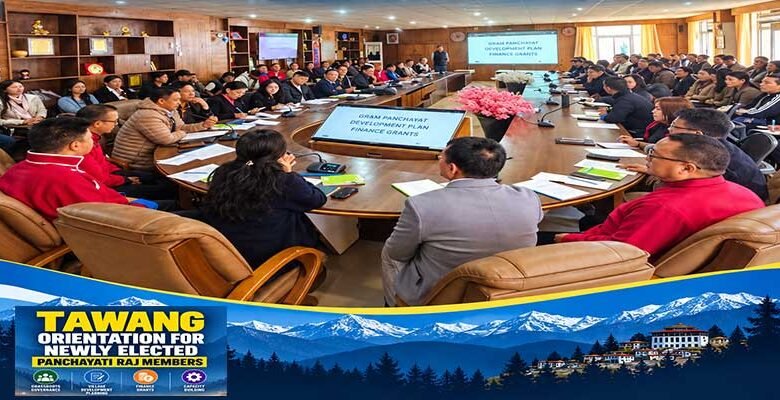
TAWANG- The Tawang district administration has organised a district-level orientation programme for newly elected Panchayati Raj Institution (PRI) members to strengthen grassroots governance, village development planning and the effective utilisation of public funds.
The one-day programme on the Gram Panchayat Development Plan (GPDP) and XVI Finance Commission Grants was held on Wednesday at the Conference Hall of the Deputy Commissioner’s Office in Tawang under the Rashtriya Gram Swaraj Abhiyan (RGSA).

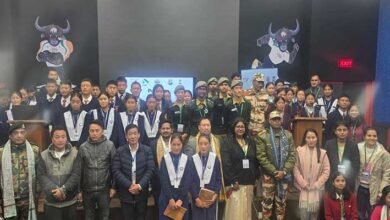
The programme was chaired by Deputy Commissioner Namgyal Angmo, IAS, and attended by Zilla Parishad Chairperson Leki Gombu, all six Zilla Parishad Members (ZPMs) and PRI members from across the district.
Organised by the State Institute of Rural Development and Panchayati Raj (SIRD&PR) in collaboration with the District Panchayati Raj Department, Tawang, the orientation aimed to equip elected representatives with practical knowledge of participatory planning, financial management and the implementation of rural development initiatives.
Also Read- Tawang Administration Plans for Winter Power Cuts, Seeks Public Cooperation
Focus on Effective Village Development Planning
Addressing the participants, Deputy Commissioner Namgyal Angmo emphasised that the training would help newly elected PRI members better understand their roles and responsibilities in serving rural communities.
She noted that although the programme had been planned earlier, it could not be conducted for various reasons. However, she said sufficient time remained for the representatives to work towards the welfare and development of the people.
Describing the orientation as both a learning opportunity and a refresher course, the Deputy Commissioner encouraged participants to share their experiences, clarify doubts and exchange ideas with the resource person.
She also highlighted that capacity building was a collective responsibility involving elected representatives and government officials. Better coordination between the two, she said, would help strengthen local governance and improve the implementation of development programmes.
Angmo thanked SIRD&PR for organising the programme in Tawang and appreciated Course Director Dr. Mihin Lali for travelling from Itanagar to conduct the training.
Also Read- Anganwadi Workers Trained in Early Learning, Literacy and Child Development in Diyun
GPDP and Finance Commission Grants
Dr. Mihin Lali, the resource person and course director, conducted sessions focusing on the preparation of Gram Panchayat Development Plans and the implementation of rural development initiatives.
The GPDP process is intended to help village-level institutions identify local needs, consult communities and prioritise development activities. Understanding this process is important for ensuring that local development plans reflect the concerns and aspirations of residents.
The orientation also addressed the effective utilisation of XVI Finance Commission Grants, with emphasis on financial management, transparency and accountability in the use of public funds.
For PRI members, these areas are central to translating community priorities into planned development activities and ensuring that available resources are directed towards identified local needs.
Also Read- Eviction Drive Clears Encroachments Along Koloriang Ring Road Alignment
Strengthening Grassroots Democracy
The programme sought to promote participatory decision-making and inclusive, sustainable rural development across Tawang district.
Strengthening the capacity of elected representatives can help improve the quality of village development plans and the monitoring of public expenditure. Effective implementation, however, will depend on applying the training in local planning processes, maintaining transparency and coordinating with the relevant government departments.
The orientation concluded with a renewed emphasis on capacity building and cooperation between PRI representatives and government officials to strengthen grassroots democracy and ensure that rural development initiatives respond to community needs.