
Rare Himalayan Flower Rediscovered in Arunachal Pradesh After 158 Years
Scientists found Cyananthus hookeri near Chuna Valley in Tawang, marking the species’ first confirmed Indian record since 1867 and its first record from Arunachal Pradesh.
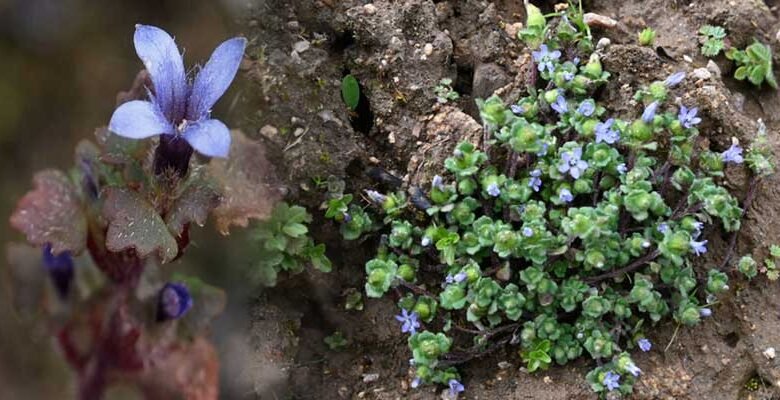
ITANAGAR- In a remarkable botanical breakthrough, scientists have rediscovered a rare Himalayan flowering plant, Cyananthus hookeri, in Arunachal Pradesh’s Tawang district after it vanished from Indian records for 158 years. The tiny purple-blue flower, belonging to the bellflower family (Campanulaceae), was last documented in India in 1867 in Sikkim by the renowned British botanist Sir Joseph Dalton Hooker.
The rediscovery marks the first confirmed sighting of the species in India in over a century and a half, and the first-ever record from Arunachal Pradesh. It underscores the extraordinary yet still poorly explored biodiversity of the Eastern Himalayas, one of the world’s most important biodiversity hotspots.

Details of the Discovery
The plant was found on September 20, 2025, during a botanical field survey near Chuna Valley, approximately 1 km from Mago village in Tawang district. Researchers collected specimens at an altitude of about 3,600 metres on alpine grassy and rocky slopes.
The discovery was made by Subhajit Lahiri and Monalisa Das of the Botanical Survey of India (BSI), under the supervision of Sudhansu Sekhar Dash. Voucher specimens have been deposited at the Central National Herbarium (CAL) in Howrah. The findings were published online on June 30, 2026, in the prestigious international conservation journal Oryx (Cambridge University Press), titled “Rediscovery of Cyananthus hookeri (Campanulaceae) in India after 158 years.”
Also Read- Potholes, Broken Surfaces and Years of Neglect: Key Arunachal Highways in Dire Condition
Only a small number of plants were observed at the site, with individual populations consisting of just 3 to 7 mature individuals. Overall, scientists estimate fewer than 50 mature individuals of the species exist in India.
About the Species
Cyananthus hookeri is a small, low-growing herbaceous plant. It features tiny, vivid purple-blue flowers, often with a hairy throat inside the corolla. The plant is an annual or short-lived perennial adapted to harsh high-altitude conditions. It typically flowers between August and September.
The species has a highly restricted distribution across the Eastern Himalayas. It is known from Bhutan, China (including Tibet), Nepal, and parts of the Sino-Himalayan region, but it had remained elusive in India despite extensive surveys over the decades. In its natural habitat, it grows in thickets, grasslands, and rocky slopes at elevations between 2,700 and 4,500 metres.
Conservation Implications
Given its extremely small population size in India and restricted distribution, the researchers have recommended classifying Cyananthus hookeri as Endangered nationally under the IUCN Red List criteria. This assessment highlights the high risk of extinction within the country and is expected to help mobilize targeted conservation efforts.
Also Read- Arunachal Scholar Dr Prem Taba Awarded SAARC Grant for Tribal Heritage Research
Arunachal Pradesh Deputy Chief Minister Chowna Mein welcomed the discovery, calling it “a significant milestone for India’s botanical heritage.” He emphasized that it highlights the state’s extraordinary biodiversity and reinforces the urgent need to conserve its fragile Himalayan ecosystems.
Broader Significance
This rediscovery adds to a growing list of botanical surprises from Arunachal Pradesh’s remote mountains. The state is part of the globally recognized Eastern Himalaya biodiversity hotspot and is home to thousands of plant species, many of them endemic or rare.
“Arunachal Pradesh continues to yield scientific surprises, reinforcing its status as one of the world’s most important biodiversity hotspots,” the researchers noted in their publication.
The finding also serves as a reminder of how much remains unknown about India’s high-altitude flora and the importance of continued field surveys, especially in remote border regions.
Looking Ahead
With climate change, habitat disturbance, and limited population sizes posing threats, conservationists are likely to call for habitat protection measures, further population surveys, and possibly ex-situ conservation efforts (such as seed banking) for this rare species.
This rediscovery not only revives a piece of India’s botanical history lost since the British colonial era but also strengthens the case for preserving the unique ecosystems of the Eastern Himalayas for future generations.