
Potholes, Broken Surfaces and Years of Neglect: Key Arunachal Highways in Dire Condition
Deep potholes and severely eroded surfaces have left key stretches of NH-515 and NH-13 in a dangerous condition, affecting daily travel, trade and access to essential services while raising questions over maintenance and accountability.
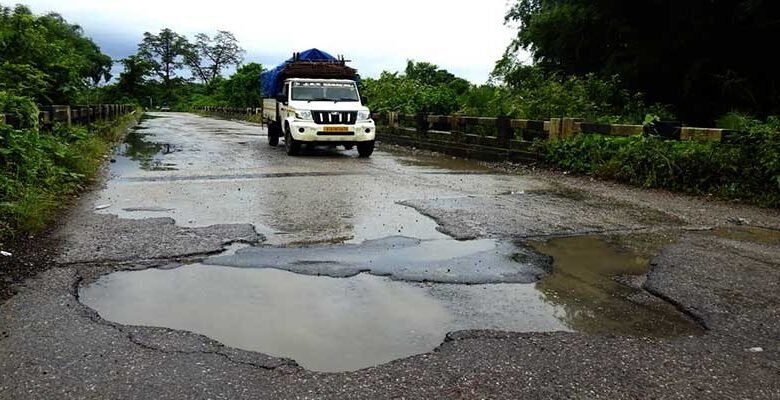
PASIGHAT (By Maksam Tayeng): What was once envisioned as a key component of the Trans-Arunachal Highway network has deteriorated into a major concern for commuters, transport operators and residents, with critical stretches of National Highway-515 and National Highway-13 now marked by deep potholes, broken surfaces and severe erosion.
The worsening condition of the Oyan-Pasighat-Mebo corridor has turned daily travel into an increasingly difficult and potentially hazardous experience, prompting renewed questions over maintenance, responsibility and the future of two strategically and economically important highways.

NH-515: A Lifeline in Poor Condition
NH-515 is one of the principal road corridors connecting Assam with central and eastern Arunachal Pradesh.
The stretch from Jonai in Assam through Ruksin, Sille, Oyan and Rani to 7 Mile, Pasighat, is reported to be affected by large potholes, damaged surfaces and severe wear.
The road is more than a local transport route. It serves as a key connection for several districts in central and northern Arunachal Pradesh, including East Siang, Siang, Upper Siang, West Siang and Shi-Yomi.
Also Read- Arunachal Flood Crisis Deepens as IMD Predicts More Heavy Rain Across Northeast
It also provides connectivity towards eastern districts, including Lower Dibang Valley, Dibang Valley, Namsai and Lohit.
Any prolonged deterioration of such a corridor has wider implications for passenger movement, the transport of goods and access to healthcare, education and emergency services.
NH-13 Stretch Towards Mebo Also Deteriorates
Conditions are reportedly no better after the Raneghat bridge on NH-13.
The highway connecting Mebo Sub-Division with Dambuk and Roing is riddled with deep potholes and badly eroded sections.
The Raneghat-Ayeng-Mebo stretch has deteriorated at several locations, particularly near Ayeng village, Siku bridge and Mebo Char-ali.
Also Read- Waterlogged Roads, Hidden Potholes and a Superhero: Meet this Spider-Man
Once envisioned as an important link under the Trans-Arunachal Highway project, the road is now facing growing criticism over the absence of adequate and sustained maintenance.
For residents who travel on these roads several times a day, the consequences are immediate. Continuous driving over potholes and damaged surfaces increases travel time, creates safety risks and contributes to higher vehicle maintenance costs.
Roads Essential for Healthcare, Education and Trade
The condition of the two highways affects more than everyday convenience.
Residents depend on these routes for economic activities, education, medical treatment and emergency travel. Commercial vehicles also use the corridors to transport goods between Assam and several districts of Arunachal Pradesh.
For transport operators and daily commuters, even relatively small but continuous bumps, craters and broken road surfaces can lead to frequent damage to tyres, suspension systems and other vehicle components.
The poor condition of the roads therefore imposes an additional economic cost on people who have little alternative but to use these routes.
Concerns Date Back a Decade
The dispute over the maintenance of these highway stretches dates back to 2015-16, when the Ministry of Road Transport and Highways transferred responsibility for the roads from the Border Roads Organisation to the State Public Works Department.
The move had faced opposition at the time.
In March 2016, citizens under the banner of the Pasighat-Bomjir NH-52 Bachao Committee, led by Chairman Todol Pertin and Member Secretary Olen Rome, submitted memorandums to Deputy Chief Minister Chowna Mein and the then Director General of the BRO, Lieutenant General Suresh Sharma.
The committee had expressed concern that the State PWD might not have adequate capacity to maintain infrastructure of such importance.
Despite the appeals, the highway stretches were transferred from the BRO/BRTF to the State PWD.
Nearly a decade later, residents and commuters argue that their concerns remain unresolved.
Patchwork Repairs Fail to Provide Lasting Solution
Concerns over the condition of the same stretches were raised with the PWD Highway Division in October 2025.
The complaints were followed by limited repair work near the 7 Mile bridge close to Rani village and the Raneghat bridge over the Siang River.
However, the repairs did not address the broader deterioration along the highway.
Sections near the 7 Mile bridge that had undergone repair have reportedly developed deep potholes again, raising questions over the durability and quality of the work.
The recurring deterioration highlights a broader challenge: temporary patchwork may provide short-term relief, but without comprehensive repairs, effective drainage and regular maintenance, the same problems are likely to return.
Questions Over Maintenance and Accountability
The continued deterioration has led commuters and residents to question which agency is responsible for ensuring regular upkeep of the highways.
Questions are being directed at the State PWD Highway Division and the National Highways & Infrastructure Development Corporation Limited over the apparent absence of effective routine maintenance on these crucial road stretches.
The central issues are straightforward: Are adequate funds available for maintenance? If funds have been sanctioned, have they been sufficient and effectively utilised? And which agency is directly accountable for ensuring that the roads remain safe and motorable?
These questions require clear answers from the authorities concerned.
Strategic Importance Adds to Concern
The significance of NH-515 and NH-13 extends beyond civilian transportation and regional commerce.
The routes also form part of the wider road network used for movement towards strategically sensitive areas near the Line of Actual Control.
Reliable road infrastructure is particularly important in a border state such as Arunachal Pradesh, where difficult terrain and extreme weather already create major logistical challenges.
Poorly maintained highways can slow civilian movement, disrupt supply chains and create additional difficulties for emergency and strategic transportation.
The deteriorating condition of the Oyan-Pasighat-Mebo corridor therefore raises concerns not only about daily commuting but also about the resilience of a wider regional transport network.
For now, commuters continue to navigate potholes, damaged surfaces and eroded sections on roads that are supposed to function as vital links for central and eastern Arunachal Pradesh.
After years of complaints, limited repairs and recurring deterioration, one question continues to dominate public discussion: Who will fix these roads, and when?