Mushroom Cultivation Training Held at Aalo to Promote Rural Livelihoods
The one-day programme focused on practical mushroom production, post-harvest management and value addition as potential livelihood opportunities for rural communities.
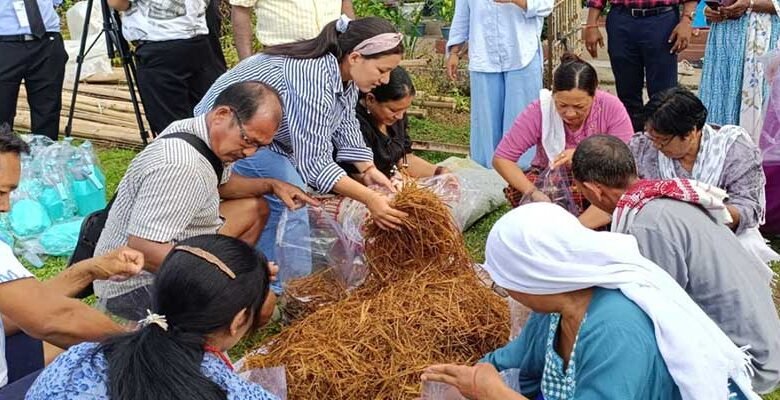
AALO- A one-day training programme on “Mushroom Cultivation for Rural Food and Economic Security” was organised at Aalo Town to promote mushroom cultivation as a low-investment and sustainable livelihood opportunity for rural communities.
The programme was organised by the College of Horticulture & Forestry (CHF), Central Agricultural University (CAU), Pasighat, under the All India Coordinated Research Project (AICRP) on Mushroom.

Around 100 village farmers, progressive farmers, unemployed rural youth and farm women participated in the programme, showing keen interest in adopting mushroom cultivation as an additional source of income.
Also Read- Three-Day Capacity Building Programme for Primary Teachers Begins in Tawang
Smt. Tabi Lollen, ZPM, 1-East Lower, attended the programme as the Chief Guest. The training was conducted under the guidance of Dr. P. Raja, who highlighted the potential of mushroom cultivation to contribute to rural food, nutritional and economic security.
The technical sessions provided participants with practical knowledge of mushroom production, covering suitable mushroom species, selection and preparation of substrates, bed and bag preparation, substrate treatment and sterilisation, spawn run, cropping management, harvesting and post-harvest handling.
Participants were also introduced to value addition and product development, while practical demonstrations provided hands-on experience in mushroom production using locally available agricultural residues.
Also Read- RIWATCH Launches 10-Day Panchkarma Therapy Training in Roing
A special lecture by Dr. S. Jayanthi, Assistant Professor, J.N. College, Pasighat, focused on mushroom drying and post-harvest management. She explained solar energy-based and oven-drying techniques that can help preserve mushrooms, extend shelf life and reduce post-harvest losses.
The session particularly highlighted solar drying as a potentially low-cost and energy-efficient option for rural households. Participants were also informed about the importance of proper drying, storage and hygienic handling for maintaining the quality of dried mushroom products.
Dr. Raja emphasised that mushroom cultivation can provide an additional income source while enabling farmers to make productive use of agricultural residues. He encouraged farmers, rural youth and farm women to explore small-scale mushroom production along with opportunities for value addition and entrepreneurship.
Also Read- APU Induction Programme Highlights Journalism, Entrepreneurship and Regional Storytelling
The training also included an environmental component, with participants being informed about the role of agroforestry and tree plantation in supporting environmental sustainability. Fast-growing species such as Moringa and Melia were highlighted for their potential to increase biomass production and contribute to carbon sequestration.
The enthusiastic participation of farmers and rural communities indicated growing interest in mushroom cultivation and value-added mushroom products in the region. The organisers expect the training to encourage participants to consider mushroom production as a practical livelihood option while contributing to food, nutritional and income security in rural Arunachal Pradesh.
The programme was supported by the AICRP on Mushroom, College of Horticulture & Forestry, Central Agricultural University, Pasighat.