Arunachal: Scientists Warn of Rapid Changes in Khangri Glacier
The fifth Khangri Glacier Expedition in Arunachal Pradesh’s Tawang district recorded rapid glacier retreat, unstable terrain formation, and a potentially dangerous glacial lake linked to climate variability.
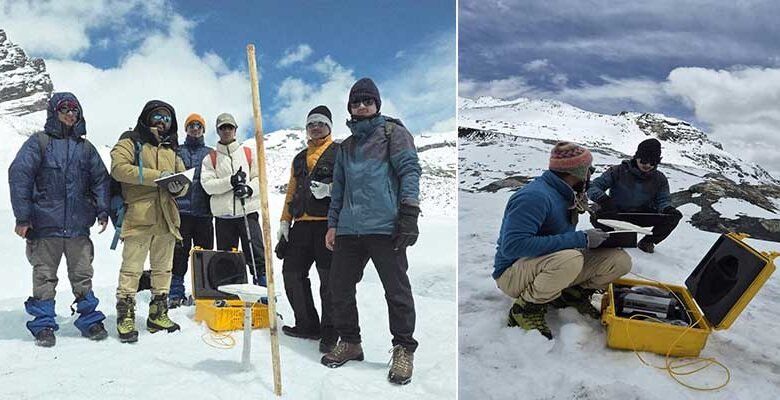
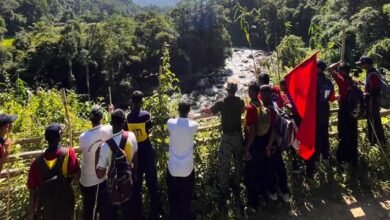
ITANAGAR- The Centre for Earth Sciences and Himalayan Studies (CESHS), in collaboration with the National Centre for Polar and Ocean Research (NCPOR) and the North Eastern Regional Institute of Science and Technology, has completed the fifth Khangri Glacier Expedition in the transboundary Mago Chu Basin of Tawang district in Arunachal Pradesh.
The expedition, which began on May 4, focused on glacier health assessments, cryospheric monitoring, and climate-linked hazard studies in the eastern Himalayan region. Scientists involved in the study reported significant geomorphological transformations in the Khangri Glacier, pointing to accelerating impacts of climate variability in the high-altitude Himalayan ecosystem.

Also Read- Study reveals, Arunachal Pradesh lost 110 glaciers in 32 years
Among the key observations was the formation of a major glacier sinking zone near the glacier snout, where rapid collapse of ice structures has reportedly created unstable terrain conditions. Researchers warned that such instability may heighten downstream landscape hazards and increase vulnerability in the Mago Chu Basin.
The expedition also identified the emergence of a potentially hazardous proglacial lake at an elevation of approximately 16,500 feet. According to the scientific team, the newly formed lake may pose a Glacial Lake Outburst Flood (GLOF) risk to downstream regions, carrying possible cascading impacts across ecosystems, river systems, and settlements connected to the larger Brahmaputra Basin.
Also Read- Glacier Melting in Arunachal Pradesh Raises Alarm Over Deadly Lake Outburst Floods
Although the region witnessed comparatively healthy winter snowfall this year, the findings suggest that glacier melt continues at an accelerated pace due to persistent climate variability and rising atmospheric temperatures across the eastern Himalayas.
To support long-term glacier monitoring, the expedition team installed five scientific monitoring stakes at elevations nearing 17,000 feet. The installations were carried out using a steam ice-core drilling system integrated with Differential Global Positioning System (DGPS) technology. The monitoring systems are expected to aid future glacier mass balance studies and surface velocity assessments.
The team also retrieved and calibrated data from an Automatic Weather Station (AWS) and an Automatic Water Level Recorder (AWLR) installed in the study region. Researchers stated that these datasets would contribute to understanding glacier-linked hydrological responses, extreme weather patterns, and broader climate interactions in the eastern Himalayas.
Additionally, moraine sediments and glacier meltwater samples were collected from the glacier snout for laboratory-based geochemical analysis.
Officials from CESHS said the successful completion of the fifth expedition strengthens ongoing cryospheric monitoring initiatives in the eastern Himalayan region and contributes valuable scientific insight into glacier dynamics, water security concerns, and emerging climate-linked hazards.