
Arunachal Pradesh Records Highest Alcohol Consumption in India: NFHS-6
The latest National Family Health Survey reveals that Arunachal Pradesh continues to record the highest alcohol consumption rates among both men and women in India, despite a slight decline from previous survey findings.
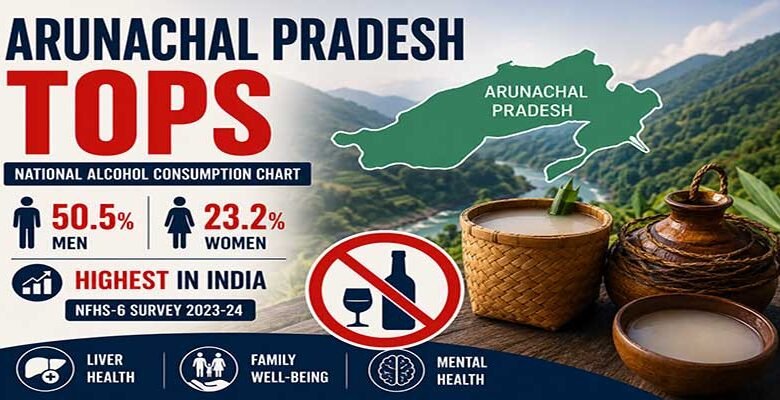
NEW DELHI- Arunachal Pradesh has recorded the highest prevalence of alcohol consumption among both men and women in India, according to the National Family Health Survey (NFHS-6) 2023-24 released by the Ministry of Health and Family Welfare on May 29.
The survey found that 50.5 per cent of men aged 15 years and above in Arunachal Pradesh consume alcohol, the highest rate among all states and Union Territories. Although the figure represents a marginal decline from 52.6 per cent recorded in NFHS-5 (2019-21), the state continues to remain at the top of the national chart.

Among women aged 15 years and above, Arunachal Pradesh also reported the highest alcohol consumption rate in the country at 23.2 per cent. The figure has declined slightly from 24.2 per cent in the previous survey but remains significantly higher than the national average.
Also Read- From Meme to Movement? Cockroach Janta Party Sparks Debate Across India
The NFHS-6 data shows that alcohol consumption at the national level stands at 18.9 per cent among men and 1.1 per cent among women. Arunachal Pradesh’s figures are therefore nearly three times the national average for women and substantially higher for men.
Top States for Alcohol Consumption
Men (15 years and above):
- Arunachal Pradesh – 50.5%
- Telangana – 43.9%
- Sikkim – 42.2%
- Chhattisgarh – 38.3%
- Jharkhand – 33.6%
Women (15 years and above):
- Arunachal Pradesh – 23.2%
- Sikkim – 19.9%
- Telangana – 7.1%
- Tripura – 6.0%
- Assam – 5.8%
The survey was conducted by the International Institute for Population Sciences (IIPS), Mumbai, and covered nearly 679,000 households across 715 districts, making it one of the most comprehensive assessments of health and demographic indicators in the country.
Public health experts have pointed to cultural and historical factors that contribute to higher alcohol consumption in several Northeastern states, including Arunachal Pradesh. Traditional beverages such as apong and various locally brewed rice beers continue to play an important role in social, cultural and ceremonial practices across many tribal communities.
Also Read- Jio Emerges as India’s Patent Powerhouse with Record FY26 Intellectual Property Growth
However, experts caution that high levels of alcohol consumption can have significant public health implications. Excessive alcohol use has been associated with liver disease, cardiovascular conditions, mental health issues, domestic violence, road accidents and reduced productivity.
Health specialists note that while the slight decline in Arunachal Pradesh’s alcohol consumption rates is encouraging, the prevalence remains high enough to warrant targeted interventions. They advocate for awareness campaigns, community-based counselling programmes, improved access to de-addiction services and stronger public health education initiatives.
Also Read- Reliance Contribution to National Exchequer Rises to Rs 2.16 Lakh Crore in FY26
Officials familiar with the issue have highlighted ongoing efforts by the state government to address substance abuse through awareness drives, regulation of illicit liquor production and community engagement programmes. At the same time, policymakers face the challenge of balancing public health objectives with cultural sensitivities surrounding traditional forms of alcohol consumption.
The findings have also renewed discussions among civil society organisations and women’s groups regarding underage drinking, the availability of illicit liquor and the need for stronger preventive measures. Some tribal leaders, however, have argued that traditional and moderate consumption practices should be distinguished from harmful alcohol abuse.
The NFHS-6 findings underscore the importance of region-specific policy interventions, particularly in states where alcohol consumption remains significantly above national averages. Public health advocates argue that data-driven strategies focusing on education, prevention, treatment and community participation will be essential to reducing the long-term social and health impacts associated with alcohol use.