Arunachal Govt Forms High-Level Committee to Examine 80:20 Reservation Ratio; AAPSU Named Special Invitee
Minister Nyato Dukam to chair the high-level committee, which will examine legal provisions, neighbouring states’ policies and earlier recommendations before submitting its report within two months.
ITANAGAR- The Government of Arunachal Pradesh on Tuesday constituted a high-level committee to examine the feasibility and methodology of abolishing the existing 80:20 reservation ratio in state government recruitment and making Permanent Resident Certificate (PRC) and Arunachal Pradesh Scheduled Tribe (APST) Certificate mandatory in competitive recruitment processes.
The move comes in response to demands raised by the All Arunachal Pradesh Students’ Union (AAPSU) in its memorandum submitted on June 2, 2026, and amid the union’s call for a clear and time-bound response from the state government.

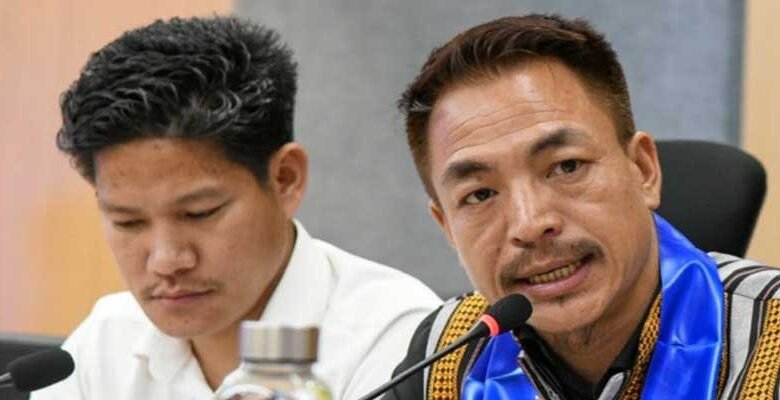
According to an order issued by the Chief Secretary, the committee will be chaired by Industries, Skill Development and Labour & Employment Minister Nyato Dukam.
The Principal Secretary (Home/PWD), Secretary (Law), Secretary (Personnel), Secretary (SJETA) and Joint Secretary (AR&T) have been appointed as members of the committee.
Also Read- Surprise Inspections in Tawang Enforce Ban on Single-Use Plastics and Small Water Bottles
The AAPSU president or his representative will participate as a special invitee during the committee’s hearings, providing the students’ body with direct representation in the deliberations.
The committee has been given a broad mandate covering the legal, constitutional and administrative dimensions of the issue.
It will examine constitutional and legal provisions governing reservation in government services and the applicability of PRC requirements in public recruitment. The panel will also study systems prevailing in neighbouring states, including Assam, Mizoram, Nagaland and Manipur.
In addition, the committee will review the recommendations of an earlier high-level committee constituted on the matter and examine the existing criteria for the issuance of PRCs in Arunachal Pradesh.
Also Read- AAPSU Gives Govt Seven Days to Respond on Recruitment, Indigenous Rights and More
The panel has been directed to submit its report to the state government within two months.
The constitution of the committee marks the government’s first formal institutional response to one of the key demands raised by AAPSU. However, the final outcome will depend on the committee’s assessment of the constitutional, legal and administrative implications of changing the existing recruitment framework.
AAPSU President Meje Taku described the development as the result of the union’s sustained advocacy and welcomed the government’s decision.
“This is a moment we have long awaited on behalf of the students and youth of our state. We thank every member of AAPSU and every indigenous Arunachalee who has stood behind this demand. This is a first step, and we will remain engaged, constructive, and vigilant until it becomes concrete, implemented policy,” Taku said.
According to the AAPSU president, the state government has also assured the union that the remaining demands in its 13-point memorandum are being taken up on priority by the departments concerned.
Also Read- Chowna Mein Calls for Balance Between Growth and Nature
These demands include re-amendment of Article 371(H), resolution of the Chakma-Hajong issue, completion of the Assam-Arunachal boundary demarcation process, central anti-racism legislation, the Chief Minister’s Research Fellowship for APST PhD scholars, additional Common University Entrance Test (CUET) examination centres and other social welfare measures.
The latest development comes a day after AAPSU gave the state government a seven-day deadline to respond to its 13-point memorandum.
The formation of the committee indicates that the government has chosen a consultative and legal review process on the reservation and recruitment-related demands. The inclusion of AAPSU as a special invitee could also provide a formal channel for the union to present its position during the committee’s deliberations.
At the same time, the issue involves complex questions of constitutional validity, recruitment policy and eligibility criteria. The committee’s report, expected within two months, is therefore likely to be crucial in determining whether the proposed changes can be translated into government policy and, if so, through what legal and administrative mechanism.