Arunachal: Bull Exchange Program Promotes Scientific Mithun Breeding in West Siang
The initiative brought together mithun farmers from Tego Gamlin and Yaki Tato to strengthen indigenous genetic diversity and support sustainable livestock development.
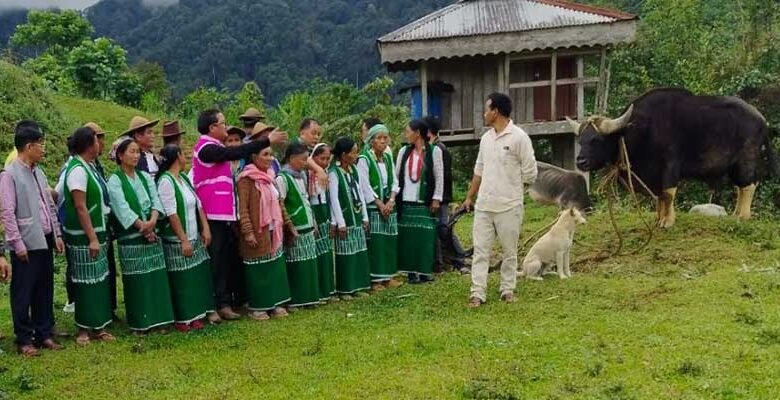
TEGO GAMLIN VILLAGE ( West Siang ) – Arunachal Pradesh witnessed a significant initiative towards scientific mithun breeding and livestock conservation with the successful conduct of a Bull Exchange Program at Tego Gamlin Village on May 18.
The programme brought together mithun farmers from Tego Gamlin and Yaki Tato villages in West Siang District with the objective of promoting scientific breeding practices, reducing inbreeding and improving the genetic diversity of local mithun populations.

The initiative was organised jointly by the Jomlo Mongku Mithun Farmers Federation (JMMFF) and ICAR-NRC on Mithun in collaboration with the Department of Animal Husbandry and Veterinary, Government of Arunachal Pradesh.
Also Read- Mithun Farming Awareness Drive Begins in Arunachal
According to organisers, the exchange of breeding bulls between villages is intended to support long-term conservation of indigenous mithun genetic resources while also contributing to sustainable livelihood development for mithun-rearing communities.
The programme was headed by Tadang Tamut, Farmers’ Coordinator and Chairman of JMMFF, who highlighted the importance of scientific intervention in traditional mithun farming systems to improve livestock health, productivity and genetic strength.
Also Read- PEAK POTENTIAL Adventure and Leadership Program Launched at Wanghoo Village
Mithun, regarded as a culturally and economically significant animal in several northeastern states, particularly Arunachal Pradesh, continues to play an important role in the rural economy and indigenous social traditions. Experts have increasingly emphasised the need for scientific breeding practices and conservation programmes to protect indigenous mithun populations from genetic decline caused by repeated inbreeding.
Officials and participating farmers described the initiative as an important step towards balancing traditional livestock practices with modern scientific approaches for sustainable animal husbandry development in the region.