Khandu Calls for Northeast Universities to Move Beyond Degree-Oriented Education
Addressing the first-ever Vice-Chancellors’ Roundtable of Northeast universities at Pasighat, the Arunachal Pradesh Chief Minister called for measurable outcomes, stronger industry-community partnerships and research focused on the region’s real-world challenges.
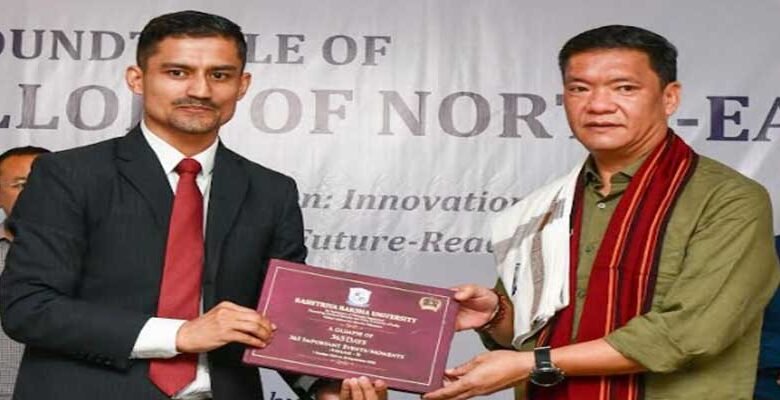
PASIGHAT- Arunachal Pradesh Chief Minister Pema Khandu has called for a fundamental transformation in the role of universities across the Northeast, urging them to move beyond conventional degree-oriented education and become “problem-solving institutions” capable of addressing the region’s developmental, social, environmental and strategic challenges.
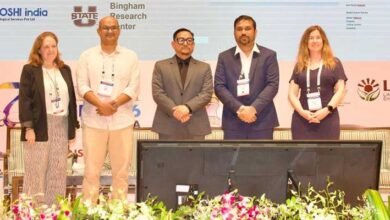
Khandu was speaking at the inaugural session of the two-day Roundtable of Vice-Chancellors of North-East Universities at the Rashtriya Raksha University (RRU) campus in Pasighat. The first-of-its-kind Vice-Chancellors’ Roundtable in Northeast India brings together Vice-Chancellors, academics, experts and representatives of the Association of Indian Universities and RRU.

The Chief Minister said the meeting should not remain limited to deliberations but should produce concrete institutional partnerships, actionable ideas and measurable outcomes.
Also Read- Eight Injured in Firing Along Assam-Arunachal Border in Dhemaji
Khandu said higher education has a particularly important role in a young and geographically diverse state such as Arunachal Pradesh. Universities, he said, should prepare students not only for employment but also for entrepreneurship, innovation, research and public service, while developing them as responsible citizens.
He identified several areas that require greater academic and research attention, including frontier and border-area development, tribal communities, biodiversity, climate change, cultural preservation, rural livelihoods, tourism, connectivity and national security.
The Chief Minister proposed a shift in the relationship between universities and the communities around them. He said universities should function as laboratories where local problems become research questions and research outcomes are converted into practical solutions.
Also Read- Tawang Steps Up Discussion on ST Certificate Re-Verification, ILP Enforcement
To achieve this, he encouraged partnerships between universities and government departments, industries, defence and security establishments, local communities and civil society. Suggested areas include sustainable agriculture, bamboo and cane, handloom and handicrafts, border development, disaster management, eco-tourism, renewable energy, indigenous knowledge and public health. He also proposed district-level research and innovation partnerships allowing students and faculty to work directly on community-level problems.
Khandu also called on universities to become early adopters of artificial intelligence and digital technologies rather than remaining passive observers of technological change.
He proposed AI-enabled academic ecosystems covering personalised learning, student assessment, research assistance, language technologies and administrative efficiency. In Arunachal Pradesh, he said AI could have applications in remote education, multilingual learning, educational-resource mapping, disaster prediction, biodiversity monitoring and healthcare delivery.
Also Read- Upper Siang Forms Highway Safety Task Force to Curb Unauthorised Parking on NH-513
He further called for joint digital repositories covering indigenous knowledge, languages, oral traditions, traditional medicine, crafts and ecological practices, while stressing the need for community ownership and appropriate safeguards. Universities, he said, should share digital infrastructure, datasets, laboratories and expertise instead of independently building the same capabilities.
The Chief Minister said internationalisation should not simply mean sending students abroad. It should also involve bringing global knowledge, research partnerships, faculty collaborations and international exposure into universities in the Northeast.
He identified opportunities for international academic partnerships in climate science, biodiversity, Himalayan studies, tribal studies, disaster management, border studies and sustainable development. He also encouraged universities to develop joint programmes and research partnerships with institutions in South and Southeast Asia, linking the region’s academic potential with India’s Act East vision.
Also Read- Yingkiong Joins Nationwide ‘Har Ghar Tiranga’ Campaign
Khandu called for time-bound institutional transformation roadmaps with measurable indicators covering teaching quality, research, innovation, employability, international collaboration and community engagement. He noted that governance reforms must take into account the specific requirements of universities located in remote, mountainous and border areas.
Another major component of his proposal was greater institutional focus on indigenous knowledge. Khandu encouraged the creation of Centres of Excellence for Indigenous Knowledge and Tribal Studies, involving research across anthropology, science, technology, environment and economics.
He also called for stronger university-based startup ecosystems, saying higher education institutions should become incubators of ideas and entrepreneurship rather than merely consumers of government employment.
He proposed that every university develop an ecosystem connecting innovation, incubation, mentorship, seed funding, intellectual property and market access. Areas with entrepreneurial potential in Arunachal Pradesh, he said, include tourism, agri-business, food processing, bamboo, handicrafts, textiles, clean energy, digital services and indigenous products.
Khandu also highlighted the presence of Rashtriya Raksha University at Pasighat as a strategic opportunity for Arunachal Pradesh and the wider Northeast.
He said the RRU campus could develop into a major regional centre for national security education, research and capacity building, with potential collaboration involving the State Police, Armed Forces, CAPFs, disaster management authorities, border-area institutions and private security organisations.
Potential areas identified include border management, cyber security, drone technology, disaster response, forensic science, counter-terrorism studies, community policing and strategic studies.
Khandu proposed consideration of a Northeast Higher Education Consortium involving universities across the region. The proposed consortium could facilitate joint research, faculty exchange, student mobility, shared laboratories and common digital resources.
It could also identify a limited number of Northeast-specific priority research areas and collectively mobilise academic resources, while providing a platform to showcase the region’s academic capabilities nationally and internationally.
Perhaps the most concrete proposal emerging from the roundtable was Khandu’s suggestion that each technical session should identify one major challenge, three practical interventions, one lead institution and a clear implementation timeline. He also urged each participating Vice-Chancellor to identify at least two institutions with which their university could immediately establish a collaboration.
The Chief Minister further proposed that the Vice-Chancellors’ Roundtable become an annual institutional process, allowing recommendations to be reviewed and followed up rather than ending with the conclusion of the meeting.
The two-day roundtable is expected to deliberate on transforming higher education in the Northeast through innovation, institutional collaboration, research, entrepreneurship, digital transformation and stronger links between universities, society and the economy.
The larger significance of Khandu’s intervention lies in its attempt to reposition Northeast universities from institutions primarily focused on degrees and conventional academic activity to institutions directly engaged with the region’s complex local challenges. The success of the approach, however, will depend on whether the proposed partnerships, research projects and measurable timelines translate into sustained action beyond the roundtable.