Workshop in Bagdogra Targets Wildlife Trafficking
Training organised by Wildlife Trust of India and partner agencies focuses on improving identification of wildlife contraband in the strategically important Siliguri corridor.
BAGDOGRA ( West Bengal ) — In an effort to strengthen frontline enforcement against illegal wildlife trade (IWT), the Wildlife Trust of India (WTI) organised a specialised Wildlife Article Identification Workshop for enforcement agencies on March 6, 2026, at the Bengdubi Forest Guest House in Bagdogra, near Siliguri.
The workshop was conducted in collaboration with the Wildlife Crime Control Bureau (WCCB), the Kurseong Forest Division under the Department of Environment, Forests and Climate Change of the Government of West Bengal, and the Nature and Wildlife Association (NWA), a local non-governmental organisation working on wildlife conservation in North Bengal. The initiative received support from The Serenity Trust.

A total of 36 personnel from six enforcement agencies participated in the training. The participants included officials from the Central Industrial Security Force (CISF), Sashastra Seema Bal (SSB), the State Police, the Forest Department, the Bureau of Investigation (Revenue), and the WCCB. The programme was designed to enhance the capacity of officers stationed in the region to identify wildlife contraband and respond effectively to wildlife crime incidents.
Also Read- Arunachal Fashion Week 2026 to Begin March 14
Bagdogra and the Siliguri corridor are widely recognised as strategic transit points in wildlife trafficking networks due to their proximity to Northeast India, international borders, and key transportation routes linking different parts of the country. Conservation experts and enforcement agencies have repeatedly identified the corridor as vulnerable to organised wildlife trafficking, making coordinated enforcement efforts particularly important in the region.
The workshop was inaugurated by Chief Guest Devesh Pandey, an Indian Forest Service officer and Divisional Forest Officer of the Kurseong Forest Division. In his address, Pandey emphasised the need for stronger collaboration between enforcement agencies to counter organised wildlife trafficking and highlighted the strategic importance of Bagdogra as a corridor connecting Northeast India with other regions.
During the inaugural session, Rahul Dev Mukherjee, Additional Divisional Forest Officer of Kurseong Forest Division, spoke about the ecological richness of the North Bengal landscape. He underlined that protecting its biodiversity requires sustained cooperation between forest authorities and other enforcement agencies operating in the region.
Als Read- Eco Harmony Fest Begins in Shergaon Village
The technical sessions were led by Kanai Poddar, Inspector at the WCCB’s Siliguri office, and Monesh Tomar, Assistant Manager at the Wildlife Trust of India. The sessions covered wildlife trafficking trends across India, with particular attention to routes and emerging challenges in eastern and northeastern regions.
Participants were also introduced to practical methods for identifying commonly traded wildlife species and their derivatives. The training included an overview of relevant legal provisions under the Wild Life (Protection) Act, 1972, which governs wildlife protection and enforcement actions in India.
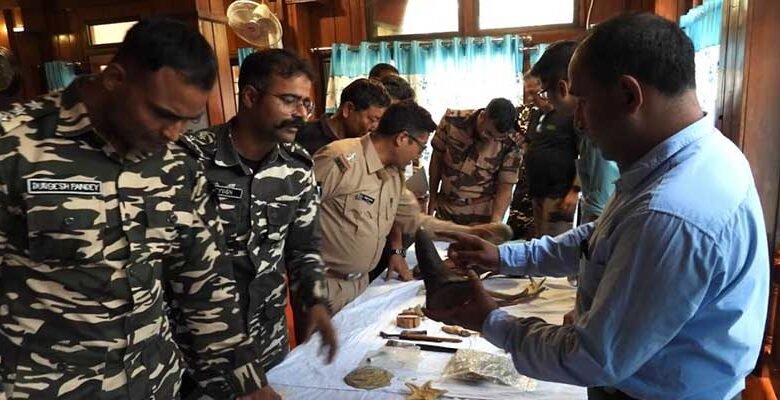
A hands-on session was conducted by Robin Borah from the Guwahati Regional Office of WCCB. During the exercise, participants examined real wildlife contraband specimens, allowing them to develop practical skills in recognising wildlife articles. Such identification skills are considered essential for effective detection of illegal wildlife trade and for ensuring proper seizure documentation during enforcement operations.
By bringing together multiple enforcement agencies on a single platform, the workshop sought to improve coordination, strengthen operational preparedness and facilitate information sharing among authorities.
The organisers noted that such capacity-building initiatives form part of broader efforts to address wildlife trafficking in key transit landscapes. Through training programmes and collaborative platforms, conservation organisations and enforcement agencies aim to strengthen institutional responses to illegal wildlife trade in India.