APFRA Rules Should Be Brought Into Force Without Delay, Says IFCSAP
The Indigenous Faith & Cultural Society of Arunachal Pradesh says the consultative process on APFRA Rules has concluded and expects the government to act on the committee's recommendations within a reasonable timeframe.
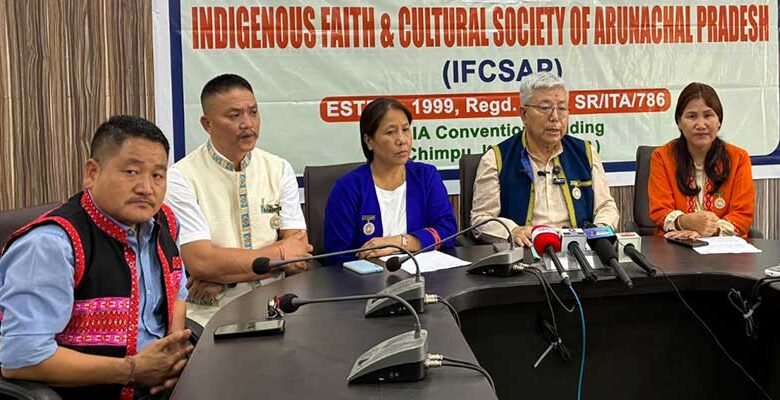
ITANAGAR: The Indigenous Faith & Cultural Society of Arunachal Pradesh (IFCSAP) has urged the state government to take timely steps towards notifying the Rules under the Arunachal Pradesh Freedom of Religion Act, 1978 (APFRA), following the submission of a report by the High-Power Committee constituted to examine matters relating to the implementation of the Act.
In a statement issued on Monday, IFCSAP said the report concerning the framing and implementation of the Rules had been formally submitted before the committee after an extensive consultative process involving various stakeholders.

The organization expressed appreciation to the Government of Arunachal Pradesh and the High-Power Committee for conducting what it described as a democratic, transparent and participatory consultation process. According to the society, the consultations provided an opportunity for different stakeholders to present their views on issues relating to the implementation of the Act and the framing of the Rules.
Also Read- NCC Cadets Witness Modern Military Equipment Display at NERIST
With the consultative exercise now concluded, IFCSAP said it expects the state government to consider the committee’s recommendations and bring the Rules into force within a reasonable timeframe in accordance with legal and constitutional provisions.
The organization stated that it would continue to monitor developments related to the implementation process and, if necessary, pursue legal remedies available under law to ensure compliance with the directions of the Gauhati High Court and the applicable statutory framework.
Addressing ongoing public discussions surrounding the legislation, IFCSAP clarified that the question of repealing the Arunachal Pradesh Freedom of Religion Act, 1978, was not part of the mandate assigned to the High-Power Committee. It stated that individuals or organizations seeking repeal of the Act may pursue such objectives through legislative, constitutional or judicial channels.
Also Read- Tawang Students Sensitized on Gender Equality, Mental Health and Career Opportunities
According to IFCSAP, the committee’s mandate was limited to matters concerning the implementation of the existing law and the framing of Rules under it, and did not extend to examining the validity or continuation of the parent legislation.
The society also noted that during proceedings before the Gauhati High Court, the issue of framing Rules under the APFRA remained uncontested. It expressed surprise over certain statements made during the concluding phase of the consultation process regarding the framing of the Rules.
IFCSAP further stated that the state government had provided adequate opportunities to all stakeholders, including the Arunachal Christian Forum (ACF), to present their concerns and viewpoints during the consultation process. It emphasized that meaningful participation and constructive engagement are essential for strengthening democratic decision-making and fostering consensus.
Also Read- Arunachal Pradesh Signs MoU with NIT for AI Centre of Excellence
Rejecting claims that the proposed Rules are directed against any specific religion or religious community, IFCSAP maintained that the framing of Rules is a statutory requirement intended to facilitate the implementation of an existing law enacted by the legislature.
The organization also observed that once notified, the Rules would become public documents accessible to citizens, thereby enhancing transparency, accountability and informed public discourse.
At the same time, IFCSAP pointed out that subordinate legislation such as Rules can be amended, reviewed or modified over time in response to changing circumstances, public interest considerations and constitutional principles.
The society cautioned against attempts to delay or obstruct the notification process through public pressure or confrontational methods, arguing that differences of opinion should be addressed through constitutional procedures, legal mechanisms and institutional engagement.
Reaffirming its commitment to indigenous rights, religious freedom, social harmony and peaceful coexistence, IFCSAP expressed hope that all stakeholders would continue engaging in constructive dialogue while allowing the government to discharge its legal responsibilities in accordance with the Constitution and the laws of the land.