China Tests 19-Seater All-Electric Aircraft, Eyes Future of Green Aviation
The battery-powered aircraft completed a 60.4-km test flight in Shandong, marking a major milestone in China's development of electric regional aviation.
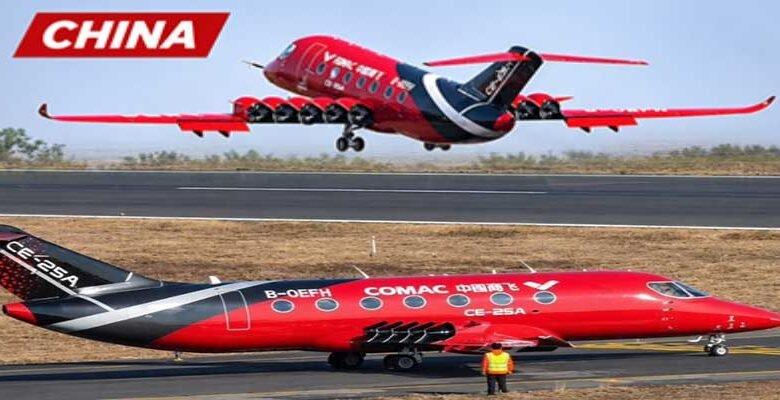
BEIJING- China has achieved a significant milestone in electric aviation after its state-owned aircraft manufacturer, Commercial Aircraft Corporation of China (COMAC), successfully completed the first crewed flight of its CE-25A all-electric commercial aircraft.
The 10-tonne-class aircraft completed its maiden piloted flight on November 14 in Binzhou, Shandong Province, carrying two pilots and one flight-test engineer. The test lasted 57 minutes and 46 seconds, including 16 minutes and 38 seconds of actual flight, during which the aircraft covered approximately 60.4 kilometres.

COMAC reported that the aircraft operated normally and all performance indicators met expectations.
Designed primarily for short-distance commercial travel between cities, the CE-25A has a proposed passenger capacity of 19 and a maximum take-off weight of 10 tonnes. Its stated design targets include a cruising speed of 300 kilometres per hour, a cruising altitude of approximately 2,400 metres and a range of around 400 kilometres.
One of the aircraft’s distinctive features is its distributed electric propulsion system, comprising 10 electric ducted fans mounted along the wings, with five on each side. The system replaces conventional fuel-powered aircraft engines with battery-powered electric propulsion.
From Uncrewed Tests to Crewed Flight
The November 14 flight was not the aircraft’s first test flight. The CE-25A had already completed 19 uncrewed autonomous flight tests following its maiden unmanned flight on February 2, 2026.
The successful crewed flight represents another important stage in the aircraft’s development as COMAC moves towards the regulatory certification process.
The Civil Aviation Administration of China (CAAC) has accepted COMAC’s application for a type certificate, formally initiating the airworthiness review. However, acceptance of the application does not mean the aircraft has received certification or approval to carry commercial passengers.
Also Read- Mamang Dai, Kaling Borang Bring 8th Arunachal Literature Festival to a Poetic Close
COMAC, CATL Among Development Partners
The CE-25A programme is a collaborative initiative involving COMAC, Chinese battery manufacturer Contemporary Amperex Technology Co. Limited (CATL), Shanghai Jiao Tong University and other partners.
The collaboration brings together expertise in aircraft manufacturing, battery technology and electric propulsion systems as China seeks to strengthen its position in the emerging electric aviation sector.
While the aircraft’s proposed range is approximately 400 kilometres, the maiden crewed flight covered only 60.4 kilometres. Its full operational range, passenger-load performance and battery endurance will therefore require further testing and validation.
Important technical considerations, including battery energy density, thermal management, charging requirements and aviation safety, will also be central to the certification process.
Commercial Operations Still Some Way Ahead
The CE-25A is being developed primarily for short-haul regional routes, rather than competing directly with conventional passenger aircraft used for medium- and long-distance travel.
Although the successful crewed flight marks a notable technological achievement, several stages of testing and regulatory approval remain before the aircraft can enter commercial service.
COMAC has not announced an entry-into-service date, launch customer, production schedule or pricing details.
The development forms part of China’s broader efforts to advance new-energy technologies and reduce carbon emissions in transportation. If successfully certified and commercially deployed, the CE-25A could contribute to the development of battery-powered regional air travel.
For now, the focus remains on further flight testing, technical validation and the completion of the airworthiness certification process.