Arunachal Icon Oshong Ering Laid to Rest
Retired IAS officer, prolific writer and Adi cultural icon Oshong Ering is laid to rest at Mirku village, as leaders, institutions and citizens mourn the loss of a pioneering scholar-administrator.
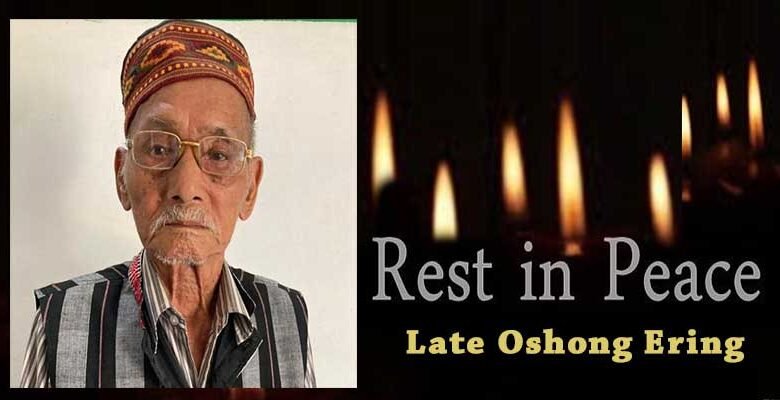
PASIGHAT- Arunachal Pradesh’s first-generation officer and one of its most admired scholar-administrators, retired IAS officer Oshong Ering, was laid to rest at Mirku village near Pasighat on Monday, a day after he passed away at his residence following a prolonged illness.
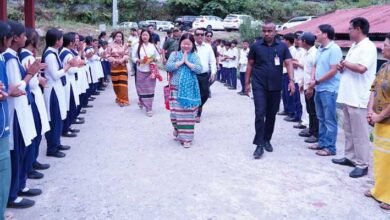
People from various walks of life, including community leaders, former colleagues, admirers and relatives, gathered at his Mirku residence to pay their last respects, describing his death as a profound loss for the state and the Adi community.

Born on February 1, 1937, to late Adul Ering and late Gomyi Gao Ering in ancestral Roing village near Pasighat, Ering belonged to the earliest generation of tribal scholars from Arunachal Pradesh. He began schooling at LP School Pasighat in the 1940s, studied at Sadiya Government Higher Secondary School and Pasighat Middle School, completed his matriculation from the then Government HSS Pasighat, and later pursued higher education at St. Edmund’s College, Shillong.
Also Read- youth groups launch 12-hr Itanagar Bandh; 25 detained
He joined government service around 1960 as Area Superintendent at Pasighat and went on to serve in several key posts, including Deputy Commissioner, Director of Arts & Culture, Director Civil Supplies, Director Relief & Rehabilitation and Registrar of Cooperative Societies.
Across decades of service in Pasighat, Yingkiong, Pangin, Boleng, Mariyang, Anini, Tezu and other regions, Ering earned a reputation for honesty, integrity, humility and unwavering commitment to public welfare. Parallel to his administrative career, he emerged as a prolific writer and cultural icon, contributing extensively to Adi literature, recording cultural knowledge and strengthening the Bogum Bokang Kebang institution.
Scholars and community members remember him as a profound thinker whose philosophical and literary work helped anchor indigenous identity and intellectual continuity amid rapid social change.
Also Read- India issues advisory on travel to China
Condolence messages poured in from political and community leaders. Member of Parliament Tapir Gao termed his demise “a great loss to the State of Arunachal Pradesh, and to all who had the privilege of knowing and working with him”, recalling both his administrative stature and moral influence. Pasighat MLA Tapi Darang, Mebo MLA Oken Tayeng, and former MLAs Kaling Moyong and Bosiram Siram also visited or issued messages, offering heartfelt tributes and highlighting his role in shaping governance and society in the formative decades of the state.
Pasighat West MLA Ninong Ering, paying his last respects, described the late officer as “of impeccable character, simple, grounded and devoted entirely to the people and community”, adding that his life would continue to inspire generations of officers and youth.
East Siang Deputy Commissioner Sonalika Jiwani and Superintendent of Police Pankaj Lamba also condoled the loss, noting that his administrative legacy and personal integrity had left a deep and lasting impact on East Siang and beyond.
Also Read- Doctors Win Fraternity Cup 2025 at JNC Pasighat
The Adi Agom Kébang (AAK), HQ Pasighat, in its condolence message called Oshong Ering a pioneering civil servant, revered philosopher and eminent literary figure of the Adi community. The organisation said his passing had created a vacuum in composition, writing, publication, literary activity, philosophical thought and wider societal development, describing it as an “irrevocable loss” for Arunachal Pradesh in general and the Adi community in particular. According to the AAK, with his departure “the light of literature and epistemology has dimmed”, even as his works and ideas remain a guiding beacon.
After retirement, Ering led a quiet but impactful life, continuing to mentor younger generations and contributing to cultural discourse from the background. He is survived by three sons, three daughters and many grandchildren, who, family members say, were a source of immense joy in his later years. For many in East Siang and across the state, his passing marks the close of a chapter in which one individual’s scholarship, simplicity and public-spirited service helped define what modern leadership rooted in indigenous values could look like.