Chowna Mein Launches First Tai Khamti Heritage Archive Website in Namsai
Deputy Chief Minister Chowna Mein launches the community’s first heritage archive website and releases ‘Lik Loka Ping-Nyep’ as 471 rare manuscripts are digitally preserved.
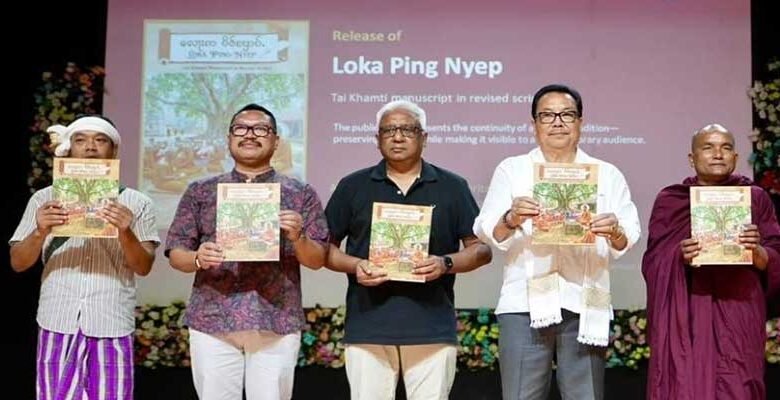
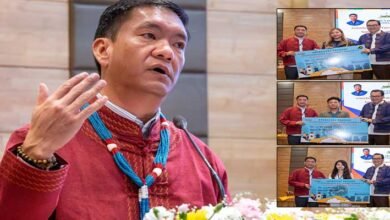
NAMSAI- The Tai Khamti Heritage Digitisation Project reached a significant milestone on Saturday with Deputy Chief Minister Chowna Mein launching the community’s first-ever Tai Khamti Heritage Archive Website and releasing the book Lik Loka Ping-Nyep in Namsai.
The initiative seeks to preserve and strengthen the rich cultural, literary and intellectual heritage of the Tai Khamti community by combining traditional knowledge with digital technology.

The most significant achievement of the project so far is the digital preservation of 471 rare Tai Khamti manuscripts comprising 28,264 pages. The archive will allow scholars, researchers, students and community members to access, study, catalogue, transcribe and translate the manuscripts, opening avenues for further research into Tai Khamti history, language, Buddhism, traditional medicine and indigenous knowledge systems.
Also Read- Khandu Outlines Roadmap for Viksit Arunachal 2047 on 80th Independence Day
The manuscript documentation and digitisation has been undertaken by the Tai Khamti Manuscripts Documentation Committee (TKMDC) in collaboration with the Nanda Talukdar Foundation, under the aegis of the Tai Khamti Heritage & Literature Society (TKHLS).
Speaking at the launch, Mein said the project was not merely a digital intervention but an effort to preserve the language, literature, manuscripts, traditional knowledge and collective memory of the Tai Khamti people for future generations.
He noted that Tai Khamti manuscripts contain material relating to Buddhist philosophy, history, folklore, traditional medicine, customary laws, language, literature and indigenous knowledge, describing them as living records of the intellectual heritage of the community’s ancestors.
Focus on Language and Script
The project also places strong emphasis on protecting the Tai Khamti language and traditional script. Mein said the traditional script has been modified into a tonal script and that 37 Tai Khamti teachers have been appointed to teach Tai Khamti as a third language in schools from Class I onwards.
Another 118 educated youths have received vocational training in the Tai Khamti script and Pali language and are expected to teach the languages in viharas, monasteries and private schools.
Also Read- Mahabodhi Lord Buddha College Gets New Library, Conference Hall and Girl’s Home
Mein appealed to Bhikkhu Sanghas to make viharas centres of learning for the Tai Khamti language and script alongside spiritual and monastic education. He also urged families to encourage children to attend classes in viharas, stressing that language preservation is essential to protecting the community’s age-old literature from extinction.
Five-Phase Preservation Plan
According to the project roadmap, the digitisation initiative will be implemented in multiple phases.
Phase-II will focus on scholarly curation, translation and print revival of selected texts, while Phase-III will cover manuscript authentication and large-scale field digitisation through an application. Phase-IV will focus on audio documentation and language preservation, while Phase-V will document and ethically preserve indigenous traditional medicine knowledge.
The project is also moving beyond written records. An audio recording studio has been established at the Centre for Tai Khamti Language & Folk Culture at Chongkham, where recordings of chants, oral traditions and spoken language have begun. The initiative aims to preserve the community’s living oral heritage alongside its manuscripts.
Community-Led Preservation
Mein emphasised that while the government can facilitate and support heritage preservation, communities themselves must lead the process of protecting their cultural legacy.
He acknowledged the contributions of Bhikkhus, elders, scholars and young members of the Tai Khamti community, particularly those being trained in digitisation and archival techniques. He described these young people as the future custodians of the community’s heritage.
Also Read- Arunachal flash flood: Five Army Personnel Missing, Four Killed in Separate Disasters
The Deputy Chief Minister also appreciated the Nanda Talukdar Foundation team led by Mrinal Talukdar for conceptualising the project, developing its technical framework and undertaking field documentation.
Mein expressed hope that the project would become a model for community-led heritage preservation across Arunachal Pradesh and the country, demonstrating how technology can help preserve cultural roots while making traditional knowledge accessible to future generations.
The programme was attended by Namsai MLA Chau Zingnu Namchoom, former MLA Pinthika Namchoom, Tax & Excise Commissioner C.R. Khampa, Deputy Commissioner Lobsang Tsering, monks and community elders. Members of the Tai Khamti Heritage & Literature Society, resource persons, scholars and contributors were also felicitated for their role in the initiative.