‘Taksing Chalo, Bharat Bachao’: AAPSU Begins March to Arunachal Frontier
Led by General Secretary Mato Bui, the student body says it will meet frontier residents, document their concerns and seek stronger security, connectivity and development along the sensitive border.

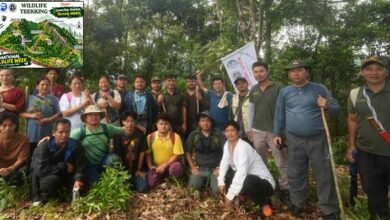
ITANAGAR- The All Arunachal Pradesh Students’ Union (AAPSU) on Thursday began its “Taksing Chalo, Bharat Bachao” march from Itanagar to Taksing in Upper Subansiri district, taking its concerns over frontier security, border infrastructure and the welfare of remote border communities directly to the sensitive India-China frontier.
AAPSU President Meje Taku flagged off the delegation from the Union’s headquarters at the NEFA Club Building in Itanagar. The team is being led by General Secretary Mato Bui and is scheduled to reach Taksing ahead of Independence Day, when the Union plans to hoist the national flag there on August 15. The programme was formally announced in an extraordinary notification issued by AAPSU on July 13.

According to the Union, the mission is intended not merely as a symbolic march but as a ground-level assessment of the situation in the frontier area. AAPSU has said its delegation will interact with local village heads, youth groups and community-based organisations, document their grievances and prepare a report for submission to the governments of Arunachal Pradesh and India.
Also READ- Major Recruitment Reform in Arunachal: PRC, APST, Tribal Language Now Essential
The Union has identified stronger border security, infrastructure and development as key demands arising from the visit. It has also called for greater attention to the safety and welfare of people living in remote frontier settlements.
Allegations of Chinese activity put Taksing in focus
The AAPSU march comes amid renewed public debate over reports of alleged Chinese People’s Liberation Army (PLA) activity in the Taksing area.
AAPSU’s July notification said the decision to visit the area followed “repeated claims and reports” from local residents regarding alleged PLA incursions and activities along the frontier. The Union said such concerns warranted direct assessment and urgent attention from both the Centre and the state government.
However, the allegations remain contested.
Chief Minister Pema Khandu has rejected reports of a fresh Chinese incursion in Taksing, saying there had been no such incursion and that the Indian Army was maintaining the territory.
Also Read- Major Recruitment Reform in Arunachal: PRC, APST, Tribal Language Now Essential
At the same time, a fact-finding committee constituted by the People’s Party of Arunachal (PPA) has made a contrasting assessment, alleging that PLA personnel had denied Indian forces access to some patrolling points in the Taksing area and that traditional grazing and hunting grounds were being affected. The PPA panel’s findings have added another layer to the ongoing controversy.
The conflicting accounts make AAPSU’s stated objective of conducting a ground assessment particularly significant. The Union says it wants to hear directly from frontier residents and place their concerns before the authorities rather than rely solely on reports and claims circulating outside the region.
AAPSU calls border residents the “vanguard”
Flagging off the delegation, Meje Taku said Arunachal’s youth and citizens would not remain silent over concerns relating to the state’s frontier.
Taku stressed that the country’s borders should be treated as a collective responsibility and called for substantial strengthening of infrastructure in border areas.
He also described people living in frontier villages as being on the frontline of national security, arguing that their welfare and security should receive greater attention from the government.
The Union’s stated objectives go beyond the immediate security controversy. Its formal notification lists five goals: assessing the prevailing situation, expressing solidarity with frontier residents, highlighting their concerns and aspirations, urging stronger border infrastructure and security as well as development initiatives, and reaffirming the commitment to India’s territorial integrity and sovereignty.
From a planned visit to a public mobilisation
AAPSU’s decision to travel to Taksing was not announced as a last-minute response to the latest controversy.
Its July 13 notification had already fixed August 13 as the date for the delegation’s departure and August 15 for the flag-hoisting programme at Taksing. It also directed community-based organisations, AAPSU federal units, student bodies and concerned citizens, particularly those in Upper Subansiri, to cooperate with and participate in the programme.
The timing gives the march an additional symbolic dimension. The delegation is scheduled to mark Independence Day at one of Arunachal Pradesh’s remote frontier settlements by hoisting the national flag.
For AAPSU, the message is intended to underline the connection between border communities, national security and territorial sovereignty.
The border village at the centre of attention
Taksing has emerged as a focal point in the latest discussion over the security and development of Arunachal Pradesh’s frontier.
The area lies in Upper Subansiri district in a remote sector of the India-China border, where terrain and connectivity remain major challenges. For residents of such frontier settlements, questions of roads, communication, public services and security are closely linked.
AAPSU says its visit will therefore seek to document not only security concerns but also the everyday grievances and aspirations of people living in these remote villages.
The Union’s formal notification specifically calls for stronger border infrastructure, security and developmental initiatives, indicating that it sees the presence and welfare of frontier populations as an important component of India’s broader border strategy.
August 15 flag-hoisting planned at Taksing
The delegation is scheduled to conclude its programme on August 15, when AAPSU plans to hoist the Indian national flag at Taksing.
The Union has described the programme as a reaffirmation of the commitment of Arunachal Pradesh’s people to India’s territorial integrity and sovereignty.
The immediate significance of the march, however, will depend on what the delegation records on the ground and whether its proposed assessment results in specific recommendations concerning security, connectivity and development.
With official authorities rejecting reports of a fresh Chinese incursion while political and community groups continue to raise concerns about developments along the frontier, the AAPSU visit is likely to keep Taksing and the condition of Arunachal’s border villages firmly in the public spotlight.