Arunachal: Zemithang Teachers Gain Hands-On Training in AI and Robotics
The three-day capacity-building programme trained nine teachers in Artificial Intelligence, robotics, programming, astronomy and activity-based learning, while Tawang DC Namgyal Angmo urged educators to make optimum use of the Future Skills Lab infrastructure.
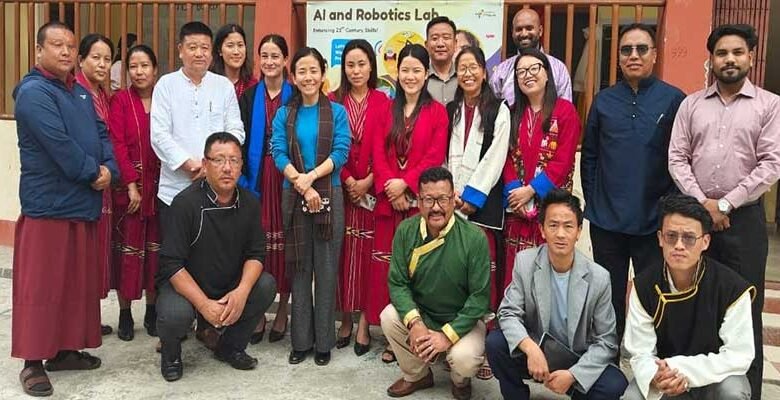
ZEMITHANG- Tawang Deputy Commissioner Namgyal Angmo, on Wednesday attended the valedictory session of a three-day K–10 Future Skills Lab Teacher Training Programme at Government Secondary School, Zemithang, aimed at strengthening technology-enabled and experiential learning in classrooms.
The Deputy Commissioner was accompanied by Additional Deputy Commissioner, Lungla, Tashi Dhondup, and Deputy Director of School Education, Tawang, Hridar Phuntsok.

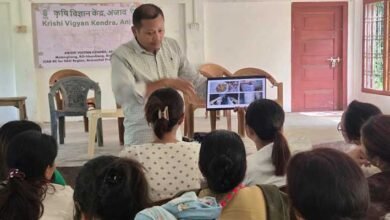
The intensive three-day capacity-building programme was conducted by resource persons from Stempedia and saw the participation of nine teachers from schools in the Zemithang cluster.
The training was designed to equip teachers with practical skills in emerging technologies and activity-based learning methodologies, enabling them to integrate innovation and hands-on learning into regular classroom teaching.
Also Read- Waterlogged Roads, Hidden Potholes and a Superhero: Meet this Spider-Man
The final day of the programme began with a comprehensive review of the concepts covered during the previous two days. The session reinforced the participants’ understanding of programming, Artificial Intelligence, robotics and hands-on learning activities.
Teachers received practical training on the Hand Pose Classifier in PictoBlox and explored its integration with the Quarky robotics controller.
As part of the exercise, the participants developed gesture-controlled robotics projects, providing them with direct experience of how Artificial Intelligence and robotics can be introduced through practical classroom activities.
The approach is intended to move beyond theory and help teachers create learning environments in which students can experiment, build and understand technology through direct participation.
Also Read- Assam Industrialist Ratan Sharma Donates Rs 15 Lakh to Assam CM’s Relief Fund
The programme also included detailed sessions on Science and Mathematics Kits.
Teachers participated in practical experiments designed to strengthen concept-based and experiential learning. The sessions focused on helping educators demonstrate scientific and mathematical concepts through activities rather than relying solely on conventional textbook-based instruction.
Participants were also introduced to the Astronomy Zone, including its learning resources, educational applications and practical demonstrations.
The astronomy component is aimed at encouraging curiosity, observation and scientific temperament among students.
Interacting with the participating teachers, Deputy Commissioner Namgyal Angmo appreciated their enthusiasm and emphasised the importance of preparing students for a rapidly changing technological environment.
She encouraged teachers to make optimum use of the infrastructure available at the Future Skills Lab and integrate Artificial Intelligence, robotics, coding, astronomy and activity-based pedagogy into their regular classroom practices.
The Deputy Commissioner said such tools should be used to make learning more engaging, innovative and relevant to the needs of the 21st century.
ADC Lungla Tashi Dhondup and DDSE Tawang Hridar Phuntsok also encouraged the teachers to effectively utilise the facilities provided under the programme.
They stressed the need to inspire students to develop creativity, critical thinking, problem-solving abilities and scientific inquiry.
The three-day programme concluded with all its stated learning objectives achieved, according to officials.
By the end of the training, the nine participating teachers demonstrated greater confidence and competence in using the resources available under the K–10 Future Skills Lab.
The training is expected to help educators create more engaging, technology-enabled and experiential learning environments for students in the Zemithang cluster.
The programme also reflects the growing emphasis on introducing emerging technologies in school education. However, the long-term impact of such initiatives will depend on the regular use of the facilities, continued teacher engagement and the practical integration of newly acquired skills into classroom teaching.
Following the valedictory programme, Deputy Commissioner Namgyal Angmo inspected ongoing civil works of the Education Department in the Zemithang area.
She also visited Government Upper Primary School, Gispu, where she inspected the ongoing construction of an academic block and teachers’ quarters.
The inspection formed part of the district administration’s review of education infrastructure and ongoing development works in the area.