Arunachal: Himalayan University Leads Biodiversity Study
Himalayan University’s Zoology Department conducted a four-day field expedition in Assam, combining scientific research with community-based ecological learning.
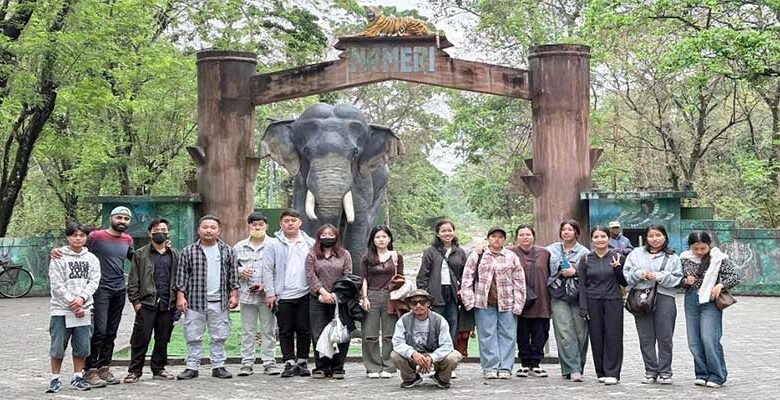
GUWAHATI- A group of postgraduate students from the Department of Zoology at Himalayan University has completed a four-day field exposure programme across riverine landscapes in Assam, aimed at advancing biodiversity assessment and conservation research.
The programme, conducted from March 19 to March 23, was organised in collaboration with the Balipara Foundation under its LEAF (Learning Ecosystem Assessment and Functioning for Resilience) Internship initiative. The expedition was led by Assistant Professor Dr. Anoop Karunakaran, under the guidance of Head of Department Dr. Feroz Ahmad Shergojri, with coordination support from Dr. Bidyut Sarania, Programme Lead for Research and Development at the foundation.

Field-Based Learning and Research
The initiative was designed to bridge the gap between classroom-based learning and field-level ecological realities. Students established their base at Baligaon and undertook intensive fieldwork in restoration sites at Bihaguri in Sonitpur district.
Also Read- Assam Rifles Khonsa Battalion Strengthens Community Ties
The research involved both quantitative and qualitative methods. Students used pitfall trapping techniques to assess ground-dwelling insect populations, contributing to estimates of invertebrate biomass and biodiversity. In addition, hand-collection methods were employed to document species diversity and ecological interactions within the region.
Community Engagement
As part of the programme, students interacted with members of the Mising community, gaining insights into traditional ecological knowledge (TEK) and sustainable living practices in riverine ecosystems. Such engagements were aimed at understanding the socio-ecological dimensions of conservation.
Exposure to Protected Areas
The final phase of the expedition included a field survey at Nameri National Park, where students observed flora and fauna under the guidance of bird experts and forest personnel. The exposure provided practical understanding of biodiversity conservation in protected landscapes.
The programme concluded with a technical session at the Eastern Himalaya Botanical Ark, where participants were introduced to community-led restoration models and modern biodiversity assessment tools.
Academic and Conservation Significance
Officials stated that the programme reinforces the role of experiential learning in building scientific capacity among students. Participants are expected to compile detailed field reports as part of their internship certification.
The collaboration between Himalayan University and the Balipara Foundation is expected to continue, focusing on long-term academic engagement and conservation efforts in the Eastern Himalayan region.