APKVIB Workshop Promotes Natural Fibre Industries to Boost Rural Employment
A training-cum-workshop in Tawang brought together APKVIB, Rajiv Gandhi University and local organisations to explore how scientific innovation, natural fibres and traditional craftsmanship can create sustainable livelihoods..........
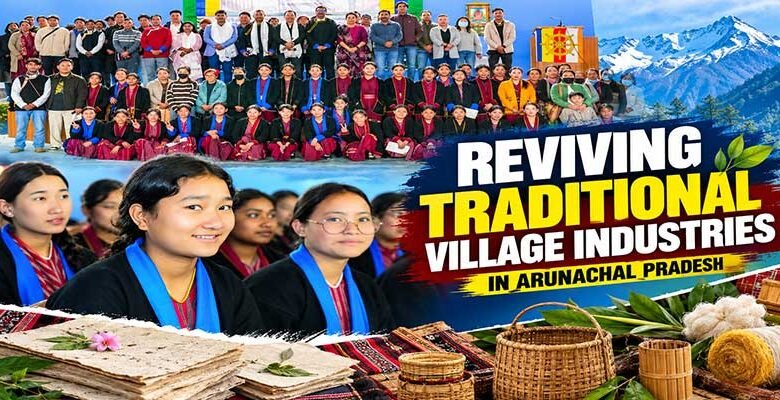
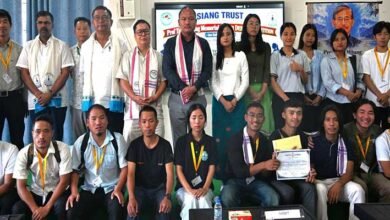
TAWANG: Reviving traditional village industries through scientific innovation, improved production techniques and stronger market linkages was the focus of a training-cum-workshop organised in Tawang on Thursday by the Arunachal Pradesh Khadi and Village Industries Board (APKVIB), in collaboration with the DST–Technology Enabling Centre at Rajiv Gandhi University (RGU), Doimukh, and Khadi Institution Youth Action for Social Welfare (YASW), Tawang.
The programme, titled “Empowering Rural Communities through Utilisation of Natural Fibre for Daphne Handmade Paper and Handicrafts in Arunachal Pradesh”, aimed to explore ways to strengthen rural enterprises by combining indigenous skills with modern technology.

Advocate Maling Gombu, Chairman of APKVIB, attended as the chief guest. Dr Krishna Kanth Pulicherla, Senior Scientist and Director in the Union Ministry of Science and Technology, presided over the programme, while Sonam Nordzin, Zila Parishad Member of Tawang, attended as the guest of honour.
Also Read- NHPC Seeks Forest Clearance for Kamala Hydel Project; 23.4 Lakh Trees Face Felling
Reviving Traditional Industries Through Technology
Addressing the gathering, Gombu stressed the need to strengthen Gramin Udyog by utilising traditional knowledge, indigenous skills and locally available natural resources.
He said traditional practices should be supported by scientific research and technological interventions to improve productivity, encourage innovation and introduce appropriate mechanisation and automation.
He also highlighted the role of the DST–Technology Enabling Centre at Rajiv Gandhi University in facilitating technical support and innovation for village industries.
Gombu called for concerted efforts to revive traditional industries and declining art forms, identifying handmade paper, pottery, silk production, woodcraft, cane and bamboo products, natural dyes, incense-stick making and oil extraction from locally cultivated crops as potential areas for development.
Also Read- After Sela Pass, Traffic Congestion Reported at Bumla Pass
Daphne Handmade Paper and Indigenous Crafts in Focus
Particular emphasis was placed on Arunachal Pradesh’s nearly 1,000-year-old Daphne handmade paper tradition, which the organisers identified as an important part of the state’s indigenous industrial heritage.
The workshop sought to explore how natural fibre-based production and handicrafts could be strengthened through better processing techniques, improved product quality and technological support.
Other traditional sectors highlighted included Eri silk and Oak Tussar silk production, local pottery, woodcraft, cane and bamboo industries, natural dye production, and the extraction of oil from soybean and other locally grown crops.
These activities could provide opportunities for rural employment, entrepreneurship and income generation if supported by appropriate technology, consistent product standards and access to markets.
Also Read- Heavy Traffic Jam at 14,000-ft Sela Pass as Record Tourist Footfall Hits Tawang
Focus on Sustainable Rural Livelihoods
Gombu emphasised that the objective should go beyond preserving traditional industries as cultural practices. He called for making them economically sustainable, commercially competitive and attractive to younger generations.
He also stressed stronger collaboration among APKVIB, scientific institutions, artisans and community organisations to connect traditional craftsmanship with modern production methods.
Delivering the keynote address, Dr Rakesh Jain, an expert with the United Nations Industrial Development Organization (UNIDO) and former Director of the Kumarappa National Handmade Paper Institute under the Khadi and Village Industries Commission, highlighted the livelihood potential of natural fibre-based industries.
He underscored the importance of skill development, technological advancement and market-oriented production in strengthening rural enterprises and improving the economic prospects of artisan communities.
Also Read- Seppa to Host Three-Day Indigenous Youth Festival from November 12
Community Participation and Institutional Support
Guest of honour Sonam Nordzin highlighted the importance of grassroots participation in promoting rural livelihoods and entrepreneurship. She encouraged local communities to use their traditional skills and available resources to develop sustainable economic opportunities.
Dr Rahul Chandra Kushwaha of the DST–Technology Enabling Centre, Rajiv Gandhi University, delivered the welcome address, while Tenzin Samcho, Secretary of YASW, proposed the vote of thanks.
The workshop highlighted the potential of integrating traditional knowledge, scientific expertise and institutional support to revitalise village industries across Arunachal Pradesh.
The longer-term challenge will be to translate these discussions into practical support for artisans, including training, access to suitable technology, reliable raw materials, product development and market connections. Such measures could help preserve indigenous craftsmanship while creating viable livelihood opportunities for rural communities.