Governor KT Parnaik Stresses Community-Led Biodiversity Conservation in Arunachal Pradesh
During a meeting with State Biodiversity Board Chairman Hawa Bagang in Itanagar, Governor KT Parnaik emphasised documenting indigenous ecological knowledge, strengthening village-level conservation institutions and ensuring development progresses alongside environmental protection.
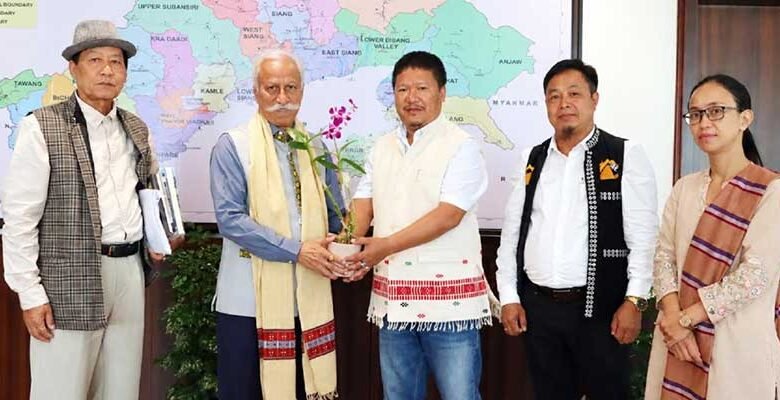
ITANAGAR- Arunachal Pradesh Governor Lt Gen KT Parnaik (Retd.) has called for integrating indigenous traditional knowledge with scientific research to strengthen biodiversity conservation, emphasising the role of local communities in protecting the state’s forests, wildlife and biological resources.
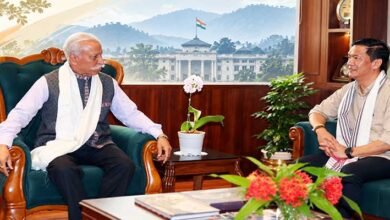
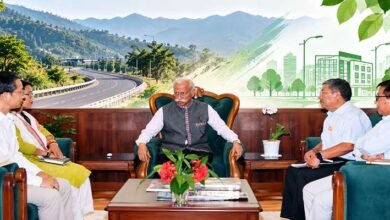
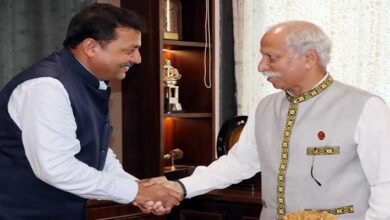
The Governor made the observations during a meeting with Hawa Bagang, Chairman of the Arunachal Pradesh State Biodiversity Board (APBB), at Lok Bhavan in Itanagar on Thursday. Bagang briefed the Governor on initiatives aimed at conserving biodiversity, protecting biological resources and promoting their sustainable use.

Parnaik highlighted the ecological knowledge accumulated by indigenous communities over generations, particularly regarding forests, medicinal plants, wildlife, sacred groves and sustainable resource management.
He urged the Board to systematically document, preserve and promote this knowledge in collaboration with local knowledge holders, ensuring that traditional practices complement scientific approaches to conservation.
Also Read- NHPC Seeks Forest Clearance for Kamala Hydel Project; 23.4 Lakh Trees Face Felling
Community Participation at the Centre of Conservation
The Governor identified habitat loss, climate change, unsustainable exploitation of natural resources and the gradual erosion of traditional knowledge as key challenges requiring coordinated action.
He stressed the need to strengthen Biodiversity Management Committees (BMCs) and ensure the effective preparation and maintenance of People’s Biodiversity Registers (PBRs), which document locally available biological resources and associated traditional knowledge.
He also called for engaging young people, students, researchers and village institutions in conservation programmes, while promoting sustainable livelihood opportunities linked to responsible management of natural resources.
Such participation, he emphasised, would help communities take a more active role in protecting their ecological heritage.
Also Read- After Sela Pass, Traffic Congestion Reported at Bumla Pass
Traditional Knowledge and Scientific Research
Arunachal Pradesh’s indigenous communities possess extensive knowledge of local ecosystems, including the uses of medicinal plants, customary conservation practices and the management of natural resources.
The Governor called for preserving this knowledge through systematic documentation and collaboration between communities, researchers and conservation institutions.
Effective documentation could support biodiversity research and help ensure that traditional ecological practices are passed on to younger generations. Such efforts would also need to respect the rights of knowledge holders and recognise the contribution of indigenous communities.
Also Read- Heavy Traffic Jam at 14,000-ft Sela Pass as Record Tourist Footfall Hits Tawang
Development and Conservation Must Progress Together
Parnaik urged the Biodiversity Board to make conservation a people’s movement, encouraging citizens—particularly the younger generation—to learn from village elders, revive sustainable traditional practices and take pride in the state’s ecological wealth.
He stressed that economic development and environmental protection should progress together, with the objective of safeguarding natural resources for future generations.
Responding to the Governor’s observations, Bagang expressed his commitment to undertaking concrete initiatives to strengthen biodiversity conservation across Arunachal Pradesh.
The meeting underscored the importance of combining scientific research, indigenous knowledge and community participation in addressing environmental challenges and protecting the state’s rich biodiversity.