After Sela Pass, Traffic Congestion Reported at Bumla Pass
A long queue of vehicles was witnessed at Bumla Pass on October 21, a day after heavy congestion at Sela Pass, highlighting traffic management challenges on popular high-altitude routes in Arunachal Pradesh.
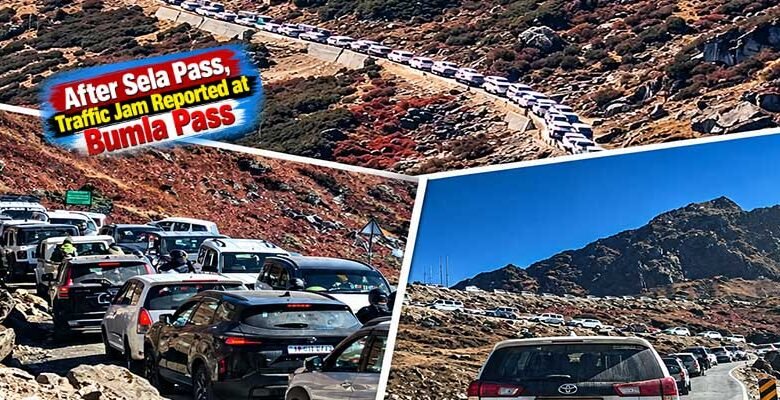
TAWANG- A long queue of vehicles was witnessed at Bumla Pass on October 21, causing traffic congestion along the mountainous route in Arunachal Pradesh, a day after heavy traffic was reported at Sela Pass on October 20.
The latest congestion highlights the traffic management challenges on high-altitude roads around Tawang, a popular destination for tourists visiting the eastern Himalayas.

Travellers heading towards Bumla Pass have been advised to remain patient, follow traffic instructions and plan their journeys accordingly.
Also Read- Heavy Traffic Jam at 14,000-ft Sela Pass as Record Tourist Footfall Hits Tawang
High-Altitude Pass Near the Indo-China Border
Bumla Pass is situated at an altitude of approximately 15,200 feet (4,600 metres) along the India-China border in Arunachal Pradesh, around 37 kilometres north of Tawang.
The mountain pass is a prominent destination for visitors to the region. However, its high altitude and mountainous approach require travellers to exercise caution and follow applicable travel and security instructions.
Also Read- Seppa to Host Three-Day Indigenous Youth Festival from November 12
Traffic Management Remains a Concern
The vehicle queues reported at Bumla Pass followed congestion at Sela Pass on October 20, when long lines of vehicles were reported along the mountain road amid heavy tourist movement.
The incidents highlight the importance of effective traffic regulation, coordination among authorities and adequate planning during periods of increased visitor arrivals.
Narrow mountain roads and high-altitude conditions can complicate vehicle movement, making it important for motorists to follow official instructions and avoid actions that could obstruct traffic or create safety risks.
Travellers are advised to check the latest local advisories before setting out and allow sufficient time for their journeys.
The latest congestion underscores the need to manage growing tourist movement on Tawang’s mountain routes while prioritising road safety and the travel experience.