FTII Itanagar Holds Gender Sensitisation Session on LGBTQIA+ Representation in Cinema
The orientation-week session brought students into an interactive discussion on gender, sexuality, lived experiences and responsible representation of LGBTQIA+ and Indigenous communities.

JOTE/ITANAGAR- The Gender Awareness Committee of FTII Itanagar organised a gender sensitisation session during the Orientation Week for its second batch, bringing filmmaking students into an interactive discussion on gender, sexuality, identity, lived experiences and their representation in cinema.
The session was led by Sawang Wangchha, founder of AP QueerStation, along with Liyom of AP QueerStation. Rather than limiting the discussion to the visibility of LGBTQIA+ identities on screen, the session examined how communities are portrayed, the narratives through which audiences understand them and the assumptions that can shape such representations.

Focus on Arunachal’s diverse communities
A key aspect of the discussion was its focus on the social and cultural context of Arunachal Pradesh. The facilitators discussed the LGBTQIA+ acronym and the diverse identities and experiences it encompasses while emphasising that ideas about gender and identity do not emerge from a single cultural framework.
The session also touched upon identities and social spaces within tribal communities of Arunachal Pradesh, including Mumbar, Mumbal and others, opening a broader discussion on how local histories, cultures and social structures can offer different ways of understanding identity.
Also Read- Arunachal Notifies New Recruitment Criteria; AAPSU Welcomes Move, Warns Against Dilution
For students beginning their filmmaking journey, Wangchha encouraged them to travel across Arunachal Pradesh, observe different communities and engage directly with people’s experiences.
The emphasis, according to the session material, was on listening and understanding communities rather than treating them simply as subjects to be represented. Students were encouraged to spend time with people and understand the contexts from which stories emerge.
Lived experience becomes part of the conversation
Liyom shared her lived experience as a trans woman, adding a personal dimension to discussions around transgender identities and the everyday challenges often overlooked when such issues are discussed only in abstract terms.
Students participated in an interactive question-and-answer session, allowing them to seek clarification and engage directly with the issues being discussed.
Students urged to challenge stereotypes in cinema
The discussion also examined longstanding stereotypes associated with queer characters, particularly in the Hindi film industry. The session highlighted how LGBTQIA+ characters have historically been portrayed through tropes involving ridicule, comic relief, tragedy, spectacle or other limited narrative roles.
Students were encouraged to critically examine these patterns and consider the responsibility they will carry as future filmmakers in creating characters and stories that move beyond conventional representations.
Also Read- Daporijo Conducts Civil Defence Blackout Drill to Test Emergency Preparedness
Wangchha emphasised that inclusive storytelling should extend beyond sexual and gender minorities to include the lived experiences of Indigenous communities in Arunachal Pradesh and other underrepresented communities across India.
The session therefore placed responsible representation within the wider context of India’s cultural, social and linguistic diversity, encouraging students to view cinema as a means of bringing lesser-heard voices, histories and experiences to wider audiences.
Emphasis on research and avoiding generalisations
A central message of the session was the need to avoid generalising about communities.
Students were encouraged to research, engage with people and understand specific social contexts rather than reproducing existing assumptions about a particular community. The discussion stressed that no community can be understood through a single experience or identity.
The session was presented not as a definitive lesson on gender or sexuality, but as an introduction to an ongoing process of learning, questioning and unlearning.
For the incoming batch of FTII Itanagar students, the session offered a framework for carrying these questions beyond the classroom and into their future work as filmmakers.
The session concluded with a reflection that responsible representation begins not with having all the answers, but with being willing to ask better questions and remain open to learning.
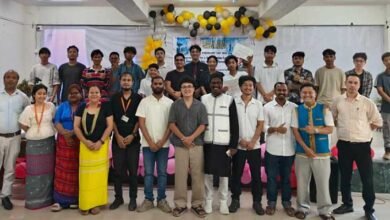
Photographs included with the session material show students participating in the auditorium discussion, an interactive presentation, group activities and a concluding group interaction.