
Rare Himalayan Fish Recorded for the First Time from High-Altitude Lake in Tawang
Scientists have recorded the presence of the rare Himalayan fish Schizopygopsis waddellii in India for the first time, in Tawang district of Arunachal Pradesh.
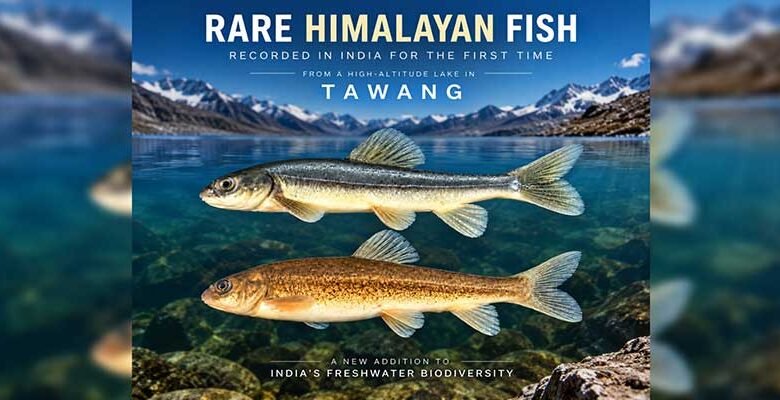
TAWANG- Scientists have recorded the presence of the rare Himalayan fish Schizopygopsis waddellii in India for the first time, following its documentation from a natural high-altitude lake in Tawang district of Arunachal Pradesh.
The fish was recorded from a lake situated at an elevation of approximately 12,800 feet (3,900 metres) above sea level, adding a significant new record to India’s freshwater fish diversity. The finding also provides new information on the distribution of freshwater fish species inhabiting the high-altitude Himalayan region.

The study was undertaken by scientists from the ICAR-Central Institute of Coldwater Fisheries Research (ICAR-CICFR) in collaboration with the Department of Fisheries, Government of Arunachal Pradesh, and the Shar-Tso Committee.
Also Read- Chowna Mein Calls for Collective Efforts to Protect Rivers and Biodiversity
Schizopygopsis waddellii is a high-altitude cyprinid fish associated with cold-water Himalayan and Tibetan aquatic environments. Prior records of the species have been reported from the Tibetan Plateau and China, making its documentation in Tawang significant from a biogeographical perspective.
The Tawang record represents a substantial extension of the species’ known geographical distribution and indicates that high-altitude aquatic ecosystems in the eastern Himalaya may support fish species whose occurrence in India has remained undocumented.
From an ecological perspective, the finding is significant because high-altitude lakes are relatively isolated freshwater systems characterised by low temperatures, limited nutrient availability, high elevation and specialised aquatic habitats. Such environmental conditions can support distinctive biological communities adapted to extreme mountain conditions.
Also Read- Third Edition of Jajinja: Angba-Bingba Held in Pasighat
The discovery also highlights the importance of systematic biodiversity surveys in Arunachal Pradesh, particularly in remote high-altitude lakes and water bodies that remain comparatively understudied. Scientific documentation of species distribution is essential for understanding biogeographical patterns, ecosystem structure and potential conservation requirements in the eastern Himalayan region.
The researchers’ collaboration with the state Fisheries Department and the Shar-Tso Committee demonstrates the value of combining scientific expertise, local knowledge and field-level support in documenting biodiversity in difficult-to-access mountain environments.
Further taxonomic, ecological and genetic studies could help establish the population status, habitat requirements and broader distribution of Schizopygopsis waddellii in the Himalayan region.
Also Read- Chowna Mein Calls for Preservation of Indigenous Languages and Cultural Heritage
The Tawang record therefore represents not only a new entry in India’s freshwater biodiversity inventory but also evidence of the biological significance of Arunachal Pradesh’s high-altitude aquatic ecosystems, underscoring the need for continued scientific exploration and long-term monitoring of these fragile habitats.