Arunachal: Chowna Mein Calls for Balance Between Growth and Nature
At a Van Mahotsav programme in Itanagar, Deputy Chief Minister Chowna Mein calls for sustained plantation care, biodiversity protection and development rooted in environmental sustainability.
ITANAGAR: Arunachal Pradesh Deputy Chief Minister Chowna Mein on Monday called for development to be balanced with environmental conservation, saying sustainability must remain at the core of planning in an ecologically sensitive state.
Mein was addressing a Van Mahotsav programme organised by the Botanical Survey of India’s Arunachal Pradesh Regional Centre in collaboration with the G.B. Pant National Institute of Himalayan Environment’s North East Regional Centre in Itanagar.

The programme was held under the theme, “Initiative for a Green Earth through Plantation Drive-cum-Training Programme on Capacity Building in Taxonomy and Ethnobotany.”
The celebrations included a plantation drive at the Botanical Survey of India campus, where Mein joined scientists, academicians, researchers, NCC cadets, students and other participants in planting saplings.
Addressing the gathering, the Deputy Chief Minister said true progress lies in embracing modernity while remaining rooted in culture and tradition.
Also Read- Arunachal Governor, 4 Corps GOC Discuss Border Security
He urged young people to preserve and promote Arunachal Pradesh’s cultural heritage and indigenous knowledge systems, noting that traditional practices have enabled communities to live in harmony with nature for centuries.
Mein said biodiversity, cultural diversity and sustainable development are closely interconnected.
He appreciated the efforts of the Botanical Survey of India and the G.B. Pant National Institute of Himalayan Environment in promoting scientific research, environmental awareness and capacity building in taxonomy and ethnobotany, particularly among students and young researchers.
Focusing on afforestation, Mein said tree plantation should not remain a ceremonial exercise and must be followed by sustained care and monitoring.
Also Read- Mishmi-land Musings Second Edition Released
Expressing concern over the high mortality rate of planted saplings, particularly along roadsides and in public institutions, he called on schools, government departments, community organisations and citizens to take collective responsibility for nurturing trees after plantation drives.
“Planting a sapling is only the beginning. Our responsibility continues until that sapling grows into a healthy tree. Every plantation drive should be measured not by the number of saplings planted but by the number of trees that survive,” Mein said.
His remarks highlighted a recurring challenge in plantation programmes, where the number of saplings planted is often recorded but long-term survival and maintenance receive less attention.
The Deputy Chief Minister highlighted Arunachal Pradesh’s ecological wealth and the wide range of ecosystems found across the state, from tropical evergreen and subtropical forests to temperate, sub-alpine and alpine regions.
Also Read- Also Read- Scientists Decode Genome of Siangmi Mithun
He noted that researchers continue to discover new species of plants, insects, amphibians, fish and wildlife in the state, underscoring its ecological significance.
Mein called for stronger efforts to conserve rare and endangered plant species facing growing threats from habitat degradation and climate change.
He also encouraged students and young researchers to develop curiosity and scientific temperament, saying research in taxonomy and ethnobotany plays an important role in documenting and conserving the region’s biodiversity.
Mein said environmental conservation and sustainable development should not be viewed as competing objectives.
Referring to ecological restoration initiatives, he said protecting forests, rivers and watersheds can safeguard biodiversity while strengthening livelihoods, improving water security and supporting rural development.
He also expressed concern over indiscriminate hunting and declining populations of birds and wildlife.
The Deputy Chief Minister appealed to communities to protect nature and promote responsible eco-tourism, birdwatching, trekking and other nature-based activities that can generate livelihoods without undermining the environment.
Such activities, he said, could provide economic opportunities while encouraging communities to conserve the natural assets on which those livelihoods depend.
Mein highlighted the deep cultural and spiritual relationship between Arunachal Pradesh’s indigenous communities and the natural environment.
He said traditional respect for forests, rivers, mountains and natural resources offers important lessons for sustainable living and should continue to guide future development.
The Deputy Chief Minister said climate change, global warming, floods, landslides and soil erosion were reminders of the need to maintain ecological balance.
“Development must always be planned with environmental sustainability at its core,” he said.
Mein also referred to Prime Minister Narendra Modi’s description of the Northeast as “Ashtalakshmi,” saying the region’s natural wealth, cultural diversity and strategic importance must be recognised in the country’s development process.
He said the vision of Viksit Bharat @2047 would require inclusive development of the Northeast while protecting its biodiversity and cultural heritage.
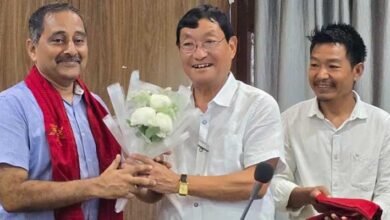
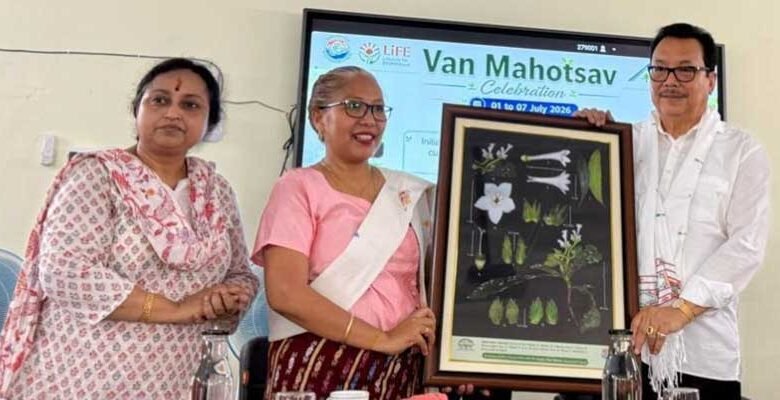
During the programme, Mein was presented with Ophiorrhiza chownaii, a newly described plant species named in his honour in recognition of his contributions to environmental conservation, biodiversity protection and sustainable development.
Expressing gratitude for the honour, he dedicated it to the people of Arunachal Pradesh and reaffirmed his commitment to protecting the state’s natural heritage.
The inaugural programme was attended by Dr Krishna Chowlu, Scientist and Head of Office, Botanical Survey of India, Arunachal Pradesh Regional Centre; Dr Paromita Ghose, Head of Office, G.B. Pant National Institute of Himalayan Environment, North East Regional Centre; Dr Arindam Barman, Head of Department at Rajiv Gandhi University; Samudra Singh, Commandant, NCC; and scientists, academicians, researchers and students.