Arunachal: National Seminar on IKS Concludes at SCCZ
Two-day seminar at Saint Claret College, Ziro, examines Indigenous Knowledge Systems, sustainability, and trans-disciplinary research.
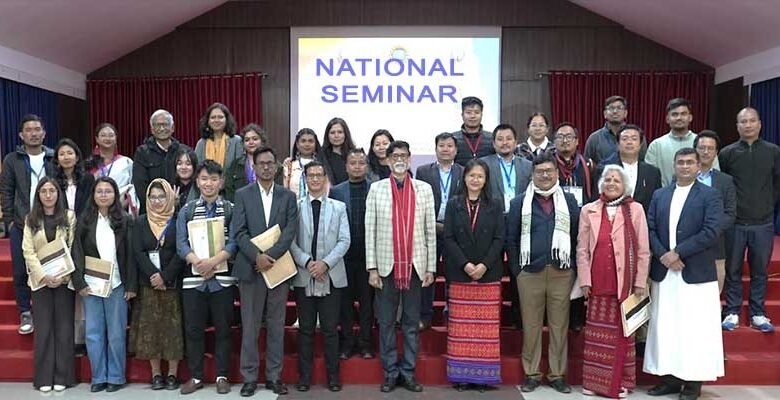
ZIRO- A two-day national seminar on “Indigenous Knowledge Systems: Implications, Strategies and Sustainability” concluded at Saint Claret College (Autonomous) in Ziro on April 11. The seminar was organised by the Department of Anthropology of the college, with sponsorship from the Indian Council of Social Science Research, in collaboration with AMA-ABA Multipurpose Co-operative Society Ltd..
Delivering the inaugural keynote, Sarit K. Chaudhuri, Vice Chancellor of Alipurduar University, highlighted the complexity of Indigenous Knowledge Systems (IKS), particularly in the tribal contexts of Northeast India. He noted that such knowledge systems are shaped by interconnected cultural, ecological, and historical factors.

He also underlined the role of institutions such as museums, describing them as “generators of ideas” capable of contributing to the revitalisation of indigenous traditions. At the same time, he cautioned that translating oral traditions into written form may alter their dynamic nature, introducing what he termed “oral fixity.”
Also Read- RIWATCH Hosts Orientation on Indigenous Languages
The valedictory keynote was delivered by Nishamani Kar of the Department of Geography at Rajiv Gandhi University. He echoed earlier observations on the significance of institutional spaces such as museums in preserving Indigenous Knowledge Systems, while noting the need for improved curation and development, particularly within Arunachal Pradesh.
Prof. Kar further observed that the seminar’s research papers avoided romanticising Indigenous Knowledge Systems, instead presenting grounded and critical perspectives. He referenced the continuing relevance of Mahatma Gandhi’s ideas in discussions on sustainability and community-based knowledge practices.
Also Read- Arunachal Prepares for Census 2027 Rollout
The seminar also reflected the trans-disciplinary approach encouraged by the National Education Policy 2020, as evident in the diverse themes and methodologies presented. Among the notable discussions was a paper titled “Walls with Feelings: Landscaping the Textual Décor of Itanagar,” which emphasised the importance of incorporating local languages in public communication for cultural representation.
The Best Paper Award was conferred on Sonam Sultana Shah for her study on ecofeminism, Indigenous Knowledge Systems, and representations of women in Hindi OTT platforms.
Outstanding Paper Presenter awards were presented to Loder Dulley, Lalhmingmawia, Saepha Swamma, and Janny Sukushi Toppo for their respective research contributions. The awards were sponsored by AMA-ABA Multipurpose Co-operative Society Ltd.
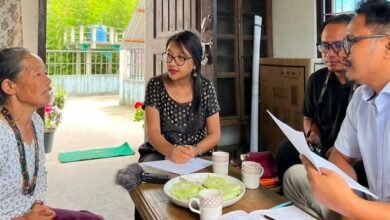
The seminar witnessed participation from scholars, researchers, and students, facilitating discussions on the role of Indigenous Knowledge Systems in shaping sustainable and culturally grounded futures.