
Smart Alert System Installed to Reduce Tiger Conflict
Wildlife Trust of India introduces ANIDERS early-detection technology in Sundarbans to strengthen non-lethal mitigation of human–tiger conflict in vulnerable forest fringe villages.
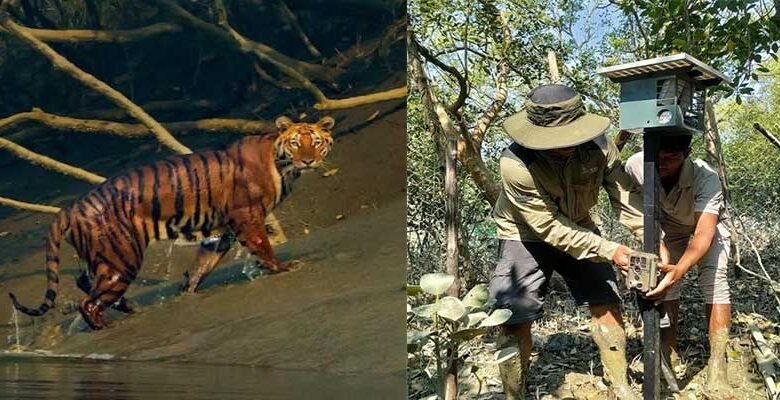
SUNDARBANS (WEST BENGAL)- In an effort to reduce human–tiger conflict in the Sundarbans, the Wildlife Trust of India (WTI), in collaboration with the South 24 Parganas Forest Division, has introduced the Animal Intrusion Detection and Repellent System (ANIDERS) in vulnerable areas of the Raidighi Range. The pilot initiative aims to enhance early-warning mechanisms and prevent big cats from entering villages located along the forest fringes.
Several settlements in the Kultali block share boundaries with tiger habitats and experience seasonal animal ingressions, particularly during winter months. Officials said the installation of ANIDERS devices, along with camera traps, seeks to strengthen monitoring and response strategies in the Herobhanga-09 forest compartment.

Also Read- PM SHRI Students Visit ICAR Basar for Agri Exposure
ANIDERS is a non-lethal, technology-driven system designed to detect animal movement using motion-sensing mechanisms. Each device can cover approximately 25 to 30 metres within a 180-degree angle and operates through solar-powered panels. The pilot phase is being implemented on a limited scale to evaluate technical feasibility, detection accuracy, and operational reliability in the mangrove ecosystem.
According to project officials, four devices have been installed so far to monitor entry points frequently used by wildlife. The system is expected to help authorities identify vulnerable zones and respond to potential conflict situations before animals reach human settlements. Conservation experts noted that adapting such technologies to the Sundarbans landscape could offer new insights into managing conflict in complex tidal environments.
Also Read- Arunachal Scholar Wins Global Award in Bali
The initiative builds on earlier trials conducted in northern India and represents the first attempt to deploy the technology in a mangrove habitat. In the long term, stakeholders suggest that incorporating early-detection tools into policy planning and conservation budgets could promote sustainable and cost-effective approaches to conflict mitigation.
Additional installations are planned in nearby forest fringe villages, including Gurguria, Nagenabad, and Ambikanagar, as part of the ongoing assessment phase.