Arunachal: Siang Dialogue 3.0 Focuses on NE and National Security
Siang Dialogue 3.0, organised by Red Lantern Analytica, combined student engagement and expert discussions to examine national security, connectivity, and development in India’s North East.
PASIGHAT- Red Lantern Analytica (RLA) organised a series of engagements under its flagship initiative Siang Dialogue 3.0, focusing on the strategic, economic, and national security dimensions of India’s North East. The programme combined a student interaction at Sainik School, East Siang, with an expert-led online panel discussion on economic development and connectivity in the region.
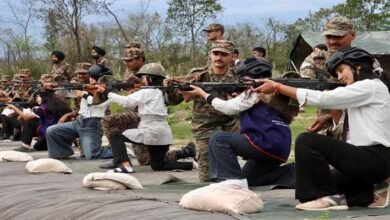
As part of the outreach component, RLA conducted a special student interaction titled “A Conversation with Young Minds on India’s North East and National Security” at Sainik School, East Siang. The session sought to familiarise students with the region’s strategic significance and encourage critical thinking on national security and policymaking.

Welcoming the participants, hosts Aritri Roy and Poulina Banerjee outlined the objectives of Siang Dialogue and introduced RLA as a policy-oriented think tank examining the intersections of diplomacy, security, development, and environmental issues. They highlighted East Siang’s importance within India’s broader strategic framework and described Siang Dialogue as a platform aimed at nurturing informed and responsible future citizens.
Also Read- Pema Khandu Lays Foundation Stone for Govt Quarters in Namsai
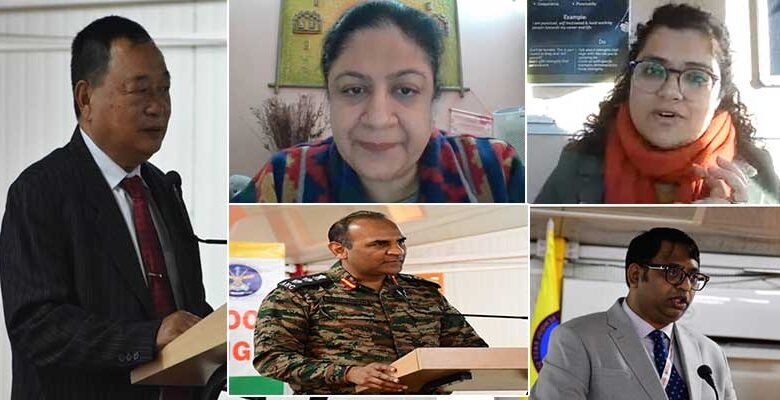
The Chief Guest, Ninong Ering, MLA, West Pasighat constituency, reflected on his long association with RLA and commended its sustained engagement with policy discourse. Emphasising the role of discipline, perseverance, and independent thinking, he urged students to view themselves as future contributors to the nation. He highlighted the importance of think tanks in shaping national debates and cautioned against unreflective conformity, stressing the need for educators to foster critical reasoning among students.
Director of RLA, Dr. Siddhartha Ghosh, spoke on the role of development, institutional strength, and education in enhancing India’s national power. He underscored the importance of Sainik Schools in cultivating discipline and civic responsibility, noting that students would serve the nation both in uniform and in civilian roles. Dr. Ghosh stressed that patriotism is reflected in personal discipline and a commitment to the nation’s long-term interests.
Also Read- Seva Aapke Dwar 2.0 Held at Seba, Debeyar Circle
An interactive student orientation session followed, during which cadets shared their aspirations and discussed how they engage with news and current affairs. The discussion reflected diverse career ambitions spanning the armed forces, medicine, engineering, entrepreneurship, ecology, and civil services. Dr. Ghosh emphasised the importance of clarity in ambition, sustained effort, and skill development.
Sainik School Principal Col. Anant Thapan expressed appreciation to Shri Ering and the RLA team, highlighting the importance of dialogue on national security, particularly in the North East context. He reaffirmed institutional support for helping cadets achieve their aspirations. The session concluded with a vote of thanks by Vanchinathan Y, who noted that the interaction reaffirmed the North East’s centrality in India’s national security discourse.
Also Read- Papum Pare Plans PPP Revival of Tourism Assets
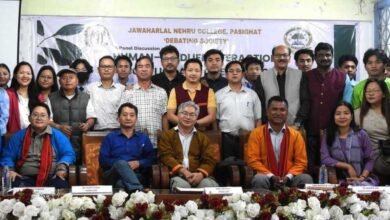
In its second component, RLA convened Online Panel 1 of Siang Dialogue 3.0 on “Economic Development and Connectivity in India’s North East.” The panel brought together scholars and policy experts to examine infrastructure expansion, cross-border connectivity, livelihoods, and the region’s evolving strategic role.
Panelists emphasised that connectivity is both an economic enabler and a strategic imperative under India’s Act East Policy. Dr. Svati Kumari traced the historical constraints on development arising from connectivity gaps and highlighted recent policy-driven efforts to integrate the region through infrastructure and trade corridors.
Also Read- Arunachal University a Top Priority: CM Khandu
Dr. Geetanjali Batra discussed the impact of major projects such as the Dhola-Sadia Bridge and expanding transport networks, noting improvements in accessibility and emerging opportunities in renewable energy, organic farming, entrepreneurship, and cultural preservation.
Dr. Alka Lalhall offered a critical assessment of cross-border connectivity, pointing to opportunities for economic integration alongside challenges arising from geopolitical competition, political instability, and security concerns.
Prof. Pavnesh Kumar highlighted recent infrastructure gains, including roads, bridges, and airports, which are reducing transportation costs and improving market access. He noted that the North East is emerging as a hub for organic agriculture, tourism, and low-cost manufacturing, with investments exceeding ₹4 lakh crore committed, while also flagging challenges related to ecology, land disputes, and youth skill development.
The panel concluded with a consensus that the North East stands at a transformative juncture, where connectivity-led development must be inclusive, sustainable, and sensitive to the region’s ecological and strategic context.