Arunachal Celebrates Indigenous Faith Day 2025
Indigenous Faith Day, observed on December 1, honors Arunachal Pradesh’s diverse tribal belief systems and commemorates Talom Rukbo’s 1978 Donyi-Polo revival movement.
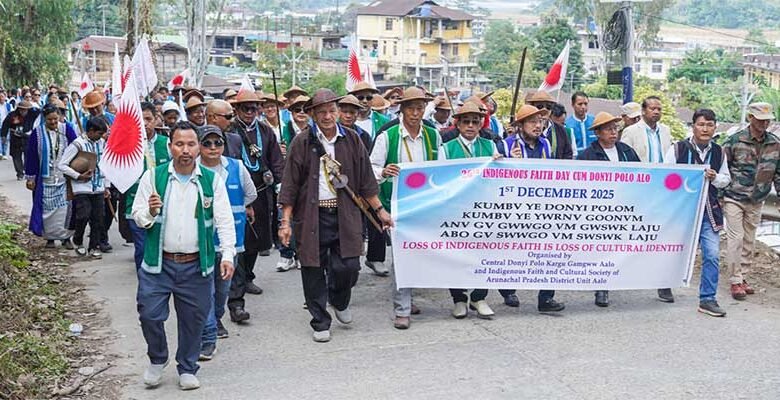
ITANAGAR- Arunachal Pradesh on Monday observed Indigenous Faith Day, an annual state holiday dedicated to celebrating and preserving the diverse ancestral belief systems of its tribal communities. The day, marked every year on December 1, honors the cultural legacy of Arunachal’s numerous tribes and commemorates the revivalist movement launched by Golgi Bote Talom Rukbo, widely regarded as the father of the modern Donyi-Polo faith.
The observance was instituted in 2004 by the Government of Arunachal Pradesh in collaboration with the Indigenous Faith and Cultural Society of Arunachal Pradesh (IFCSAP), amid rising concerns over the erosion of tribal religions and cultural identities.

Also Read- Arunachal’s Rupa Bayor Wins Bronze at WT President Cup Europe
The chosen date recalls December 1, 1978, when Talom Rukbo initiated a movement to systematize indigenous worship practices among the Tani tribes—including the Adi, Nyishi, Galo, and Apatani.
Rooted in nature and ancestral reverence, Donyi-Polo—literally translating to “Sun-Moon”—emphasizes harmony with natural elements such as rivers, forests, and mountains. Many rituals are guided by tribal priests and passed down orally through generations.
Also Read- Arunachalee Woman Yangki Taki Creates History by Presenting Award at International Cricket
Although major religions like Christianity and Hinduism now account for much of the population, nearly 25% of Arunachal’s people continue to practice indigenous faith systems.
Governor Lt. Gen. (Retd.) K.T. Parnaik in his 2025 message said the day serves as a reminder to carry forward “indigenous faith systems followed since time immemorial,” while Chief Minister Pema Khandu described the State’s cultural plurality as its “soul and strength.”
Statewide Celebrations
Across Arunachal Pradesh—including Itanagar, Doimukh, Tawang, Khonsa and Tirap—events featured:
- Processions and awareness rallies led by IFCSAP units
- Ritual prayers and offerings conducted by tribal priests
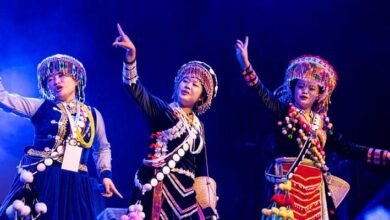
- Cultural performances showcasing traditional attire, folk songs, and dances
- Community seminars and youth forums discussing cultural preservation
- Visits to sacred sites such as Malinithan and Parasuram Kund
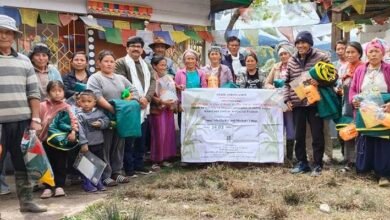
In 2025, celebrations at Rono Ground, Doimukh were particularly notable as IFCSAP marked its 25th anniversary with large gatherings, traditional performances and tributes to Talom Rukbo.
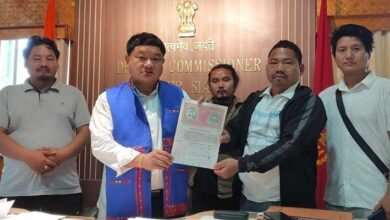
Leaders including Deputy Chief Minister Chowna Mein underscored the need to harmonize tradition with modernity, reflecting the broader state vision of Atmanirbhar Arunachal.
Historical and Cultural Context
Arunachal Pradesh, home to over 100 tribes and sub-tribes, has a long history shaped by prehistoric cultures, references in the Ramayana and Mahabharata, and regional influences from the Monpa and Chutia kingdoms. Formerly the North-East Frontier Agency (NEFA), it attained statehood in 1987.
Amid such diversity, Indigenous Faith Day functions as a unifying cultural symbol and an institutional acknowledgment of the State’s unique spiritual heritage.
Key Facts
| Aspect | Details |
|---|---|
| Date | December 1 (Public Holiday) |
| Established | 2004 |
| Commemorates | Talom Rukbo’s Donyi-Polo revival (1978) |
| Main Tribes | Adi, Nyishi, Apatani, Galo, Aka, Tangsa, Bokar |
| Core Belief | Nature-based spirituality (Donyi-Polo) |
| Organizers | IFCSAP + Govt. of Arunachal Pradesh |
Organisers emphasize that Indigenous Faith Day is not only about safeguarding rituals, but also about ensuring that younger generations remain rooted in their ancestral identity while navigating an increasingly modern world.