Mishmi Speech Competition Gives Students Platform to Promote Mother Tongue
The initiative combined efforts to preserve Mishmi languages with awareness on social issues, while the District Administration proposed making the competition a regular calendar event.
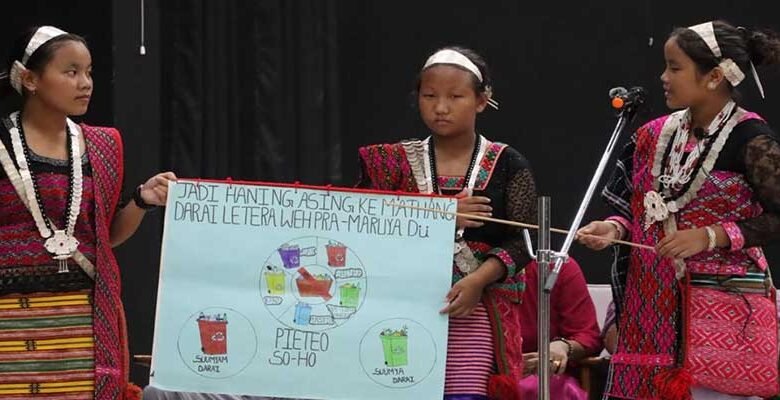
TEZU- The Lohit District Administration has proposed making the Inter-School Mishmi Speech Competition a regular calendar event, as the first edition brought together students to promote the Mishmi language while addressing contemporary social concerns.
The Grand Finale of the First Edition of the Inter-School Mishmi (Kaman & Taroan) Speech Competition was held at Amik Ringya Hall, Tezu, with the objective of promoting and preserving Mishmi language, culture and traditions among the younger generation.

The competition was conducted in two categories. Students participating in the Taroan category spoke on “Solid Waste Management,” while participants in the Kaman category addressed “Opium Cultivation and its Ill Effects.” The themes connected language learning with issues that directly affect communities.
Also Read- Arka Nikita Emerges as Top-Performing Okra Variety in Anjaw
Addressing the gathering, the Deputy Commissioner stressed the importance of encouraging children and young people to learn and use their mother tongue. He noted that several indigenous languages of Arunachal Pradesh are endangered and said concerted efforts are needed for their preservation.
While acknowledging the importance of Hindi as a wider language of communication, the Deputy Commissioner emphasised that indigenous languages are closely linked to the identity, culture and traditions of local communities. He called on community-based organisations, parents and other stakeholders to ensure that children learn and speak their native language at home and within the community.
The proposed continuation of the competition is significant because it would provide students with a recurring platform to learn, speak and take pride in their indigenous languages, rather than limiting language preservation efforts to occasional events.
Also Read- Indian Army Holds Community Outreach Programme for Students in Tuting
Chief Guest Basanlu Dellang, ZPC Lohit, commended the District Administration for organising the competition and said the selected themes were particularly relevant because solid waste management and opium cultivation directly concern society. She highlighted the social, health and developmental consequences associated with opium cultivation and stressed responsible solid waste management.
She also said such competitions could serve two purposes at once: preserving indigenous languages and sensitising young people to important social issues. She urged teachers, parents and other sections of society to make conscious efforts to promote and preserve the Mishmi language.
ZPM Sunpura Gulapso Bellai highlighted the close relationship between language and community identity, observing that the disappearance of a community’s language and traditions could gradually affect its identity. ZPM Tezu Baplalum Chiba similarly urged people to use their local language more frequently in everyday life and called for more programmes to promote indigenous languages and traditions.
Also Read- Views and Likes Should Not Define Success, Says Arunachal Governor at TRACTION 2026
Sokhep Kri, Chairman of CALSOM, said the organisation had already developed literature in local languages and was undertaking initiatives for preserving Mishmi language, tradition and culture. He also informed that CALSOM had constituted a Language Development Committee to strengthen language-preservation efforts.
Kri suggested expanding the initiative to Anjaw district to provide wider coverage to Mishmi-speaking communities. He also proposed recording the speeches of the competition winners, particularly those addressing opium cultivation and solid waste management, and developing them into awareness videos. Such content, he said, could simultaneously promote the Mishmi language and communicate socially relevant messages.
The initiative reflects an approach in which language preservation is connected with everyday use, education and community awareness. The participation of elected representatives, community organisations, educators, parents and students also highlighted the need for collective action to safeguard Mishmi language, culture and traditions for future generations.