Arunachal: ED Busts Suspected Interstate Liquor Network
Searches across seven towns uncover cash, fake seals, and evidence of a complex interstate liquor smuggling and money laundering network.
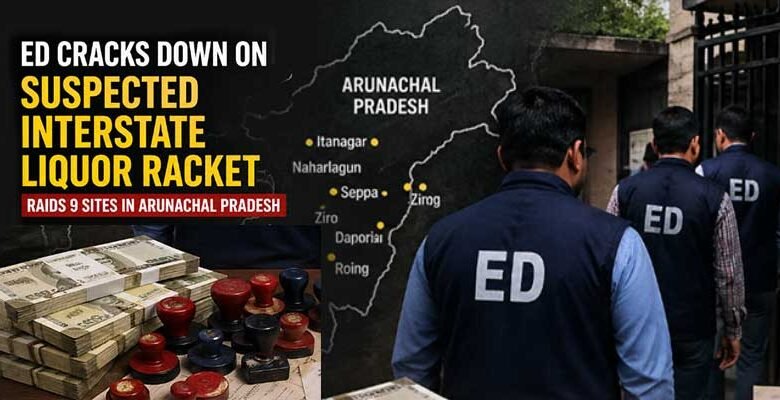
ITANAGAR- The Enforcement Directorate (ED) has launched a major crackdown on a suspected interstate liquor smuggling and money laundering network in Arunachal Pradesh, conducting coordinated searches at nine locations across the state.
The Raid, carried out under the Prevention of Money Laundering Act (PMLA), targeted a syndicate allegedly involved in diverting liquor meant for local consumption into markets in Assam and other neighbouring states.

Raids were conducted in multiple towns, including Itanagar, Naharlagun, Seppa, Ziro, Daporijo, Namsai, and Roing.
Also Read- Lumla MLA Urges Farmers to Adopt Scientific Methods
According to officials, approximately ₹40 lakh in unaccounted cash was recovered during the searches. Investigators also seized 14 seals, including some purportedly belonging to the state’s excise department, which are suspected to have been used to fabricate fake transport permits for illegal liquor shipments.
The investigation stems from multiple FIRs registered by the Assam Police, along with an Enforcement Case Information Report (ECIR) filed in October 2024. Officials said the probe has since expanded to include more than 170 related cases.
Also Read- Beekeeping, Sericulture Training Held in Sille
Preliminary findings suggest that the syndicate operated through “benami” or proxy licences issued in the names of local tribal residents, while actual financial and operational control remained concentrated among a small group of key individuals.
Scrutiny of wholesale bank accounts linked to the network revealed that between 51% and 90% of credited funds consisted of unexplained cash deposits, raising concerns over large-scale laundering of illicit proceeds.
Also Read- AP QueerStation Flags Concerns Over Trans Bill
Investigators have also identified attempts to evade regulatory oversight through systematic invoice splitting, with transactions deliberately kept below ₹2 lakh. In one instance, a single outlet reportedly generated over 200 invoices of an identical value—₹1,99,554—within a month.
Officials believe the network exploited differences in excise duty structures between states, resulting in significant revenue losses to the exchequer.
The ED’s Guwahati Zonal Office is continuing its investigation to trace the flow of funds and identify the primary beneficiaries of the alleged illegal operations. Further raid is expected as analysis of seized documents and digital evidence progresses.