
China builds border villages near Arunachal: Army
Indian Army says China has built hundreds of ‘Xiaokang’ villages along the LAC facing Arunachal Pradesh, raising concerns about strategic implications near the Siliguri Corridor.
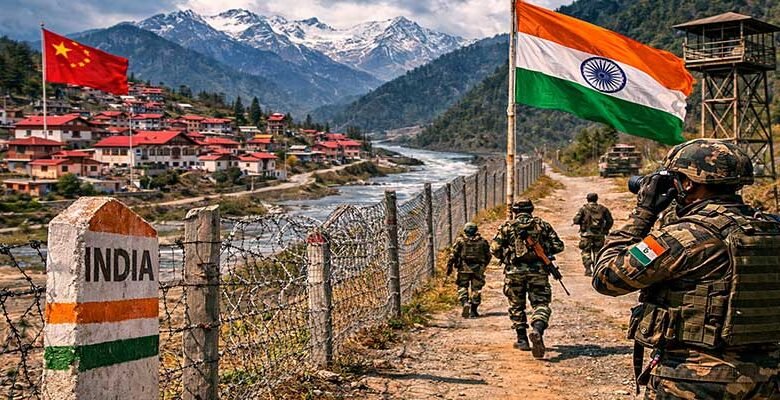
NEW DELHI- China has constructed hundreds of so-called “Xiaokang” or “well-off” villages along its border areas facing India, particularly opposite Arunachal Pradesh, according to senior officials of the Indian Army. The development has raised strategic concerns regarding the evolving security dynamics along the Line of Actual Control (LAC).
Lieutenant General Rajiv Ghai, Deputy Chief of Army Staff (Strategy), highlighted the issue during a seminar organised by the Assam Rifles in collaboration with the United Service Institution (USI) in New Delhi. The seminar examined emerging security challenges in India’s Northeast region.

According to the Army, China has built around 628 Xiaokang villages along its northern borders over the last two decades. Of these, approximately 72 percent — nearly 450 villages — are located across from India’s northeastern states.
Also Read- Court Sentences Man to 20 Years in POCSO Case
Officials noted that almost 90 percent of these villages face Arunachal Pradesh, including areas that remain disputed between the two countries. While Beijing describes these settlements as part of rural development initiatives, Indian security analysts have expressed concerns that the villages could serve dual civilian and strategic purposes, including logistical support in border areas.
The development has also renewed focus on the Siliguri Corridor, a narrow stretch of land in West Bengal that connects India’s northeastern states with the rest of the country. Often referred to as the “Chicken’s Neck,” the corridor is roughly 22 kilometres wide and about 60 kilometres long, making it one of India’s most strategically sensitive locations.
Also Read- MLA Kumar Waii Raises Job Policy in Assembly
Army officials said the corridor’s proximity to the Chumbi Valley in Tibet, near the India-Bhutan-China tri-junction, increases its vulnerability in the event of a military crisis.
To strengthen connectivity and security in the region, India has been accelerating infrastructure development across the Northeast. Key projects include the Sela Tunnel in Arunachal Pradesh, the Bogibeel rail-cum-road bridge in Assam, and several strategic bridges across the Brahmaputra and Lohit rivers. These projects are expected to improve civilian connectivity as well as military mobility in the region.
Also Read- Arunachal Assembly Condemns Racial Abuse
Additionally, the government is exploring plans for underground rail and transport infrastructure in the Siliguri Corridor to enhance logistical resilience in the strategically important passage.
The Army also highlighted progress on border fencing along the India-Myanmar border, aimed at addressing challenges such as cross-border insurgency, infiltration and drug trafficking.
Meanwhile, Assam Rifles Director General Lt Gen Vikas Lakhera noted that while the security situation in the Northeast has improved significantly over the years, the region continues to face evolving challenges due to its complex terrain, ethnic diversity and long international borders.
Security experts say the combination of China’s infrastructure expansion along the LAC and India’s own connectivity push reflects an increasingly strategic focus on the Himalayan frontier and the Northeast region.