Opposition Takes ‘March for Democracy’ to Supreme Court Over Alleged Vote Chori
The INDIA bloc’s ‘March for Democracy’ demands a halt to the Special Intensive Revision of electoral rolls and the resignation of Chief Election Commissioner Gyanesh Kumar, while petitioners seek judicial intervention over alleged voter deletions.
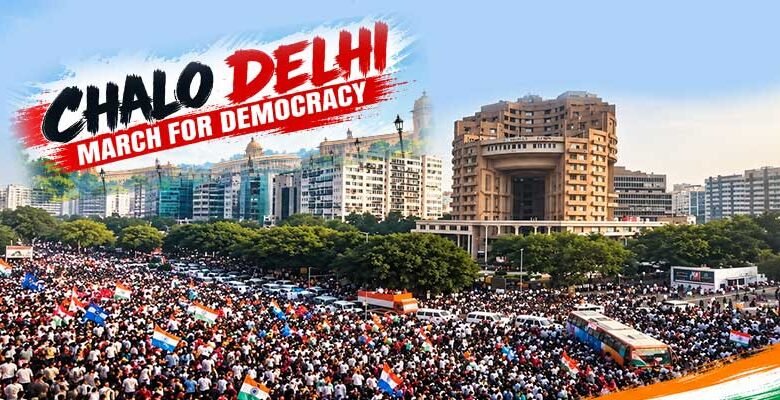
NEW DELHI- Leader of the Opposition in the Lok Sabha Rahul Gandhi led an INDIA bloc protest march towards the Supreme Court on Monday, demanding the resignation of Chief Election Commissioner Gyanesh Kumar and a halt to the Special Intensive Revision (SIR) of electoral rolls over allegations of voter deletions and irregularities.
The march, titled “Chalo Delhi – March for Democracy,” drew thousands of supporters and activists to central Delhi. The Opposition accused the Election Commission of India (ECI) of failing to ensure transparency in the electoral roll revision process and raised concerns over what it termed “vote chori”.

The allegations have been rejected by the ruling Bharatiya Janata Party (BJP), while the Election Commission has defended the revision exercise.
Also Read- CJP Leaders Abhijeet Dipke, Saurav Das and Ashutosh Ranka Detained Aboard Flight
INDIA Bloc Leaders Join Protest
Rahul Gandhi was accompanied by Congress leader Priyanka Gandhi Vadra, Samajwadi Party chief Akhilesh Yadav, Rashtriya Janata Dal leader Tejashwi Yadav, Karnataka Deputy Chief Minister D.K. Shivakumar and other Opposition leaders.
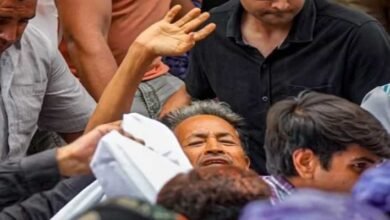
The procession began in the Connaught Place–Barakhamba Road area and moved towards the Supreme Court. Heavy security arrangements, police barricades and restrictions around parts of central Delhi affected the march. Authorities also imposed restrictions at several Metro stations as a crowd-management measure. The procession was stopped before reaching the court directly, but Opposition leaders pursued their legal initiative.
Also Read- Delhi on High Alert Ahead of October 10 Protest Demanding Gyanesh Kumar’s Resignation
Opposition Moves Supreme Court Over Electoral Roll Revision
The protest was accompanied by a legal challenge. Opposition leaders moved the Supreme Court with a petition raising concerns about alleged irregularities in the SIR process and seeking intervention over the electoral roll revision exercise.
The petitioners include Congress president Mallikarjun Kharge and other Opposition representatives. Their demands centre on electoral transparency, alleged wrongful deletion of voters and accountability within the Election Commission.
The move followed an earlier attempt by Opposition leaders to meet Chief Justice of India Surya Kant. The Chief Justice declined a direct meeting, citing the fact that related matters were already before the court. The Opposition subsequently opted to pursue the issue through formal legal proceedings.
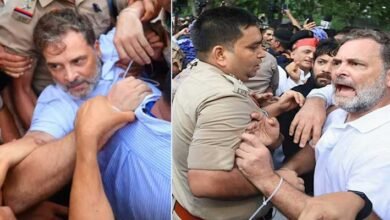
Also Read- Rahul Gandhi, Priyanka Gandhi Among Opposition Leaders Detained in New Delhi
Rahul Gandhi Accuses Election Commission of Acting Under Pressure
Addressing a press conference before the march, Rahul Gandhi said the central objective of the protests was to secure Gyanesh Kumar’s removal. He accused the Chief Election Commissioner of acting under pressure from Prime Minister Narendra Modi, Union Home Minister Amit Shah and National Security Adviser Ajit Doval.
Gandhi called on Kumar to resign and become an approver, alleging that the official was not acting independently. He also argued that the deployment of heavy police forces against protesters would draw greater public attention to the Opposition’s concerns.
These remain allegations made by the Opposition. Their merits, including claims of political interference and electoral manipulation, require assessment through evidence and the appropriate legal processes.
Student Activists and Wider Protests
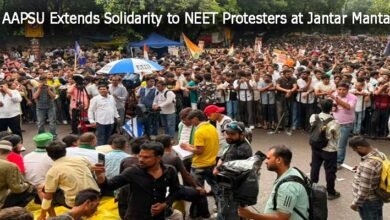
Student activists and youth groups have also played a role in the agitation against the SIR exercise. Neha Bora, associated with the student-led protests, joined the march alongside Opposition leaders. The demonstrations have included confrontations with police barricades and detentions, intensifying the political dispute over the right to protest and electoral accountability.
The Delhi mobilisation forms part of a broader Opposition campaign that has included demonstrations in other parts of the country. The campaign has sought to combine street protests with legal challenges to the Election Commission’s handling of electoral rolls.
Electoral Transparency at the Centre of Political Dispute
The controversy highlights a wider debate over the revision of electoral rolls, the protection of eligible voters and public confidence in election administration.
The Opposition argues that alleged wrongful deletions could undermine voting rights and has demanded a halt to the SIR exercise and the resignation of the Chief Election Commissioner. The BJP has rejected the Opposition’s accusations, while the Election Commission maintains that the revision process is intended to improve electoral roll accuracy.
The legal proceedings may provide a forum for examining the evidence and determining whether the alleged irregularities warrant judicial intervention.
Monday’s march marks a further escalation in the confrontation between the Opposition and the Election Commission. Its implications will depend on the Supreme Court’s consideration of the petition, the evidence presented by the parties and any subsequent directions concerning the electoral roll revision process.