After Gen-Z, Now Gen-Alpha: UP School Protest Goes Viral, Wins Written Assurances
Students at a government inter college in Uttar Pradesh's Fatehpur district used AI-generated protest placards to demand basic amenities, prompting authorities to issue written assurances for infrastructure improvements.
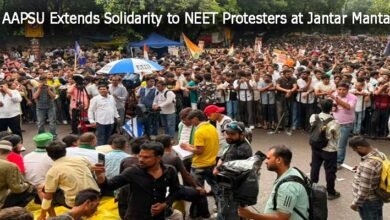
NEW DELHI / FATEHPUR- Barely days after the nationwide Gen-Z demonstrations over examination-related issues, a new generation of students has captured public attention. This time, it is Generation Alpha—children born roughly between 2013 and the mid-2020s—whose protest at a government inter college in Uttar Pradesh’s Fatehpur district has gone viral on social media.
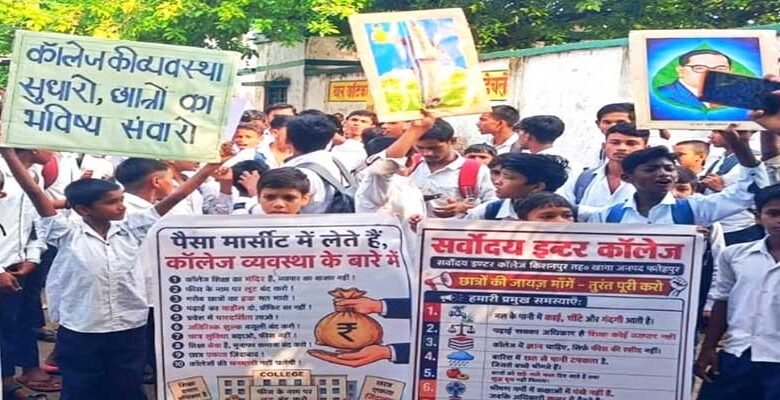
The protest took place at Sarvodaya Inter College in Kishanpur, where students assembled outside the school demanding basic facilities such as electricity, clean drinking water, adequate classroom ventilation and improved infrastructure.

According to videos circulating online, students alleged that classrooms lacked proper fans and reliable power supply, while access to drinking water remained inadequate. Some students also complained about the condition of school toilets and alleged inappropriate behaviour by the principal, claims that have been widely shared on social media but have not been independently verified.
Watch Video
What has particularly drawn attention is the manner in which the protest was organised. Instead of handwritten slogans alone, several students reportedly used artificial intelligence (AI) tools to design posters and placards carrying their demands.
The combination of digital tools with a traditional street protest quickly attracted national attention, with many social media users describing it as the “first Gen-Alpha movement” in Uttar Pradesh.
The demonstration appears to have produced immediate results. Following discussions with education authorities, the District Inspector of Schools (DIOS) reportedly issued written assurances accepting the students’ key demands.
Also Read- DC Directs Intensified Night Patrolling to Combat Drug Abuse in Tawang
According to the assurance shared publicly, four ceiling fans will be installed in every classroom by the following day, faulty electrical wiring will be repaired, desks and benches will be provided within one month, and an RO water cooler will be installed on the school premises.
The incident has sparked widespread debate online, not only because the protesters were schoolchildren but also because of the issues they raised. Many commentators observed that the demands centred on basic educational infrastructure rather than broader political or ideological concerns, with several questioning why such essential facilities required a public protest before action was taken.
Also Read- Governor Visits Chilipam Monastery, Meets Chinmaya Mission Delegation
Beyond the immediate outcome, the episode reflects a changing pattern of civic engagement among younger generations. While Gen-Z has increasingly mobilised around employment, examinations and public policy, the Fatehpur protest suggests that Gen-Alpha students are becoming aware of institutional accountability at an early age, using digital technology alongside peaceful collective action to press for change. Their use of AI-generated posters also illustrates how emerging technologies are beginning to shape civic participation among school-age children.
Although the long-term impact of the protest remains to be seen, the written commitments made by education authorities will now be closely watched. Whether the promised improvements are implemented on schedule could determine whether this viral moment becomes a one-off success story or an example of how digital-age student activism can influence governance at the grassroots level.