Arunachal: Workshop on Suicide Prevention Held in Itanagar
ICMR’s project team conducted a multi-institution leadership workshop in Itanagar, training heads of 19 educational institutions on suicide prevention and student wellbeing systems.

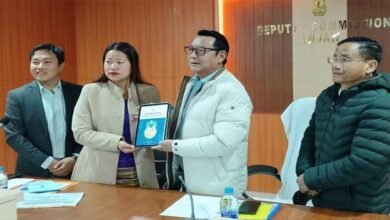
ITANAGAR: A major Leadership Engagement Workshop focused on suicide prevention and student mental health was held today at AITS–Rajiv Gandhi University (RGU), bringing together heads and senior representatives from 19 educational institutions across the Itanagar Capital Region.
The initiative, led by the Indian Council of Medical Research (ICMR) project team, marks the second phase of training following a similar programme earlier this year involving 35 institutions from Itanagar and Papum Pare district.

The participating institutions included NIT Jote, Dera Natung Government College, Don Bosco College, Government Higher Secondary School Ganga Basti, PM Government Higher Secondary School Arunodaya, Government Secondary School Chimpu, VKV Chimpu, Regional Institute of Nursing, Kingcup Public School, Vivekananda Central School, Arunachal Valley Public School, Donyi Polo B.Ed. College, Government Higher Secondary School Leporiang, Green Mount School, JNK Public School, Garden Dew School, Nichiphu Foundation School, Donyi Polo Vidya Bhawan, and Rajiv Gandhi Polytechnic College.
Also Read- Statewide Candlelight March, Calls for Justice in Tadu Haro Case
Opening the programme, Principal Investigator Dr. Tarun Mene highlighted the mounting pressures faced by students and the urgent need for stronger institutional mechanisms to support mental wellbeing. He stressed the importance of leadership involvement in building preventive and responsive systems within campuses.
The Director of NIT Jote, in his introductory remarks, discussed the mental health framework adopted on the NIT campus, including mentor–mentee structures and mid-semester evaluations. He underscored the need for more capacity-building programmes that enable educational leaders to create healthier learning environments for young people.
Also Read- Tragedy Strikes RKMS Aalo as Teacher Found Dead
The workshop featured a series of detailed technical sessions.
- Dr. Kakali Goswami (Co-PI) spoke on “Understanding Mental Health and Wellbeing,” explaining the emotional landscape of children and adolescents, the impact of academic pressures, and the need for daily supportive practices within institutions.
- Dr. Dharmeshwari Lourembam (Co-PI) addressed “Child, Adolescent & Youth Development and Mental Health,” focusing on behavioural changes among students, the influence of digital exposure, cultural transitions, and developmentally responsive support systems.
- Dr. Leeyir Ete (Research Scientist-II) led the final session on “Action Planning: Mental Health Support and Protocols,” offering frameworks for building referral pathways, documenting student distress, establishing wellbeing committees, and conducting periodic audits.
Also Read- Miss Arunachal 2024 Seeks Justice for Brother’s Death
A central theme of the workshop was the creation of Crisis Response Teams (CRTs) tailored for suicide prevention within each participating institution. With rising instances of student suicides, the facilitators emphasized the need for trained crisis teams capable of delivering immediate support, coordinating with families, and managing high-risk incidents without panic. More than 30 participants were trained on role delegation, emergency protocols, and post-crisis care strategies.
Institutional leaders collaborated in group activities to draft initial roadmaps for establishing CRTs, integrating wellbeing personnel, and improving routine monitoring mechanisms on their campuses. Participants also discussed long-term action plans to strengthen mental health support systems beyond crisis response.
The workshop concluded with a collective commitment from all 19 institutions to prioritize mental health, implement the action plans developed during the sessions, and collaborate to create safer and more nurturing educational environments across the Itanagar Capital Region.