Rashtriya Sanskriti Mahotsav 2026 Concludes in Tawang with Grand Cultural Celebration
The five-day national festival concluded with a grand cultural presentation in Tawang, as Arunachal Pradesh Minister Mama Natung called upon young people to embrace modern technology while preserving their mother tongues, indigenous traditions and cultural identity.
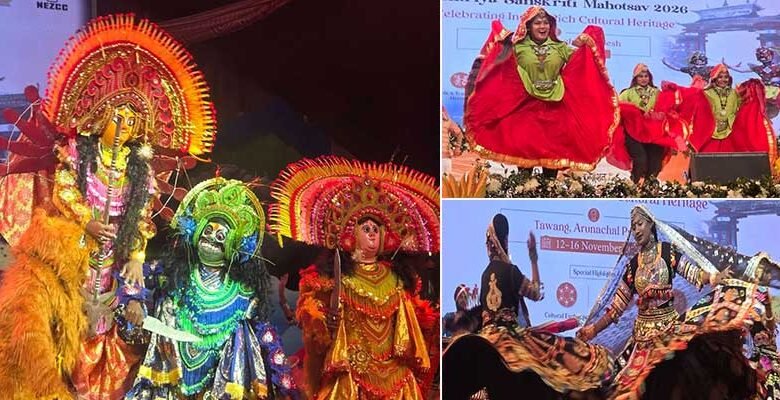
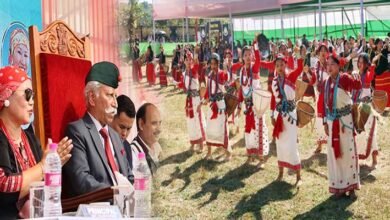
TAWANG- The Rashtriya Sanskriti Mahotsav 2026 concluded in Tawang on Monday with a grand cultural celebration, bringing together more than 500 artists from across India. The five-day national festival ended with a powerful message from Arunachal Pradesh Minister Mama Natung, who urged the younger generation to embrace modern technology and Artificial Intelligence while preserving indigenous languages, traditions and cultural identity.
Addressing the concluding ceremony at the Festival Ground, Tawang, Natung emphasised that India’s cultural diversity and traditional knowledge systems remain among the country’s greatest strengths. He stressed that technological advancement and modernisation should not come at the cost of indigenous identity and traditional values.

Delivering a message directed particularly at young people, the minister encouraged them to learn and use emerging technologies, including AI and digital platforms, without losing their connection with their mother tongues and cultural roots.
“We must learn ChatGPT and embrace modern technology, but we must never forget our own language, culture and roots,” was the central message of his address.
Also Read- Chinese Military Aircraft Reportedly Enters Indian Airspace Over Sikkim
Focus on Indigenous Languages and Cultural Identity
Highlighting the Arunachal Pradesh government’s commitment to protecting indigenous languages, Natung referred to important Cabinet decisions aimed at promoting local languages and strengthening their role in public life.
He also referred to provisions concerning language tests in connection with the Arunachal Pradesh Civil Services (APCS) and APSSB examinations, underlining the importance of linguistic proficiency.
Recalling India’s historical knowledge traditions, the minister referred to Nalanda as a renowned centre of learning that attracted scholars from different parts of the world. He observed that despite centuries of foreign invasions and challenges, India’s cultural foundations had remained strong.
Natung also highlighted the historical and cultural connections between Arunachal Pradesh and Gujarat through the legend of Rukmini Ji, emphasising the importance of inter-state cultural exchanges in strengthening national unity.
Calling for collective efforts towards the vision of Viksit Bharat @ 2047, he said that the development of Arunachal Pradesh would be an integral part of India’s overall progress.
Also Read- Governor Inaugurates Rs 5.75-Crore DIET Building in Namsai
Five Days of India’s Cultural Diversity
The 2026 edition of Rashtriya Sanskriti Mahotsav was held from November 12 to 16, bringing together over 500 artists representing different regions and cultural traditions of the country.
The five-day celebration showcased India’s diverse folk and tribal heritage through traditional music, dance, indigenous art forms, costumes and cultural performances.
The concluding programme, titled “Main Bharat Hoon,” featured an enthralling musical performance by the Cantamus Choir from Nagaland, followed by an elaborate choreographic presentation highlighting folk and classical dance traditions from different parts of India, accompanied by live music.
The performances offered audiences a glimpse into the country’s rich artistic traditions and received an enthusiastic response.
Also Read- Wancho Script and Unicode Journey Highlighted at Sweden’s Uppsala University
Tawang’s Cultural Significance
The festival was organised by the Ministry of Culture, Government of India, in collaboration with the North East Zone Cultural Centre (NEZCC) and the Department of Art & Culture, Government of Arunachal Pradesh.
Tawang holds particular significance in the festival’s journey, having hosted Rashtriya Sanskriti Mahotsav in 2017. Its return to the Himalayan district in 2026, after nearly nine years, highlighted the Northeast’s important place in India’s cultural landscape.
The minister also appreciated Tawang’s traditional craftsmanship and handicrafts, acknowledging the district’s rich cultural heritage.
Also Read- Governor Receives Holy Relics of Lord Buddha at Namsai
Rashtriya Sanskriti Mahotsav was conceptualised by the Ministry of Culture in 2015 as a national initiative to preserve, promote and showcase India’s cultural heritage. The festival aims to connect younger generations with indigenous traditions while providing artists and artisans from different regions a platform to present their cultural expressions.
The seven Zonal Cultural Centres under the Ministry of Culture played an important role in facilitating the participation of artists and cultural groups in the 2026 edition.
The concluding ceremony was attended by Tawang Deputy Commissioner Namgyal Angmo, Superintendent of Police Tasi Darang, officials from the Ministry of Culture and various Zonal Cultural Centres, cultural representatives, delegates and members of the public.
The successful conclusion of the Mahotsav reinforced a central message: India’s journey towards modernisation and development must move forward alongside the preservation of its cultural diversity, indigenous languages and traditional knowledge.