AAPSU Rejects Kuki Human Rights Council’s Complaint Over Bordumsa SIR
The students’ body said the Special Intensive Revision in Bordumsa concerns Arunachal’s electoral rolls and indigenous interests, while rejecting allegations of violent obstruction by the Manipur-based KHRC.
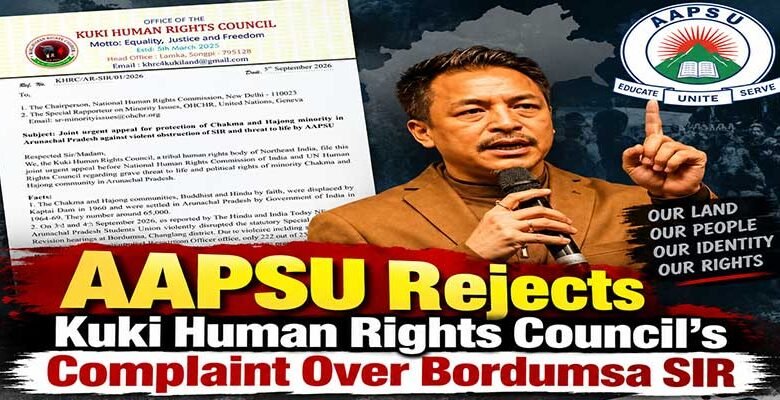
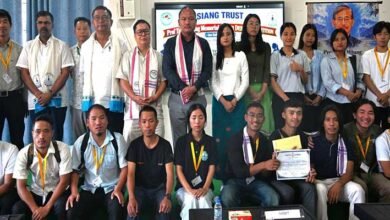
ITANAGAR- The All Arunachal Pradesh Students’ Union (AAPSU) has strongly criticised the Manipur-based Kuki Human Rights Council (KHRC) over its recent representation to the National Human Rights Commission (NHRC) and the United Nations concerning the Special Intensive Revision (SIR) process in Bordumsa, Changlang district.
In a statement issued on Tuesday, AAPSU President Meje Taku described the KHRC’s intervention as “baseless” and “politically motivated”, and said the organisation had no locus standi to intervene in what AAPSU characterised as an internal matter concerning Arunachal Pradesh and its indigenous communities.

AAPSU said the SIR is a statutory exercise undertaken by the Election Commission of India to verify and revise electoral rolls. The students’ body maintained that, as a stakeholder, it has a democratic right to raise concerns about the inclusion of what it describes as illegal or doubtful names in the State’s electoral rolls.
Also Read- Kamle Panchayat Leaders Demand Verification of PMAY-G Beneficiary Selection
The dispute centres on the longstanding Chakma and Hajong issue in Arunachal Pradesh. AAPSU argued that the matter should not be viewed solely through the framework of minority rights, describing it instead as an issue concerning indigenous identity, land and political representation.
According to AAPSU, Chakma and Hajong people were brought to Arunachal Pradesh during 1964-69 and settled on humanitarian grounds. The Union claimed that the subsequent demographic situation has created concerns among indigenous tribal communities in Changlang.
AAPSU said its position was aimed at protecting what it described as the constitutional and legal safeguards available to Arunachal Pradesh’s indigenous tribes, including provisions it cited under Article 371H and the Bengal Eastern Frontier Regulation, 1873.
Also Read- Joint Market Inspection in Yupia and Tigdo: Unlicensed Shops Penalised
On allegations by the KHRC that the SIR proceedings had faced violent obstruction, AAPSU rejected the characterisation and maintained that its agitation was democratic and peaceful. The students’ body urged the administration to listen to the concerns raised by indigenous communities rather than take action against students involved in the protest.
AAPSU also criticised the KHRC for raising the matter before national and international bodies while referring to the prolonged conflict in Manipur. The Union argued that organisations concerned with human rights should also address displacement and humanitarian difficulties within their own state.
The students’ body further warned against what it described as external attempts to influence Arunachal Pradesh’s internal affairs. It maintained that the State should not become a destination for what it termed illegal settlements and said outside organisations should not dictate its future.
Also Read- KVK Anjaw Conducts Crop Survey in Hawai Circle
At the same time, AAPSU appealed to the Chief Election Commissioner of India and the Arunachal Pradesh government to complete the SIR process with full transparency. It urged the authorities not to succumb to what it described as external pressure and to ensure that the electoral-roll revision is conducted according to established procedures.
The statement concluded with an appeal to the people of Arunachal Pradesh to remain united in protecting indigenous rights.
The latest development adds another dimension to the continuing debate over electoral rolls, migration, indigenous rights and the status of Chakma and Hajong communities in Arunachal Pradesh. While AAPSU has defended its position as a matter of indigenous protection and electoral integrity, its criticism of the KHRC underscores the sensitivity surrounding outside intervention in the State’s demographic and political affairs.