
Arunachal: Thousands Join Peaceful Pro-Dam Rally in Daporijo
A peaceful rally in Daporijo renews support for the 1,605 MW Subansiri Upper Hydroelectric Project, amplifying tensions between development advocates and anti-dam groups across Arunachal Pradesh.
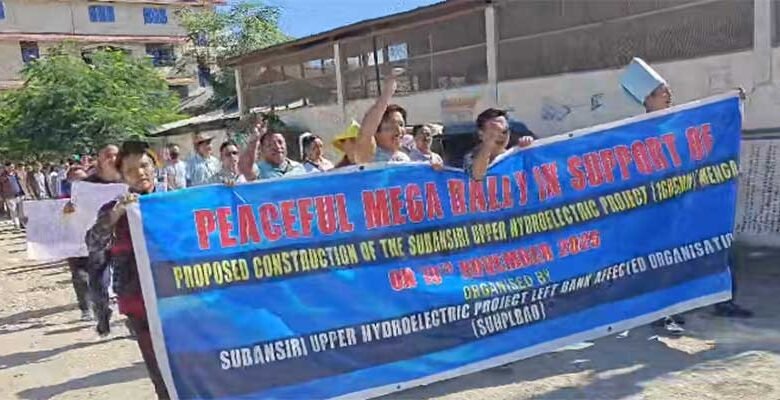
DAPORIJO: In a significant public demonstration of support for Arunachal Pradesh’s expanding hydropower agenda, thousands of residents marched through Daporijo on Sunday backing the long-delayed 1,605 MW Subansiri Upper Hydroelectric Project (SUHEP). The event, organized by the Subansiri Upper Hydroelectric Project Left Bank Affected Organisation, unfolded peacefully under extensive security arrangements.
The rally, which began around 10 a.m. near the district headquarters, drew participants from villages such as Menga, Sippi, and Dompurijo. Many carried banners reading “Build the Dam for Our Future” and “Power for Progress,” while calling on the government to expedite construction at the halted NHPC project site. Organizers claimed a turnout of over 5,000, including landowners, youth groups, and members of Tagin and Nyishi communities.

Supporters argued that the project promises employment, improved regional infrastructure, flood control mechanisms, and long-term energy security. Some also framed the dam as a geopolitical buffer in the face of China’s upstream hydropower expansion. “This dam isn’t just about electricity; it’s about securing our livelihoods and standing strong against external threats,” said a landowner whose family expects compensation and rehabilitation benefits.
Also Read- Bandh Halts Life in Upper Subansiri Over NHPC Project
The mobilization comes amid escalating tensions in Upper Subansiri district. On October 8, anti-dam groups led by the Subansiri Upper Hydro Electric Project Land Affected Forum organized a large protest in Daporijo demanding the project’s cancellation.
Their concerns centred around displacement, ecological degradation, and cultural disruptions for indigenous communities. The demonstration was backed by student groups including the Daporijo Students’ Union (DSU) and All Tagin Students’ Union (ATSU), who accused the government of aligning with corporate interests.
A subsequent two-day bandh on October 27–28, spearheaded by anti-dam groups, had brought the district to a standstill, halting commercial activity, transport, and educational institutions. Opponents of the proposed 2,000 MW project argue that it threatens the fragile Subansiri basin, downstream floodplains in Assam, and the livelihoods of nearly 1,000 families living in the potential submergence zone.
Also Read- India Accelerates Dibang Dam Construction in Arunachal Pradesh Amid Rising Water Tensions with China
Despite the polarized climate, Sunday’s pro-dam rally took place without incident. Over 200 security personnel were deployed across town. A senior police official said the administration “monitored the situation closely” but credited both sides with maintaining restraint, adding that “dialogue is key to resolving these divides.”
First conceptualized in the 1990s, the SUHEP has been a focal point in Arunachal Pradesh’s strategy to harness its estimated 50,000 MW hydropower potential. The state government has outlined plans for 13 major dams by 2035, citing national clean-energy goals and strategic concerns related to China’s Medog dam project upstream. Environmentalists, however, warn of severe ecological risks and point to past controversies, including the 2011 protests that halted the Lower Subansiri project for years.
Also Read- Scientists, Researchers and Activists Demand Halt to Siang Upper Multipurpose Dam Construction
As Sunday’s rally concluded, organizers submitted a memorandum to the Deputy Commissioner urging immediate revival of SUHEP. Meanwhile, anti-dam groups took to social media, dismissing the march as unrepresentative and reiterating claims of “98% public opposition.”
State authorities have not issued a formal response yet, but government sources indicate that an environmental public hearing may be rescheduled soon, potentially reigniting local tensions. With hydropower central to India’s energy transition, the competing visions on display in Daporijo underscore a persistent dilemma: how to pursue development in a region where ecological sensitivity and cultural identity remain deeply intertwined.