Arunachal: Rare Saprophytic Mushroom Found in Longding
Researchers have documented the first field-level record of the Pleated Inkcap mushroom (Parasola plicatilis) from Arunachal Pradesh at ICAR-KVK Longding.
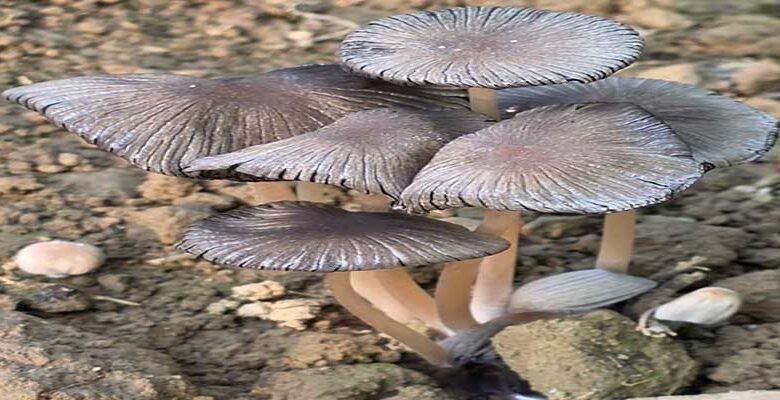
LONGDING— A small saprophytic mushroom species, Parasola plicatilis—commonly known as the Pleated Inkcap—has been recorded for the first time in Arunachal Pradesh, based on field observations made at the experimental farm of the ICAR–Krishi Vigyan Kendra (KVK), Longding.
The specimens were initially observed and collected by Dr. Tilling Tayo, Assistant Chief Technical Officer (Animal Science), during routine field activities at the KVK farm. The field observation, supported by photographic documentation, was subsequently shared with Dr. Deep Narayan Mishra, Subject Matter Specialist (Plant Pathology), who confirmed the identification based on distinct morphological characteristics.

Also Read- Doimukh Police Crack ₹3.5 Cr Burglary Case
According to Dr. Mishra, the mushroom exhibited key diagnostic features of Parasola plicatilis, including a strongly pleated grey pileus, a slender and fragile stipe, and non-deliquescent gills. The species is known for its extremely delicate, paper-thin cap and short life cycle, typically lasting less than 24 hours.
Parasola plicatilis is a saprotrophic agaric that plays a significant ecological role in forest and agricultural ecosystems. By decomposing leaf litter and organic residues through the secretion of extracellular enzymes, the species contributes to nutrient mineralization, carbon cycling, and the availability of essential plant nutrients such as nitrogen and phosphorus. Its presence is often considered indicative of biologically active soil conditions with healthy microbial functioning, particularly under moist, organic-rich environments.
Also Read- Army Evacuates Stranded Travellers at Sela Top
The mushroom is non-edible and has no known food or commercial value due to its fragile structure and ephemeral nature. While P. plicatilis has been reported from several regions of India and other parts of the world, there are no well-documented published records confirming its earlier occurrence in Arunachal Pradesh.
Based on currently accessible information, the observation from ICAR-KVK Longding is therefore considered the first field-level record of the species from the state. Researchers note that the finding highlights the rich but underexplored fungal biodiversity of Arunachal Pradesh and underscores the importance of systematic documentation during routine field observations and surveys.