Arunachal: Ngorlung Mothers Continue Hunger Strike Demanding Factory Closure in Niglok
The eight member Fact-Finding Committee constituted by APCC visit the hunger site to study and assess the serious concerns arising from the ongoing indefinite hunger.
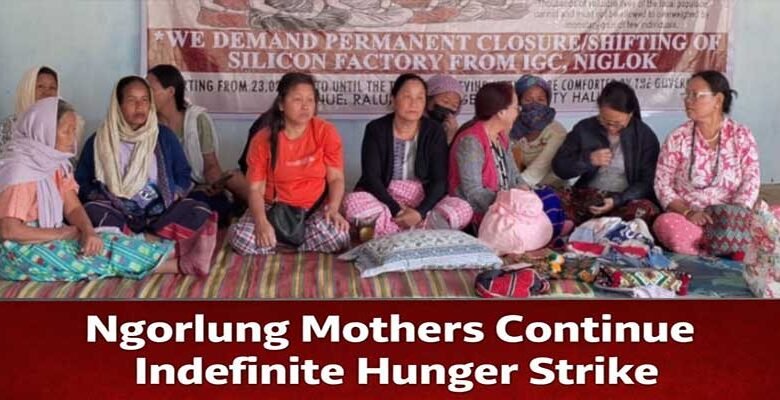
NIGLOK: The indefinite hunger strike staged by mothers of Ngorlung–Ralung village against a ferro silicon manufacturing unit at the Industrial Growth Centre in Niglok has intensified, drawing political attention and raising concerns over public health and environmental safety.
The protestors are demanding the permanent closure or immediate relocation of the hazardous ferro silicon factory operated by M/S Aether Alloys LLP at the Industrial Growth Centre, Niglok. They allege that the Government of Arunachal Pradesh had earlier assured that the unit would be shifted but that the commitment has not been fulfilled.

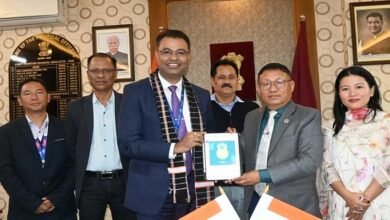
The Arunachal Pradesh Congress Committee (APCC), has constituted an eight-member fact-finding committee to examine the issues raised by the protesting women. The committee is chaired by Mrs. Yane Dai, Vice President of APCC, with Advocate Tami Pangu as Vice-Chairman and Advocate Daniel Gao as Member Secretary.
Also Read- Arunachal Must Strengthen Internal Security: CM
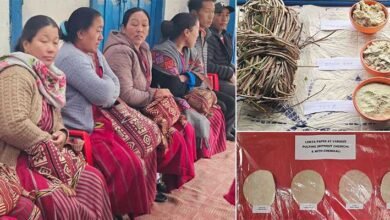
Members of the fact-finding committee visited the hunger strike site and met the fasting mothers, many of whom have reportedly continued their protest despite deteriorating health conditions. The delegation also conducted an on-site inspection of the factory premises to assess environmental and safety conditions.
Health and Environmental Concerns
The women protestors cited multiple concerns linked to the operation of the ferro silicon plant. These include continuous emission of toxic smoke and dust particles, rising cases of respiratory ailments such as asthma and chronic cough, eye irritation, and skin diseases among villagers.
They further alleged pollution of agricultural fields leading to crop damage and declining productivity, contamination of water sources affecting drinking water and livestock, and noise pollution coupled with improper industrial waste disposal. The protestors expressed fears of long-term health hazards, including cancer and other serious diseases.
Also Read- Youth Parliament–2026 Held at WRGC Deomali
Ferro silicon production is widely recognised as a high-risk industrial activity involving high-temperature electric arc furnaces. The process can generate particulate matter (PM2.5 and PM10), silica dust, carbon monoxide, sulphur compounds, and other hazardous emissions. Industrial slag and waste materials, if inadequately managed, may contaminate soil and groundwater. Environmental experts have often cautioned that such units require strict pollution-control mechanisms, especially when located near human habitation and agricultural zones.
Political Response
The APCC stated that it stands in solidarity with the women of Ngorlung–Ralung village, describing the hunger strike as a democratic and peaceful struggle for public health and environmental protection. The party said the fact-finding committee will submit a detailed report to party president Bosiram Siram after consultations with stakeholders and documentation of findings.
The opposition party urged the state government to act with urgency and sensitivity, honour earlier commitments regarding the factory, and ensure that community concerns are addressed without further delay.
The hunger strike, now ongoing indefinitely, has become a focal point of debate over industrial development and environmental safeguards in Arunachal Pradesh. While authorities have yet to issue a fresh official statement on the matter, the protest underscores growing tensions between industrial expansion and local ecological and health concerns.
Further developments are awaited as the fact-finding process continues and the health condition of the fasting women remains under watch.