Arunachal: ICAR–NBFGR empowers tribal fishers in Shergaon
The ICAR–NBFGR and Department of Fisheries, Government of Arunachal Pradesh, jointly organised a stakeholder meet to promote tribal aquaculture entrepreneurship in Shergaon.

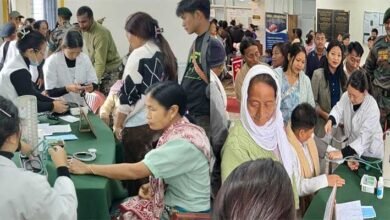
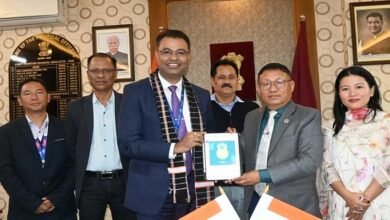
SHERGAON- In a major step toward strengthening aquaculture-based livelihoods among tribal communities, the ICAR–National Bureau of Fish Genetic Resources (NBFGR), Lucknow, in collaboration with the Department of Fisheries, Government of Arunachal Pradesh, organised a Stakeholder Meet-cum-Awareness Programme and Tribal Fishery-Entrepreneurship Summit at Shergaon, West Kameng District.
The event, held under the Scheduled Tribe Component (STC) and North Eastern Hill (NEH) initiatives as part of Janjatiya Gaurav Varsh 2025, focused on “Empowering Tribal Fishers through Capacity Building, Technological Demonstration and Resource Support.”

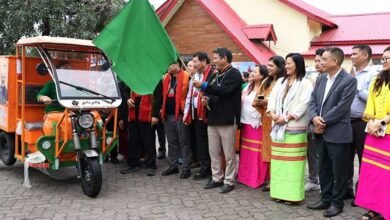
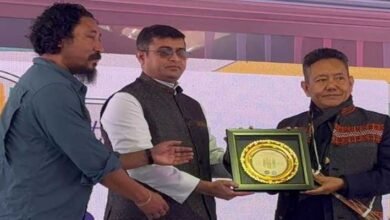
The programme was graced by Mrs. Tsering Wangmu Lama, Zilla Parishad Member, Shergaon; Tagi Yonggam, Deputy Director (Fisheries); Ledo Thungon, Chairman, Garung Thuk Community Centre; Pema Khandu Thungon, District Fisheries Development Officer, West Kameng; and Narang Taming, District Fisheries Development Officer, Bichom.
Also Read- ICAR-CPCRI trains Namsai farmers on arecanut farming
In their addresses, the dignitaries appreciated Dr. Kajal Chakraborty, Director, ICAR–NBFGR, for extending institutional support to Arunachal Pradesh and promoting sustainable aquaculture practices in remote hill districts.
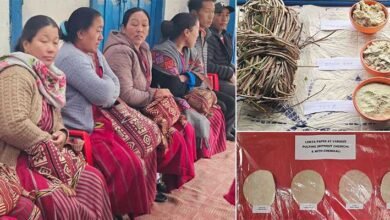
Over 200 fishers and farmers from West Kameng and Bichom participated in the programme, which featured interactive sessions, technology demonstrations, and input distribution. Experts Dr. L. Mog Choudhary and Dr. Tarachand Kumawat from ICAR–NBFGR conducted training on fish seed quality, feed management, disease diagnostics, and integrated hill aquaculture practices.
Also Read- New APUSU team takes oath at Arunachal University
Discussions also explored community-managed fish sanctuaries, native species conservation, and the development of sustainable fishery clusters as long-term livelihood solutions.
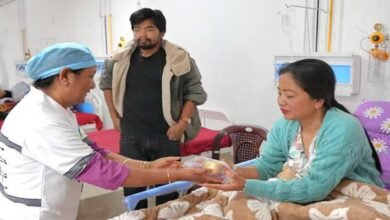
As part of the initiative, ICAR–NBFGR distributed fish seed, feed, and lime to participating farmers to promote the adoption of improved aquaculture techniques. The institute also showcased its national programmes, including genetic resource conservation, aquatic disease diagnostics, cryobanking, species documentation, and the AqGRISI information portal.
Also Read- 11th Mission Clean Kley River held in Ziro
The event emphasized the potential of Arunachal Pradesh’s pristine rivers and natural lakes for aquaculture development while ensuring conservation of indigenous fish genetic resources.
The programme concluded with a collective commitment from ICAR–NBFGR and the Department of Fisheries to intensify scientific interventions, strengthen biodiversity documentation, and build entrepreneurial capacity in West Kameng and Bichom districts — transforming them into models of culturally rooted and environmentally sustainable aquaculture development.