
Northeast India Emerges as Bird Migration Hub
On World Migratory Bird Day 2026, conservationists underline Northeast India’s critical role in sustaining global bird migration routes amid growing ecological threats.
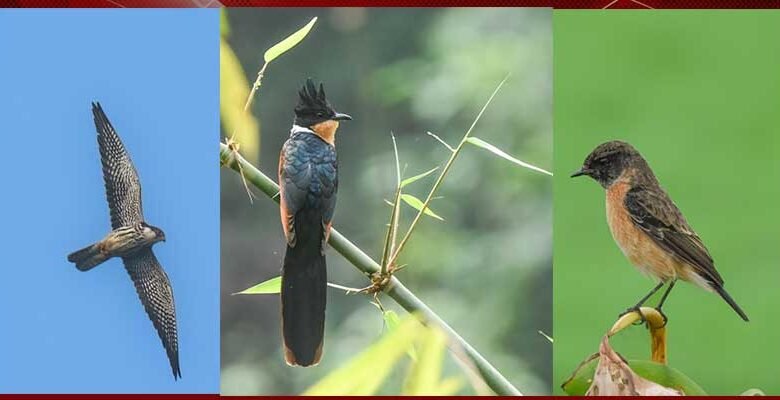
The phenomenon of bird migration predates human civilisation itself, rooted in evolutionary responses to climatic shifts during the Ice Age, when advancing glaciers forced species into long-distance seasonal movement for survival. Over time, migration evolved into one of nature’s most extraordinary ecological processes, connecting continents, ecosystems and climatic zones through the annual journeys of birds.
Observed every year on May 9, World Migratory Bird Day celebrates these avian travellers and highlights the ecological interconnectedness their movements represent. Scientific understanding of migration advanced dramatically in 1822 with the discovery of the famous “arrow stork” in Germany — a White Stork carrying an African spear lodged through its neck — offering early evidence that birds travelled across continents.

Also Read- IGTAMSU Hosts Grand Finale of Youth Carnival
Today, Northeast India occupies a strategically important position within this global network of migration routes.
Located at the intersection of the Central Asian Flyway and the East Asian-Australasian Flyway, the region serves as a critical migratory corridor for thousands of bird species travelling between breeding and wintering grounds across Asia. Its wetlands, grasslands, riverine ecosystems and forests provide essential stopover and wintering habitats for migratory birds undertaking journeys spanning thousands of kilometres.
Among the species dependent on these landscapes is the critically endangered White-throated Bushchat, which migrates from Mongolia to winter in the grasslands of Kaziranga National Park and Manas National Park. The endangered Yellow-breasted Bunting also winters in Northeast India, relying on grasslands and agricultural fields for feeding habitats.
Also Read- Tiger Returns to D’Ering WLS After Two Decades
The region additionally supports several species known for their remarkable migratory endurance.
Each autumn, millions of Amur Falcon arrive in Nagaland after traversing vast stretches of Asia before continuing on a non-stop flight across the Indian Ocean towards southern Africa. Similarly, the Bar-headed Goose is renowned for crossing the Himalayas at extreme altitudes where oxygen levels are critically low.
Other migratory visitors include the Northern Pintail, which travels from Siberia to Assam’s wetlands, and multiple subspecies of the Siberian Stonechat that migrate from Russia, China and the Himalayan region to the grasslands of Northeast India.
However, conservationists warn that these ancient flyways are increasingly under threat from habitat degradation, shrinking wetlands, disappearing grasslands and the impacts of climate change. Altered rainfall patterns and shifting seasonal cycles are disrupting migratory timing and reducing habitat suitability across key stopover points.
Experts argue that the destruction of habitats along migratory routes represents not only a regional conservation challenge but also a disruption of ecological systems linking continents and biodiversity networks across the globe.
In this context, protecting Northeast India’s ecosystems assumes international significance. Conservation of wetlands, riverine grasslands and forests in the region is viewed as essential for maintaining ecological connectivity between the Arctic, Central Asia and the Indian subcontinent.
As migratory birds once again fill the skies this World Migratory Bird Day, the annual journeys of these species continue to symbolise resilience, endurance and the interconnected nature of Earth’s ecosystems — while also underscoring the urgency of safeguarding the fragile habitats upon which migration depends.
Written By Dr. Leons Mathew Abraham,
Project Officer, Threatened Species Recovery Programme, Aaranyak