Arunachal: Public Hearing for 1,000 MW Naying Hydro Project on Nov 12
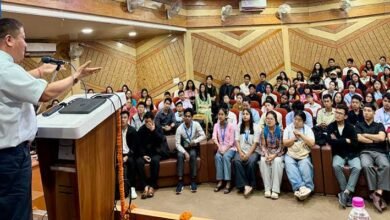
The public hearing will be conducted under the supervision of Shi-Yomi Deputy Commissioner Tungee Loya, who has invited broad participation from local communities and civil society groups.

SHI-YOMI— The environmental public hearing for the ambitious 1,000 MW Naying Hydro Project is scheduled to take place on November 12 at the Yapik Community Hall in Shi-Yomi district, according to an official announcement from the district administration.
The hearing, organized under the provisions of the Environment Impact Assessment (EIA) Notification, 2006, will allow residents and stakeholders from project-affected areas to share their views, suggestions, and objections before final environmental clearance is granted.

Hearing Details and Participation
The public hearing will be conducted under the supervision of Shi-Yomi Deputy Commissioner Tungee Loya, who has invited broad participation from local communities and civil society groups.
Also Read- Chief Secretary and DGP Review District Development Report in Siang
Officials from the Arunachal Pradesh Pollution Control Board, NEEPCO, and the State Environment & Forest Department will be present to record public feedback and address queries.
Deputy Commissioner Loya stated that the event aims to ensure transparency, inclusivity, and responsible governance before proceeding with the project’s next phase.
About the Naying Hydro Project
The Naying Hydro Project is designed as a run-of-the-river hydroelectric scheme on the Siyom (Yomgo) River, a major tributary of the Brahmaputra. The project includes a concrete gravity dam, underground powerhouse, and tunnel system.
Also Read- RGU NSS Volunteer Honored with Prestigious My Bharat NSS Award
Being developed by the North Eastern Electric Power Corporation Limited (NEEPCO), the project is expected to generate approximately 4,966.77 million units (MU) of electricity annually — strengthening the power supply in India’s Northeast and contributing to the nation’s clean energy goals.
Originally approved by the Central Electricity Authority (CEA) in 2013, the project’s progress had been delayed due to environmental and social concerns. Construction is expected to begin around 2028, with commissioning targeted for 2032.
Environmental and Social Concerns
Despite its economic promise, the Naying project has drawn attention from environmentalists and local groups worried about its ecological footprint.
The project is expected to involve the diversion of large tracts of forest land, potentially leading to deforestation and loss of biodiversity in the fragile Himalayan ecosystem.
Local residents have also voiced concerns about land acquisition, resettlement, and the impact on traditional forest-based livelihoods.
“We want development, but our environment and culture must be protected,” said a community member from Mechuka. “The public hearing should ensure local concerns are heard sincerely.”
State’s Push for Hydropower Development
The Naying Hydro Project forms part of Arunachal Pradesh’s broader “Decade of Hydro Power (2025–35)” initiative, which aims to develop 10,000 MW (10 GW) of clean energy capacity.
This initiative is being implemented through joint ventures between NEEPCO and the Arunachal Pradesh Hydropower Corporation Limited (APHPCL).
Chief Minister Pema Khandu, during the Cabinet Aapke Dwar programme in Changlang district, reaffirmed that hydropower will play a crucial role in achieving economic growth, employment generation, and India’s net-zero carbon goals by 2070.
Why the Public Hearing Matters
The upcoming public hearing is seen as a critical milestone for the Naying project, balancing development aspirations with ecological and social responsibilities.
If cleared, it could become one of Arunachal Pradesh’s largest and most strategic hydropower projects — but its future will depend on how effectively public feedback is addressed.
Observers say the November 12 hearing will be a litmus test for sustainable infrastructure planning in the region.