Arunachal: Tezu Concludes Second Phase of Disaster Response Training, 100 Volunteers Now Equipped for Emergencies
A total of 65 volunteers from Tezu and Sunpura circles participated in this phase.
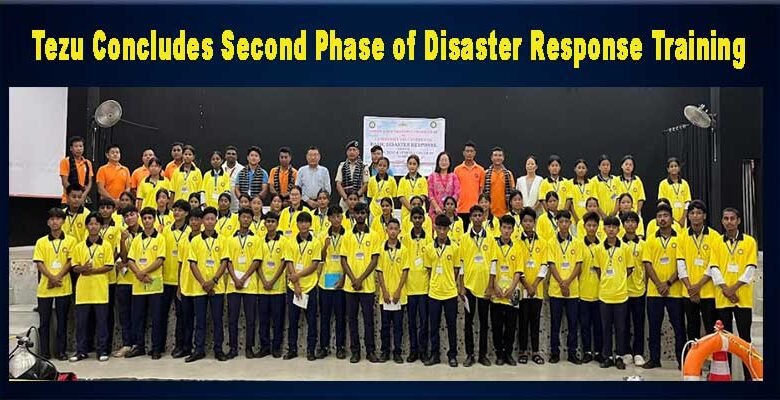
TEZU- The second phase of the three-day Community Volunteers Training on Basic Disaster Response concluded successfully at Amik Ringya Hall, Tezu, from August 25–27, 2025.
The programme, aimed at strengthening grassroots-level preparedness against natural disasters, was inaugurated by Kesang Ngurup Damo, Deputy Commissioner of Lohit, alongside Sana Matum, Commandant of 25 BN ITBP, whose motivating remarks set the tone for the sessions.

Also Read- Key Decisions Taken to Strengthen Assam-Arunachal Border Coordination at Narayanpur Meeting
A total of 65 volunteers from Tezu and Sunpura circles participated in this phase. This comes after the first phase held at Wakro (August 18–20), where 35 volunteers were trained. Together, the initiative has now trained 100 volunteers across Lohit district.
Training Highlights:
- Conducted by: SDRF, I/C DDMO, trainers & Tezu Fire Station OC.
- Modules Covered: Dos & Don’ts during earthquakes, floods, landslides, thunderstorms & lightning; basic first aid; search & rescue; BLS & CPR; rope rescue; water rescue techniques.
- Practical Drills: Hands-on fire safety training by the Fire Station OC.
Also Read- Mechukha Trout Quest 2025 Sets New National Record with 105 Catches on Yargyap Chu River
Deputy Commissioner Damo emphasized the urgency of preparedness in the era of climate change:
“Due to global warming, weather events are increasingly unpredictable. Therefore, training and preparedness are essential to mitigate any disaster.”
In a personal gesture, the DC also shared his mobile number with volunteers, urging them to contact him directly if they came across cases of opium use or drug abuse—underscoring his commitment to community vigilance and trust.
The closing ceremony featured the distribution of ID cards, first aid kits, uniforms, and basic volunteer kits, formally recognizing the trained volunteers as frontline responders for their communities.
This sustained effort reflects the district administration’s commitment to building disaster resilience, community empowerment, and social responsibility at the grassroots level.