
Explained: How Arunachal’s new Honey Policy aims to transform beekeeping
The Cabinet has approved the Arunachal Pradesh Apiculture and Honey Policy, 2026. Here's what the policy seeks to achieve, why it matters, and whether it can transform the state's beekeeping sector.
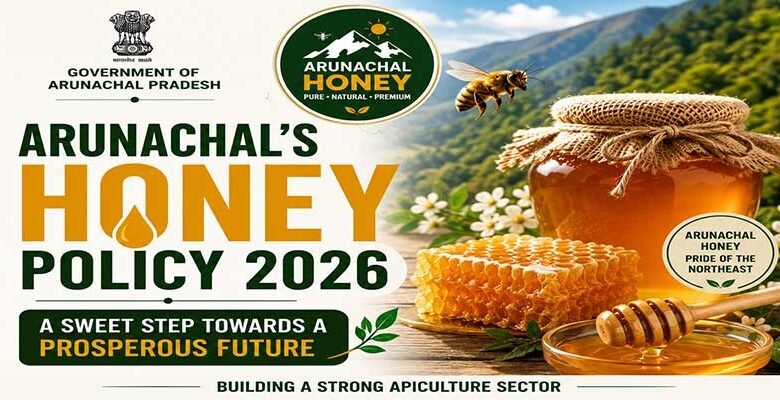
 How Arunachal’s new Honey Policy aims to transform beekeeping; Explained By Manzar Alam |
From the dense forests of Tirap and Changlang to the flowering orchards of West Kameng and Tawang, Arunachal Pradesh possesses one of India’s richest natural environments for beekeeping. Blessed with abundant biodiversity, diverse flowering plants and relatively low levels of industrial pollution, the state has long been regarded as having immense potential for honey production. Yet, despite these natural advantages, apiculture remains a largely underdeveloped sector.

The Arunachal Pradesh Cabinet’s approval of the Arunachal Pradesh Apiculture and Honey Policy, 2026 marks a fresh attempt to unlock that potential. The policy aims to transform the state into a leading hub for scientific and commercially viable beekeeping while positioning “Arunachal Honey” as a premium and traceable product in domestic and international markets.
Why a Honey Policy?
Across India, beekeeping has increasingly emerged as a supplementary source of income for farmers. Unlike many agricultural activities, apiculture requires relatively modest investment while providing multiple benefits. Besides producing honey, bees improve pollination, leading to better crop yields in horticulture, fruit cultivation and agriculture.
Also Read- Cabinet clears 36 ASI posts to strengthen Arunachal Armed Police Battalions
For Arunachal Pradesh, where a large section of the population depends on farming and allied activities, apiculture offers an opportunity to diversify rural incomes without requiring large-scale land conversion.
What does the new policy propose?
According to the Cabinet, the Honey Policy seeks to develop a sustainable, scientific and commercially viable apiculture sector. Rather than creating a completely new framework, the policy proposes to converge and integrate existing schemes and programmes across various government departments working in the sector.
The government has also stated that the policy is intended to significantly improve the incomes of farmers and women Self-Help Group (SHG) members, while making Arunachal Pradesh one of the leading honey-producing states in the Northeast.
A growing market
India’s demand for natural, organic and specialty honey has grown steadily over the past decade, driven by changing consumer preferences and increasing awareness of health and wellness. Premium honey sourced from forests, medicinal plants and biodiversity-rich regions often commands higher prices than conventional honey.
Also Read- Cabinet extends APSSB waitlist validity to one year
With its rich flora and relatively unspoiled ecosystems, Arunachal Pradesh has the potential to develop niche honey varieties that could appeal to premium domestic and export markets, provided quality standards, traceability and branding are effectively implemented.
Opportunities beyond honey
The policy’s potential impact extends beyond honey production. A well-developed apiculture sector can create employment opportunities for rural youth, strengthen women’s self-help groups, encourage small-scale entrepreneurship and support value-added industries such as honey processing, packaging and marketing.
Improved pollination services may also enhance productivity in horticulture crops, citrus plantations, vegetables and other agricultural produce, generating indirect economic benefits for farmers.
Challenges ahead
While the policy outlines an ambitious vision, implementation will be crucial. Experts have often pointed to challenges including limited scientific beekeeping practices, inadequate processing facilities, lack of organised marketing channels, quality certification requirements and insufficient branding of locally produced honey.
Training beekeepers, expanding technical support, improving market access and establishing reliable supply chains are likely to determine whether the policy achieves its objectives.
Can Arunachal become the Northeast’s honey leader?
The answer depends not only on the policy itself but also on its execution. Arunachal Pradesh already possesses many of the natural advantages needed for a successful apiculture industry. If scientific beekeeping, quality assurance, branding and market linkages are developed alongside institutional support for farmers and SHGs, the state could emerge as a significant producer of premium honey in the Northeast.
The Cabinet’s decision has laid the policy foundation. The coming years will determine whether that vision translates into sustainable livelihoods and a stronger rural economy.