Arunachal: NCC Cadets Visit Belo Under Vibrant Village Programme
NCC cadets engage with Galo community in Belo village, gaining first-hand exposure to indigenous traditions under the Vibrant Village Programme.
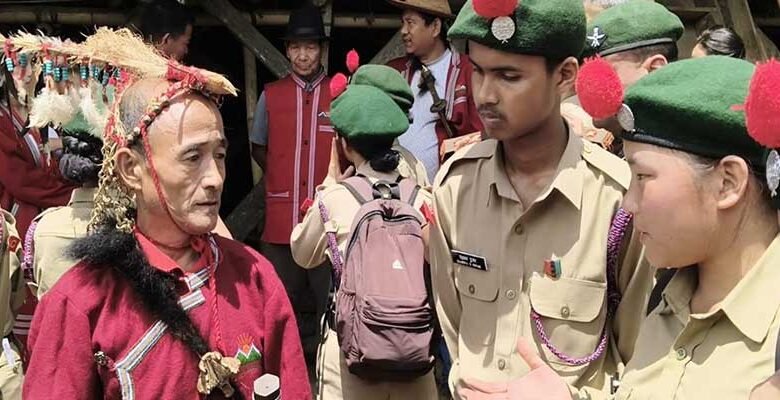
BELO VILLAGE– Upper Subansiri district: In an initiative aimed at promoting cultural awareness and experiential learning, National Cadet Corps (NCC) cadets visited Belo village under the Dumporijo Circle as part of the Vibrant Village Programme.
Belo village, predominantly inhabited by members of the Galo tribe, provided cadets with an immersive experience of indigenous traditions and rural life. Surrounded by lush paddy fields, the village reflects a cultural heritage influenced by neighbouring Yomcha Circle.

The visit aimed to foster meaningful interaction between cadets and the local community, enabling participants to gain insights into the customs, traditions, and social fabric of the Galo people. Cadets were introduced to traditional social roles and titles such as Ronya, Riba, Tatu, and Yinyo, which denote respect and identity within the community.
Also Read- Press Freedom Day Celebrated with Eco Drive in Ziro
During the programme, cadets engaged directly with villagers, learning about traditional practices, lifestyle patterns, and values that have been preserved over generations. The interaction offered a perspective beyond classroom learning, highlighting the significance of cultural continuity in rural societies.
The visit was led by the Commanding Officer of 1 APBN NCC, with support from Associate NCC Officer Mennu Haji and PI staff, ensuring coordinated execution of the programme. Officials noted that such initiatives help bridge the gap between structured training and real-world experiences.
Also Read- Teen Swept Away in Yomgo River, Search On
Organisers emphasised that the Vibrant Village Programme serves as a platform to nurture socially responsible youth by connecting them with India’s diverse cultural heritage. The Belo visit, they added, not only enhanced the cadets’ understanding of rural ecosystems but also underscored the importance of preserving indigenous identities amid rapid modernisation.
The programme concluded with reflections from participants, who described the experience as a valuable lesson in cultural appreciation, community engagement, and social responsibility.