

Keyi Panyor Flood Relief Fund Dispute Intensifies; MLA Clarifies Fund Details
BJP Keyi Panyor unit and affected families stage a solidarity march and dharna, demanding the release of the remaining donations directly to flood victims and opposing the proposed Living Memorial project.
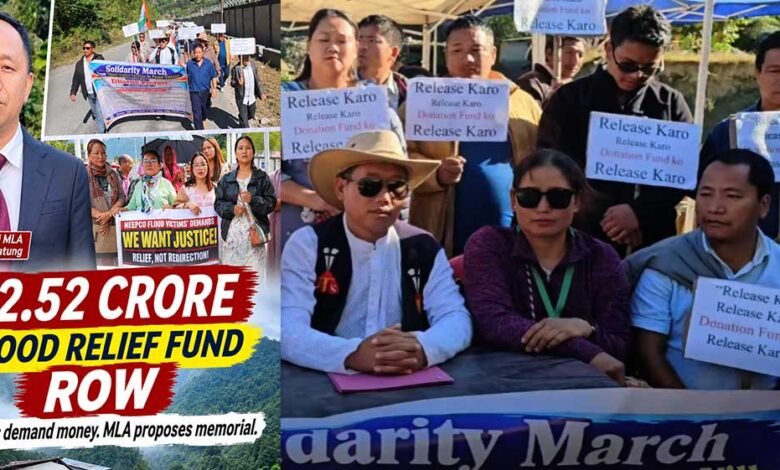
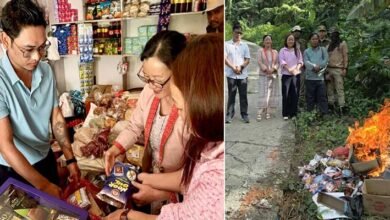
YAZALI/KEYI PANYOR: A controversy over the utilisation of public donations collected for victims of the June 2026 flash floods in Keyi Panyor district intensified on Thursday, as the BJP Keyi Panyor unit, along with the 16th Yachuli Mandal, staged a solidarity march and dharna demanding the release of the remaining relief fund directly to affected families.
The protesters marched from Yazali Check Gate to Poosa village, opposing the proposed utilisation of the remaining donations for the construction of a memorial complex. They maintained that contributions made by individuals and organisations across the country and beyond were intended primarily to help flood-affected families rebuild their lives.

The dispute centres on the MLA Relief Care Fund launched by Yachuli MLA Toko Tatung following the devastating cloudburst and flash floods that struck Poosa, NEEPCO Colony and adjoining areas in June.
Also Read- Arunachal Flash Floods Ravage NEEPCO Colony in Keyi Panyor; Three Missing
₹3.20 Crore Collected, ₹2.52 Crore Remains
According to figures shared by MLA Toko Tatung, the relief fund received a total contribution of ₹3,20,06,738.37 over a period of four months.
Of this amount, ₹67,74,000 was reportedly spent on immediate relief, ex-gratia assistance, compensation for property damage, medical assistance and debris clearance.
The remaining balance stands at ₹2,52,32,738.37.
Tatung has maintained that the collection and utilisation of the fund have been transparent and that relief was extended to all affected families without discrimination.
Responding to the latest criticism, the MLA said the total amount was accumulated over four months rather than received at one time. He also stated that the fund’s accounts were in the public domain and that the transactions could be verified.
Also Read- J.P. Nadda Visits Flood-Hit Areas in Keyi Panyor District; Assures Full Central Support
MLA Defends Living Memorial Proposal
At the centre of the disagreement is the MLA’s proposal to utilise the remaining amount for developing a memorial complex at Poosa.
Described as a “Living Memorial” or “NYOKU — Seeds of Resilience,” the proposed complex is envisioned to include a Tree of Life, memorial trees dedicated to those who lost their lives, a roll of honour recognising donors, a community library and a café.
Defending the proposal, Tatung said the project would preserve the memory of the victims while honouring the contributions of people who supported the affected community during the disaster.
He further argued that the proposed memorial and café could generate income, with victim families eventually taking responsibility for managing the facilities and benefiting from the revenue.
“Our responsibility does not end with providing relief. We must ensure that the lives lost in this tragedy are remembered with dignity and that the generosity of every donor is honoured,” the MLA had stated while announcing the proposal.
He has maintained that the memorial would provide long-term benefits to the affected community.
Also Read- CoSAAP Keyi Panyor Donates ₹8 Lakh for Flood Relief
BJP and Flood Victims Oppose Proposed Diversion
However, the BJP Keyi Panyor unit and sections of the affected community have strongly opposed the proposal.
The protesters argued that donations collected in the aftermath of the disaster should be utilised primarily for the rehabilitation and financial recovery of flood-affected families rather than construction activities or income-generating projects.
They demanded equal treatment for affected people from Poosa, NEEPCO Colony, Kebi, Potin and other areas.
The protesters also sought the publication of beneficiary lists, transparency in the utilisation of both the MLA Relief Care Fund and the Deputy Commissioner’s relief fund, and an investigation into alleged irregularities and delays.
A seven-point charter of demands was submitted during the dharna.
One of the flood victims reportedly questioned the rationale behind using public donations for construction, arguing that the money was contributed to help affected families rebuild their lives. The victim also maintained that government funds, rather than public donations intended for relief, should be used for such development projects.
Debate Over Relief, Rehabilitation and Accountability
The June flash floods caused significant loss of life, damage to houses in NEEPCO Colony and surrounding areas, and widespread disruption across the affected region.
While immediate relief was distributed and several organisations and individuals extended financial assistance, the utilisation of the remaining public donations has now become a contentious issue.
The disagreement reflects two different approaches to the future of the relief fund: the MLA’s proposal to establish a permanent memorial and community facilities, and the protesters’ demand for direct financial assistance to affected families.
With the BJP unit and flood victims pressing for the release of the remaining amount, the issue has raised wider questions about public accountability, donor expectations and the appropriate use of funds collected specifically for disaster relief.
The immediate challenge will be to establish a mutually acceptable course of action that addresses the needs of affected families while ensuring transparency and public confidence in the management of donated funds.








One Comment