A Journey of Faith and Coordination: The Sacred Relics of Lord Buddha in Arunachal Pradesh
The sacred relics of Lord Buddha, discovered during the excavation of an ancient Buddhist stupa at Piprahwa in present-day Uttar Pradesh in 1898, are among the most treasured elements of India's spiritual and cultural heritage.
A Journey of Faith and Coordination: The Sacred Relics of Lord Buddha in Arunachal Pradesh
By Kesang Ngurup Damo and Nyatum Doke
The sacred relics of Lord Buddha, discovered during the excavation of an ancient Buddhist stupa at Piprahwa in present-day Uttar Pradesh in 1898, are among the most treasured elements of India’s spiritual and cultural heritage. Revered by Buddhist communities across the world, their significance extends beyond religious boundaries. People from different walks of life draw inspiration from Lord Buddha’s timeless teachings of peace, compassion, wisdom, brotherhood and non-violence.

From time to time, these sacred relics are taken to different parts of India and abroad for public exposition, providing devotees with a rare opportunity to pay homage and reconnect with the spiritual legacy of Lord Buddha.
After a gap of 13 years, Arunachal Pradesh once again had the privilege of hosting the sacred relics. The three-week-long exposition witnessed an overwhelming response, with more than one lakh devotees and visitors paying their respects.
Also Read- Sacred Relics of Lord Buddha Depart Tezu for Delhi After 22-Day Exposition in Arunachal
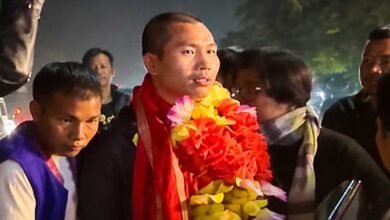
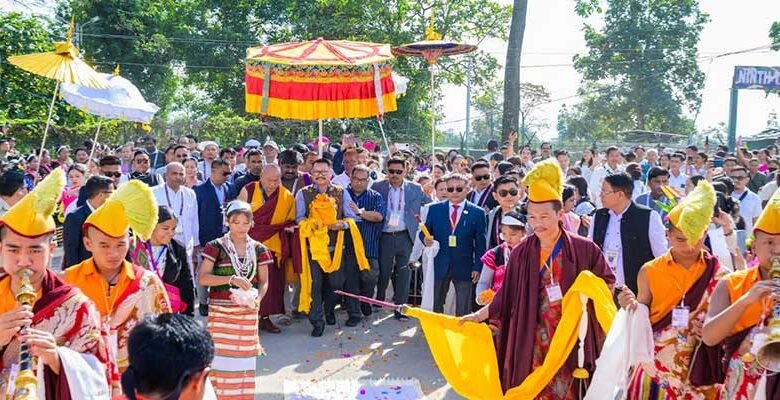
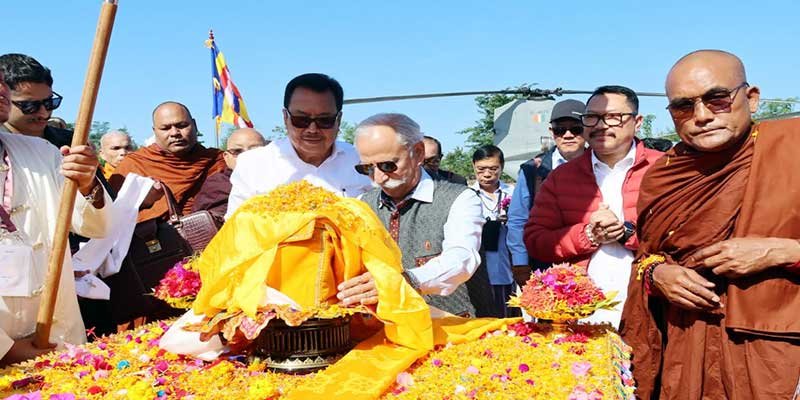
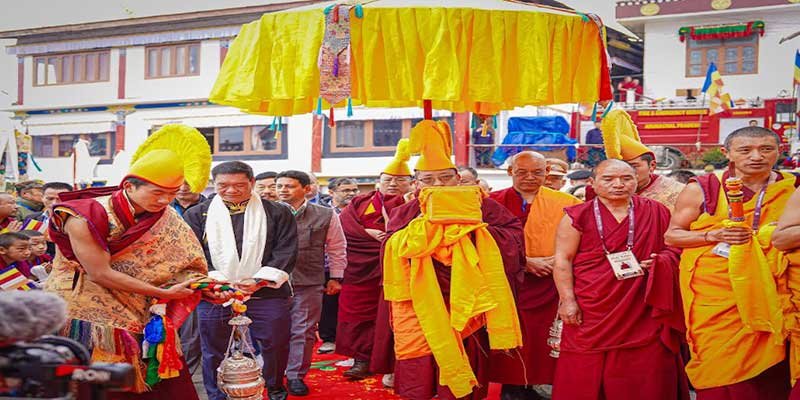
On 31 October 2026, the sacred relics arrived in Tawang aboard a Chinook helicopter of the Indian Air Force. Following a grand ceremonial reception, they were placed for public veneration at the historic Tawang Monastery. On 8 November, the relics were airlifted from Tawang to Rupa for their onward journey to Bomdila, where the exposition continued until 13 November.
On 14 November, the sacred relics reached Namsai and were placed for public veneration at the Golden Pagoda (Kongmu Kham), where the exposition continued until 20 November. The journey from Tawang to Namsai brought together the Mahayana and Theravada traditions of Buddhism, connecting the western and eastern regions of Arunachal Pradesh through a shared spiritual heritage.
Also Read- Governor Receives Holy Relics of Lord Buddha at Namsai
On 21 November, the sacred relics reached Tezu in Lohit district before beginning their onward journey. The people of Lohit accorded them a grand ceremonial reception and farewell. Before proceeding to New Delhi, the relics also received a ceremonial reception at Chabua Air Force Station in Assam. Another grand reception awaited them at Delhi airport, marking the successful completion of the sacred journey.
What made the entire exercise particularly remarkable was that the journey was completed smoothly, without any major disruption.
Behind the Scenes: Planning and Coordination
While the public witnessed the grand receptions, religious ceremonies and large gatherings of devotees, much of the effort that made the exposition possible remained behind the scenes.
Transporting sacred relics of such immense historical and religious significance is no ordinary undertaking. It requires meticulous planning, secure transportation, preservation arrangements, security measures and extensive ceremonial preparations. The mountainous terrain, long distances and unpredictable weather conditions of Arunachal Pradesh added further complexity to the task.
Also Read- Buddha’s Sacred Relics Return to Arunachal After 13 Years; Exposition Begins in Tawang
The exposition was, therefore, not merely a spiritual event but also a remarkable demonstration of planning, coordination and cooperation among various institutions and individuals.
The Ministry of Culture, Government of India; the Department of Art and Culture, Government of Arunachal Pradesh; the International Buddhist Confederation (IBC); the National Museum; and the Indian Air Force played significant roles in making the exposition a success.
The Department of Art and Culture, in particular, deserves special appreciation for coordinating with various government departments and district administrations, facilitating necessary arrangements and ensuring preparedness at every destination. The successful execution of a programme of this scale required sustained communication and cooperation among the Central Government, State Government and other participating institutions.
Colonel Yash Saxena: A Key Coordinator
Among the individuals who played a crucial role in the entire journey, special mention must be made of Colonel (Retd.) Yash Saxena, a Special Forces veteran and Director (Projects) of the International Buddhist Confederation.
Designated by the Government of India as the Chief Coordination Officer for the Holy Relics Exposition of Lord Buddha in Arunachal Pradesh, Colonel Saxena was closely involved in the planning and execution of the programme from its inception.
He personally coordinated the Indian Air Force’s aviation support, involving C-130 Hercules aircraft and Chinook helicopters. This required extensive coordination with the Ministry of Defence, Department of Military Affairs, Indian Air Force Headquarters, Eastern Air Command, concerned units and squadron authorities, as well as the aircraft captains.
Beyond aviation arrangements, Colonel Saxena maintained close liaison with the Government of Arunachal Pradesh on behalf of the Government of India, particularly with the Secretary of Art and Culture and the Deputy Commissioners of Tawang, West Kameng, Namsai and Lohit districts.
From advance visits and coordination meetings to reviewing arrangements at different locations, he remained actively involved throughout the journey. His military experience, meticulous planning, attention to detail and sustained efforts in bringing together different institutions contributed immensely to the successful completion of the exposition.
State-Level Coordination and Leadership
At the State level, special appreciation must also be extended to Shri Tezing Jordan, State Coordinator for the Holy Relics Exposition.
He played an important role in coordinating with government departments, district administrations and other stakeholders. His continuous engagement, dedication and efforts in addressing various requirements throughout the exposition contributed significantly to its smooth conduct.
The close cooperation between Colonel Yash Saxena, as Chief Coordination Officer, and Shri Tezing Jordan, as State Coordinator, helped ensure effective coordination between Central and State agencies. Their dedication and sustained efforts deserve special recognition.
Indian Air Force: Bridging Geography and Spiritual Heritage
The Indian Air Force was another important pillar of the sacred journey. Its aviation support helped overcome the geographical challenges of Arunachal Pradesh and ensured the smooth movement of the relics across the State.
There was something particularly meaningful about its involvement in the exposition. An institution entrusted with safeguarding the nation’s skies became a facilitator of a sacred journey carrying the universal message of peace and compassion.
Its contribution demonstrated how defence institutions can also play an important role in preserving and celebrating India’s rich spiritual and cultural heritage.
Special appreciation is also due to the Airport Director, Tezu, and her team for their dedicated efforts in facilitating the smooth arrival and onward departure of the sacred relics. The support and cooperation extended by the Airports Authority of India and the Ministry of Civil Aviation were equally instrumental in ensuring the successful completion of this important responsibility.
A Collective Achievement
The success of the exposition was ultimately a collective achievement.
The district administrations of Tawang, West Kameng, Namsai and Lohit made extensive preparations for the smooth conduct of the programmes. Police personnel, government officials, religious institutions, monks, volunteers and local communities contributed in their respective capacities.
Many worked quietly behind the scenes. Their contributions may not have featured in newspaper headlines or photographs, but they were equally important to the success of the exposition.
The entire exercise also offers a valuable lesson in public administration. It demonstrates what can be achieved when different departments and institutions work together with a common purpose. The exposition stands as a fine example of civil-military cooperation, effective communication, advance planning and collective responsibility.
A Journey to Remember
The sacred relics have now returned to New Delhi, but the memories of their presence will remain with the people of Arunachal Pradesh for years to come.
The exposition brought together people from different regions, faiths and communities, reaffirming the universal relevance of Lord Buddha’s teachings. Its significance lies not only in the spiritual experience it offered to thousands of devotees but also in the dedication of the individuals and institutions that made the journey possible.
While the sacred relics carried the timeless message of brotherhood, non-violence, peace and compassion, those who facilitated their journey demonstrated the power of commitment, cooperation and collective effort.
It was, in every sense, a journey of faith and a triumph of coordination.